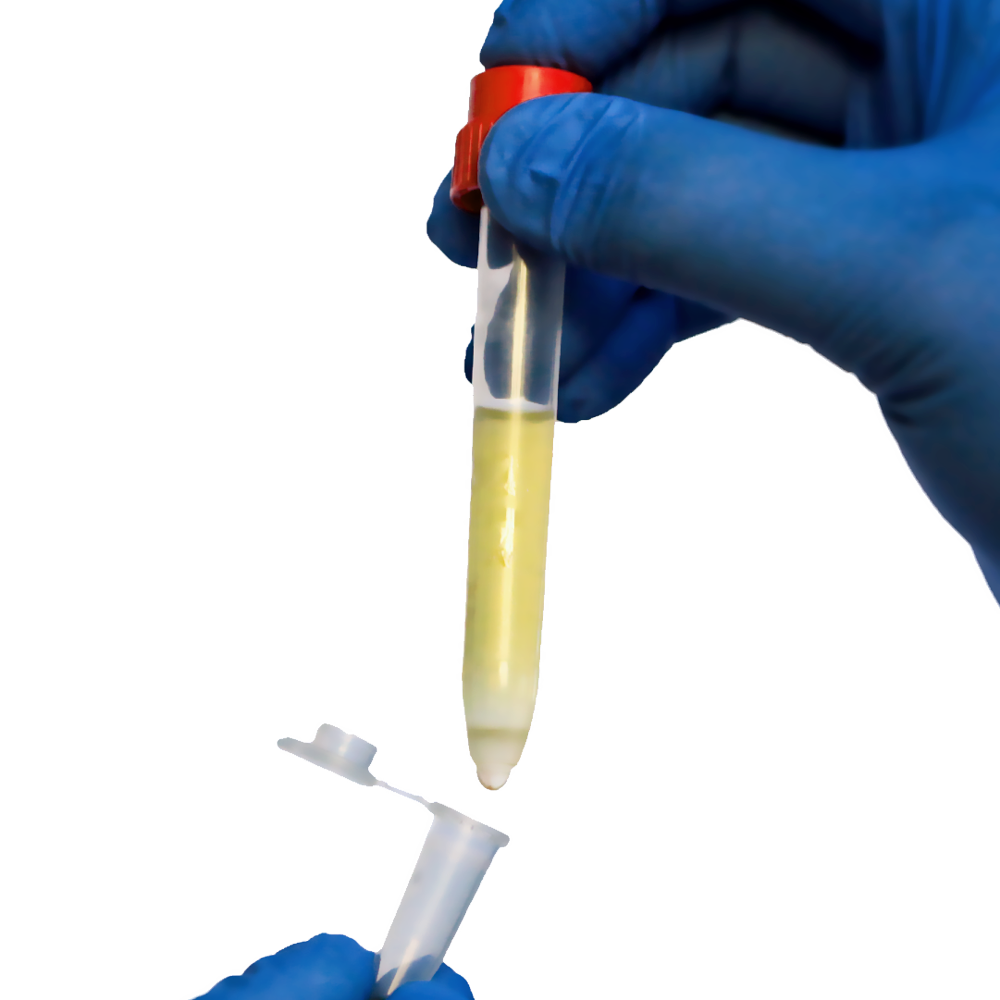
Porous samples are among the most challenging materials to process in laboratory environments because their structure naturally traps liquids and fine particles deep within internal spaces. Soil, sediment, plant matter, mineral deposits, and composite materials act like sponges, holding onto extraction solvents, water, and target compounds long after surface liquid has drained away. Releasing these trapped components without damaging the sample or losing valuable material requires a careful balance of pressure, stability, and control. Traditional approaches often fall short because they were never designed with porous matrices in mind.
Many commonly used filtration devices are optimized for liquid suspensions, where particles float freely and pass easily through a membrane or mesh. When these tools are applied to dense or porous solids, problems arise quickly. Filters clog as fine debris accumulates, membranes bend or tear under weight, and flow slows to a halt. To compensate, researchers often resort to repeated transfers, manual pressing, or additional centrifugation steps. Each of these interventions increases handling time, introduces variability, and raises the risk of sample loss or contamination.
This is where the Steel Basket-Strainer becomes essential. Designed specifically for gravity-based extraction from porous materials, it provides the mechanical strength and open structure needed for efficient drainage. Its reusable stainless-steel design supports clean, consistent extraction while integrating seamlessly into standard laboratory setups. This article explores why Steel Basket-Strainers excel in porous sample workflows, how they improve reliability, and how laboratories across disciplines can use them to build more efficient, repeatable extraction processes.
Understanding Porous Sample Extraction
Porous samples differ fundamentally from liquid suspensions because their structure is made up of interconnected spaces that trap liquids, particles, and dissolved compounds. Instead of flowing freely, fluids become absorbed and retained within the material itself. This makes extraction more complex, as the goal is not only to separate solids from liquids, but to release what is held inside the porous matrix without damaging the sample or losing valuable components.
Common porous samples include soil and sediment samples, agricultural and plant materials, mineral deposits, filter residues, biological tissues, and various industrial by-products. Each of these materials behaves differently during extraction, but they share one challenge: liquids do not drain easily on their own. Simply pouring or using fine membranes often leads to clogging or incomplete recovery.
Effective porous sample extraction must meet several requirements at once. The system must allow liquid to drain gradually from solid structures, support heavy or compact sample loads, and avoid crushing or compressing the material, which would further trap liquids. At the same time, the extraction process must prevent clogging and preserve the integrity of the extracted liquid or particles for downstream analysis.
This is where gravity-based separation becomes advantageous. By allowing liquid to drain naturally under controlled force, gravity-based systems avoid excessive pressure and reduce the risk of clogging. When paired with a stable, open structure, this approach provides a reliable way to extract liquids from porous materials while maintaining consistency and sample quality.
Why Conventional Filtration Often Fails with Porous Materials
Many laboratories attempt to use mesh filters, membranes, or disposable strainers for porous sample extraction. While these tools work well for suspensions, they present several limitations when solids dominate the sample.
Clogging and Flow Restriction
Porous samples release fine particles as liquid drains. Membrane filters trap these particles rapidly, blocking flow and forcing manual intervention.
Limited Mechanical Strength
Plastic strainers or mesh inserts can deform under load, especially when handling large masses of solid material.
Poor Liquid Recovery
When samples sit directly on flat membranes, liquid pools within the material instead of draining efficiently.
Excessive Handling
To compensate, users often:
- Transfer samples between containers
- Apply centrifugation
- Manually press or rinse material
Each step increases time, error risk, and sample loss.
The Steel Basket-Strainer: Purpose-Built for Porous Extraction
The Steel Basket-Strainer is designed to solve these problems through structure, strength, and simplicity.
Key characteristics include:
- Constructed from non-magnetic SS 316 stainless steel: Ensures high mechanical strength, corrosion resistance, and compatibility with sensitive laboratory applications.
- Fits into a standard 50 mL tube: Integrates easily into existing workflows without requiring special containers or adapters.
- Measures 45 mm in length: Provides sufficient depth to support porous samples while allowing efficient liquid drainage.
- Retains up to 20 mL volume: Holds adequate sample material for effective extraction without overcrowding or compression.
- Handles up to 30 g of solid material at 2,000 × g: Supports heavy sample loads during gravity or centrifuge-assisted extraction without deformation.
- Fully reusable: Designed for repeated use, reducing consumable costs and supporting sustainable lab practices.
- Compatible with heat sterilization and autoclaving: Allows thorough cleaning and safe reuse in sterile or contamination-sensitive workflows.
Rather than forcing porous material through a membrane, the Steel Basket-Strainer supports the sample while allowing gravity to extract liquid naturally.
How Gravity-Based Extraction Improves Recovery
Gravity-based extraction offers a clear advantage when working with porous or solid-rich samples because it relies on a natural, steady force rather than external pressure or mechanical stress. Unlike vacuum filtration, squeezing, or aggressive centrifugation, gravity applies a uniform downward pull that does not change suddenly or unevenly during processing. This consistency helps protect both the sample structure and the extracted liquid, reducing the risk of fragmentation, emulsification, or unwanted particle breakdown.
In porous materials such as soil, sediment, or plant matter, gravity allows liquids trapped within internal spaces to drain gradually and completely. As the liquid moves downward through the Steel Basket-Strainer, dissolved compounds and fine particles are carried along without forcing solid material through restrictive membranes. This prevents clogging and ensures smoother flow throughout the extraction process. Because the basket supports the solid matrix evenly, samples are not compressed or distorted, preserving the integrity of both solids and extracts.
Gravity-based extraction also reduces the need for active handling. Once the sample is placed into the basket and positioned inside a standard tube, the process continues with minimal intervention. This lowers the risk of spills, contamination, or inconsistent handling between samples. The result is clearer extracts, higher recovery of target components, and improved reproducibility across runs. For laboratories processing complex porous materials, gravity provides a dependable and low-stress approach to liquid and particle recovery.
Mechanical Stability Matters
Porous sample extraction often involves heavy, uneven, or coarse material. Plastic or mesh-based devices can bend, crack, or collapse under load.
The Steel Basket-Strainer’s SS 316 construction provides:
- High resistance to deformation
- Chemical compatibility with solvents
- Stability during centrifugation
- Long service life
This mechanical strength allows laboratories to process larger solid masses with confidence, without worrying about tool failure mid-workflow.
Processing Large Solid Loads with Confidence
The ability to handle up to 30 g of solid material sets the Steel Basket-Strainer apart from many filtration tools.
This capability is especially valuable for:
- Environmental testing labs processing bulk soil samples
- Geological analysis of sediments
- Industrial quality control workflows
- Agricultural research involving plant or soil extracts
Rather than dividing samples into multiple small portions, labs can process larger quantities in a single step, saving time and improving consistency.
Reusability Reduces Long-Term Costs
Disposable filters and membranes add recurring costs and generate waste. The Steel Basket-Strainer is designed for repeated use.
Benefits include:
- Lower consumable expenses
- Reduced procurement cycles
- More sustainable laboratory practices
- Consistent performance across runs
With proper cleaning and sterilization, a single Steel Basket-Strainer can support hundreds of extractions.
Simple Integration into Existing Lab Setups
The Steel Basket-Strainer fits directly into standard 50 mL centrifuge tubes, meaning:
- No special adapters required
- No dedicated equipment investment
- Minimal training needed
This compatibility allows laboratories to integrate the device into existing workflows without disruption.
Compatible with Centrifugation When Needed
While gravity extraction is often sufficient, some workflows require centrifugation to improve yield. The Steel Basket-Strainer is designed to handle up to 2,000 × g, allowing controlled acceleration of liquid extraction without damaging the device or sample.
This flexibility supports:
- Faster extraction when time is limited
- Processing of dense materials
- Improved recovery from tightly packed solids
Applications Across Laboratory Disciplines
Environmental Analysis
Soil and sediment samples often contain trapped water, pollutants, or micro-particles. The Steel Basket-Strainer enables clean extraction without clogging.
Agricultural Research
Plant materials and soil extracts benefit from gravity-based separation that preserves liquid fractions for downstream analysis.
Industrial Testing
Dense or abrasive materials can be processed safely without damaging filtration devices.
Chemical Extraction
Solvent-based extraction from solids becomes easier when liquid drains efficiently without membrane resistance.
Particle Concentration
Liquids extracted from porous samples can be further analyzed for size-based particle concentration.
Cleaner Extracts, Better Data
When extraction tools introduce variability, downstream results suffer. By providing:
- Consistent drainage
- Stable containment
- Minimal handling
The Steel Basket-Strainer supports reproducible, high-quality extracts that improve confidence in analytical outcomes.
Reduced Operator Fatigue and Error
Complex workflows increase the chance of mistakes. The simplicity of the Steel Basket-Strainer:
- Reduces handling steps
- Eliminates repeated transfers
- Minimizes manual force
This leads to:
- Faster workflows
- Fewer errors
- Improved technician consistency
Easy Cleaning and Sterilization
SS 316 stainless steel tolerates:
- Autoclaving
- Heat sterilization
- Common laboratory cleaning agents
This ensures:
- Reliable decontamination
- Long-term durability
- Safe reuse across applications
When Steel Basket-Strainers Outperform Alternatives
Steel Basket-Strainers outperform many conventional filtration tools because they are designed for situations where strength, stability, and controlled extraction matter more than fine pore separation. When samples contain a high proportion of solids, such as soil, sediment, plant tissue, or industrial residues, traditional membranes or mesh filters often clog quickly. Once clogged, flow slows or stops entirely, forcing users to intervene, transfer samples, or repeat steps. Steel Basket-Strainers avoid this issue by supporting the solid material while allowing liquid to drain freely through gravity.
They are especially effective when liquids must be extracted gently. Pressure-based systems, vacuum filtration, or aggressive centrifugation can compress porous material, trap liquid, or damage fragile components. In contrast, a Steel Basket-Strainer allows liquid to exit naturally, preserving dissolved compounds and suspended particles without introducing shear stress or mechanical disruption. This makes the approach well suited for workflows where extract quality and sample integrity are priorities.
Reusability is another key advantage. Many disposable filters degrade, deform, or lose performance after a single use. Steel Basket-Strainers, made from non-magnetic SS 316 stainless steel, maintain their shape and performance across repeated runs and can be cleaned and sterilized easily. Finally, when mechanical strength is required, such as handling larger solid loads or working at higher centrifugation forces, the rigid steel construction provides reliability that plastic or membrane-based devices cannot match.
Steel Basket-Strainers are not intended to replace fine filtration membranes. Instead, they solve a different and critical problem: efficient, repeatable extraction from porous matrices where other tools struggle.
Conclusion
Porous sample extraction demands tools that can handle solid-heavy materials without clogging, collapsing, or adding unnecessary complexity to laboratory workflows. Many commonly used filtration devices are designed for liquid suspensions or fine particle separation and struggle when faced with dense or porous matrices. The Steel Basket-Strainer addresses this gap by offering a purpose-built solution that relies on mechanical strength and gravity-based separation rather than fragile membranes or force-driven methods.
By supporting efficient liquid extraction from porous materials, the Steel Basket-Strainer allows laboratories to recover solvents, buffers, and dissolved target compounds in a controlled and repeatable manner. Its ability to hold large solid loads while maintaining open flow paths helps prevent common issues such as clogging, uneven drainage, or sample compression. This leads to clearer extracts, reduced handling steps, and more predictable outcomes across repeated runs.
Durability and reusability further strengthen its value. Constructed from non-magnetic SS 316 stainless steel, the Steel Basket-Strainer withstands repeated use, high mechanical stress, and routine cleaning without deforming or losing performance. Heat sterilization and autoclaving can be performed with confidence, making it suitable for workflows that require strict hygiene or cross-sample consistency. Compatibility with standard 50 mL tubes also ensures easy integration into existing laboratory setups without the need for special equipment or adapters.
Across environmental testing, agricultural research, industrial processing, and general laboratory work, the Steel Basket-Strainer offers a stable, efficient, and dependable approach to porous sample extraction. Rather than serving as a simple accessory, it becomes a core workflow tool, one that improves recovery, saves time, and provides confidence when working with some of the most challenging sample types encountered in the lab.
 English
 French
 German
 Spanish
 Belgium
 Italian
 Brazil
 Chinese Mandarin