Clogged meshes are one of the most common and frustrating problems in laboratory sample preparation. Whether working with biological suspensions, environmental samples, or particle-rich liquids, filtration is often assumed to be a simple step. In reality, it frequently becomes a bottleneck that slows workflows, wastes samples, and forces researchers to repeat steps that should have worked the first time.
Traditional cell strainers and mesh-based tools perform well under ideal conditions, low particle loads, uniform suspensions, and moderate volumes. However, modern laboratory samples are rarely ideal. Complex matrices, diluted suspensions, viscous fluids, and debris-heavy samples place strain on standard filtration tools. Mesh clogging leads to uneven flow, incomplete filtration, and inconsistent results.
Repeated filtration attempts increase handling, raise contamination risk, and consume valuable time. In high-throughput or time-sensitive environments, these failures can compromise entire workflows. What laboratories need is not just another mesh size, but a filtration system designed to manage flow, pressure, and sample complexity more effectively.
ÜberStrainer was developed to address these exact challenges. More than a conventional cell strainer, it is a modular sample preparation device designed to reduce clogging, increase filtration reliability, and support a wide range of applications. This article explores why mesh clogging happens, where traditional strainers fall short, and how ÜberStrainer minimizes filtration failures through thoughtful design and controlled processing.
Why Mesh Clogging Happens in Complex Samples
Mesh clogging is rarely the result of a single mistake or poor mesh choice. In most laboratory workflows, clogging occurs due to a combination of sample properties, flow behavior, and handling methods. The most common causes include:
- Wide particle size distribution
Many laboratory samples contain particles that vary significantly in size. Larger debris reaches the mesh surface first and blocks primary flow paths. Smaller particles then accumulate behind this initial blockage, forming compact layers that restrict liquid movement. Over time, even meshes with appropriate pore sizes become blocked due to this layered buildup.
- High debris or solid content
Samples derived from tissues, environmental sources, industrial processes, or complex suspensions often contain a high proportion of solid material. When too much material contacts the mesh at once, the surface becomes overloaded, reducing available open pores and rapidly slowing filtration.
- Diluted samples requiring large volumes
In diluted suspensions, the particle concentration may be low, but the total volume is high. Passing large volumes through a small mesh surface increases the likelihood of gradual clog formation. Even slow accumulation can become problematic when filtration takes place over extended periods.
- High viscosity or protein-rich solutions
Thick liquids, protein-heavy buffers, or samples containing extracellular matrix components move slowly through mesh structures. Reduced flow speed increases contact time between particles and the mesh surface, promoting adhesion and compaction. Once particles adhere, they are difficult to dislodge without disrupting the sample.
- Uncontrolled gravity-based flow
Gravity filtration applies uneven force across the mesh. Some areas experience higher flow rates, while others receive little flow. This uneven distribution causes localized clogging, where specific regions become blocked while the rest of the mesh remains underused.
- Lack of ventilation and airflow balance
Poor air displacement above the mesh creates back pressure. As liquid movement slows, particles settle unevenly and compact more tightly against the mesh, accelerating blockage.
- Repeated pouring and repositioning
When filtration slows, users often pour the sample again, tap the strainer, or reposition it. These actions disturb partially formed clogs, redistributing debris across the mesh surface rather than removing it. This often spreads blockage instead of clearing it.
- Manual intervention during filtration
Pipetting, scraping, or shaking the mesh introduces mechanical stress and disrupts flow patterns. These actions can force particles deeper into pores, making clogging more severe and less reversible.
- Inappropriate mesh loading strategy
Adding the full sample volume at once increases surface loading and compaction. Without controlled flow, particles accumulate faster than liquid can pass through.
- Mismatch between sample complexity and strainer design
Traditional strainers are designed for simple suspensions and moderate volumes. When used with complex, debris-heavy, or viscous samples, they lack the structural and flow control needed to prevent clog formation.
Together, these factors explain why filtration failures occur even when mesh sizes appear correct on paper. Clogging is not simply a mesh issue, it is a workflow and flow-control issue that requires a more adaptable filtration approach.
The Limitations of Conventional Cell Strainers
Standard cell strainers were developed for basic filtration tasks, where sample volumes are small and particle complexity is limited. Their design reflects this narrow purpose. Most consist of a fixed mesh held in a rigid plastic frame, positioned on top of a tube and dependent entirely on gravity to move liquid through the filter. While this setup works under ideal conditions, it quickly shows weaknesses when applied to real laboratory samples.
One major limitation is poor volume handling. Conventional strainers fill rapidly, and once the mesh surface becomes saturated, flow slows to a crawl. Processing larger volumes requires repeated loading, waiting, and repositioning. Each pause increases total processing time and exposes the sample to air, temperature fluctuations, and operator handling. For diluted samples, this inefficiency becomes even more pronounced, as large liquid volumes must pass through a small, static mesh area.
Force limitation is another critical issue. Gravity alone is often insufficient for viscous, protein-rich, or debris-heavy samples. As particles accumulate on the mesh, resistance increases, causing filtration to stall completely. Without pressure assistance or flow control, users frequently resort to manual interventions such as tapping the strainer, shaking the tube, or pipetting through the mesh. These actions disrupt partially formed layers, increase shear stress, and introduce operator-to-operator variability.
Ventilation also plays a role. Many conventional strainers restrict airflow, creating back pressure that further impedes filtration. This trapped air promotes uneven flow across the mesh surface, leading to localized clogging rather than uniform filtration.
Finally, conventional strainers lack adaptability. They fit only specific tube formats, cannot be integrated into alternative workflows, and offer no recovery options once clogged. When failure occurs, the only solution is replacement, costing time, consumables, and sometimes valuable samples. These limitations make traditional strainers poorly suited for complex, high-volume, or repeat-use laboratory workflows.
Introducing ÜberStrainer: A Modular Approach to Reliable Filtration
ÜberStrainer was designed to expand what mesh tools can do, not just refine existing designs. It is a sterile sample preparation device built to separate, isolate, concentrate, and process particles from complex or diluted suspensions.
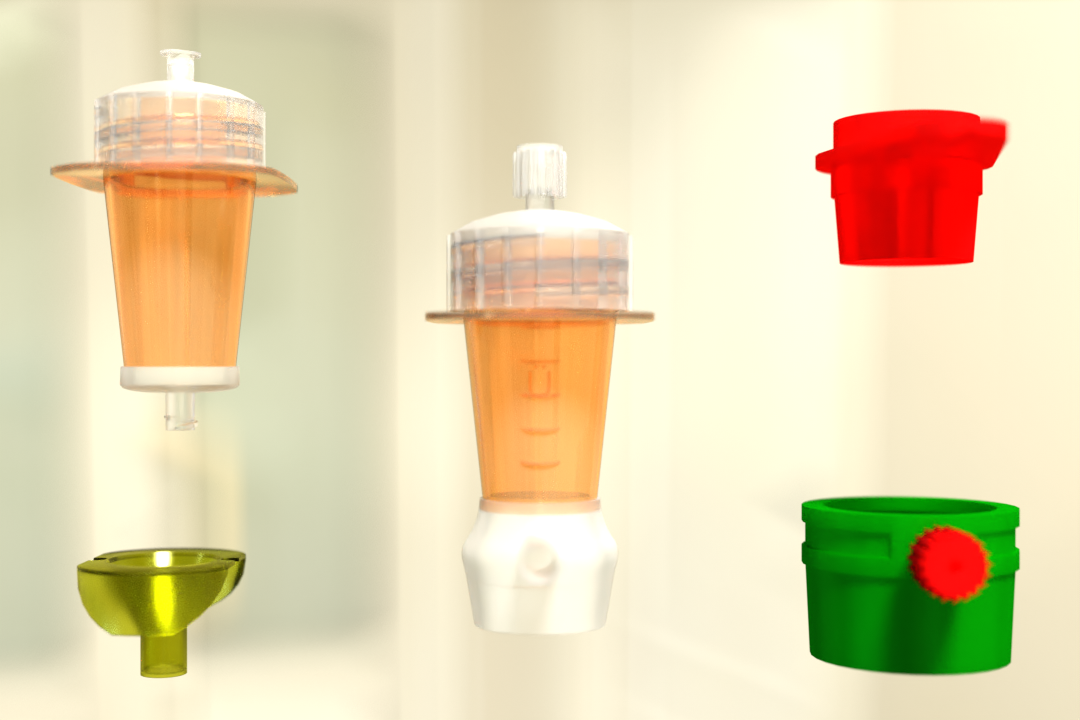
At its core, ÜberStrainer features a modular design. The strainer component can be separated from the housing, allowing flexible handling and integration into different workflows. It fits into 1.5 mL, 2 mL, 15 mL, and 50 mL tubes, as well as a 20 mm tissue culture plate cavity. This compatibility eliminates the need to switch tools as sample volumes change.
ÜberStrainer is available in 15 mesh sizes ranging from 1 µm to 500 µm, allowing precise control over particle selection. Sets commonly include multiple mesh sizes, supporting stepwise filtration or targeted isolation.
A key feature is the airtight screw cap with a Luer Lock connector. This design enables controlled, low-pressure filtration and allows users to process unlimited volumes of liquid without removing or repositioning the strainer. Instead of relying on gravity alone, users can apply gentle pressure to maintain consistent flow across the mesh surface.
Each ÜberStrainer is sterile, single-packed, and centrifugation-compatible, making it suitable for both routine and sensitive applications.
How ÜberStrainer Minimizes Clogging and Filtration Failures
ÜberStrainer is designed to address the root causes of mesh clogging rather than simply reacting to them. Its features work together to stabilize flow, reduce particle compaction, and give users more control during filtration.
- Airtight screw cap stabilizes airflow
The airtight screw cap prevents uncontrolled air entry above the mesh. Stable air displacement ensures that liquid moves smoothly through the mesh instead of surging unevenly. This reduces turbulence, prevents sudden pressure drops, and minimizes particle redistribution that often leads to clog formation.
- Luer Lock connector enables controlled low pressure
The integrated Luer Lock allows users to apply gentle, low pressure when needed. Unlike manual forcing or gravity-only filtration, this pressure is evenly distributed across the mesh surface. Even force prevents localized overload, helping keep pores open longer and maintaining consistent filtration speed.
- Even pressure reduces localized clogging
Localized clogging occurs when certain mesh regions carry most of the flow. ÜberStrainer’s pressure-assisted design spreads flow evenly, preventing debris from compacting in one area while other areas remain unused.
- Continuous processing of unlimited liquid volumes
ÜberStrainer can process unlimited volumes without removing or resetting the device. Continuous flow prevents stop-start cycles that cause particles to settle, compact, and block pores. This is especially important for diluted samples that require large volumes to pass through the mesh.
- Reduced particle compaction at the mesh surface
Because samples do not need to be added in small batches, particles encounter a steady flow environment. This reduces dwell time at the mesh surface and lowers the chance that debris will compress into tightly packed clogs.
- Centrifugation compatibility for difficult samples
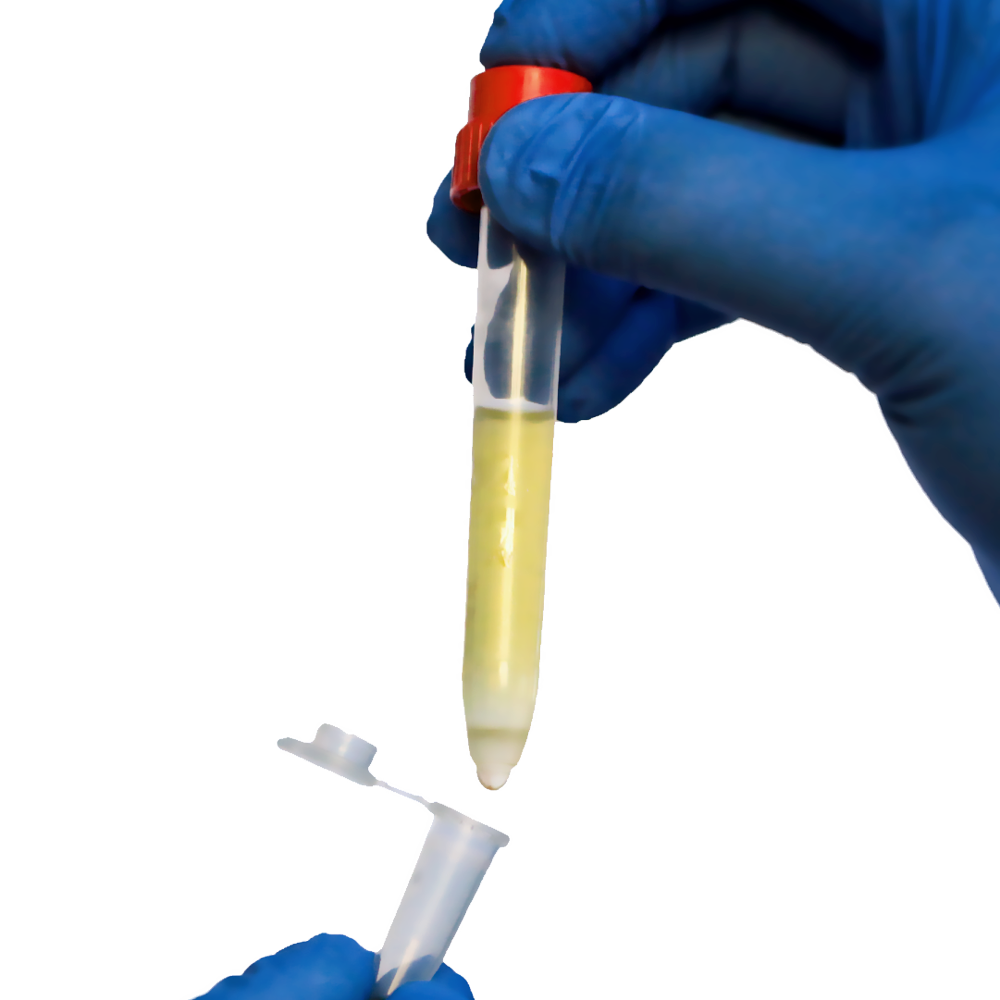
For viscous, solid-heavy, or stubborn samples, ÜberStrainer can be placed directly into a centrifuge. Centrifugal force moves liquid through the mesh uniformly without manual agitation, reducing handling and avoiding mechanical disruption of the mesh surface.
- Less manual intervention during filtration
Pressure-assisted and centrifugation-supported filtration reduces the need for tapping, shaking, or repositioning. Fewer manual actions mean fewer chances to disturb partially formed clogs or spread debris across the mesh.
- Modular, removable strainer component
The strainer can be separated cleanly from the rest of the device. This allows users to inspect mesh condition, replace only the strainer if needed, or adapt mesh sizes without discarding the entire unit.
- Improved troubleshooting and workflow flexibility
Modular design supports rapid troubleshooting when working with unfamiliar or variable samples. Users can adjust mesh size or filtration strategy without restarting the entire process.
- Transforms filtration into a controlled step
Instead of trial-and-error filtration, ÜberStrainer provides predictable flow behavior. Control over pressure, volume, and force turns filtration into a repeatable, reliable workflow step rather than a frequent failure point.
Together, these design elements allow ÜberStrainer to minimize clogging proactively, making filtration faster, cleaner, and more dependable across complex sample types.
Practical Applications Where ÜberStrainer Excels
ÜberStrainer delivers the greatest value in workflows where standard mesh tools repeatedly clog, slow down processing, or require constant intervention. One of its strongest applications is the handling of complex biological suspensions. Cell preparations that contain tissue debris, extracellular matrix fragments, aggregates, or uneven particle distributions often overwhelm traditional strainers. ÜberStrainer’s controlled flow and pressure-assisted filtration reduce shear stress while preventing sudden blockages, helping preserve particle and cell integrity throughout processing.
Environmental and industrial samples represent another area where ÜberStrainer consistently outperforms conventional devices. Water, soil extracts, wastewater, and process fluids often combine large volumes with a wide range of particle sizes. Gravity-based filtration struggles under these conditions, especially when samples are diluted. ÜberStrainer allows continuous filtration of large volumes without requiring repeated loading or mesh replacement, making it well suited for routine monitoring and large-scale testing.
ÜberStrainer is also effective for particle concentration workflows. By passing unlimited liquid volumes through a defined mesh size, target particles can be isolated and enriched efficiently without loss or repeated handling. Its compatibility with multiple tube formats and tissue culture plate wells further adds flexibility, allowing laboratories to adapt the same device across different experiments. In each of these applications, ÜberStrainer reduces manual effort, improves consistency, and turns difficult filtration tasks into dependable, repeatable steps.
Conclusion
Mesh clogging is more than a minor delay in laboratory workflows. It directly affects data quality, processing time, and confidence in sample preparation. When filtration stalls or fails, researchers lose time troubleshooting, repeating steps, or discarding partially processed samples. Over time, these disruptions accumulate, turning filtration into a persistent bottleneck rather than a routine step. Traditional mesh strainers were never designed to handle today’s complex suspensions, large liquid volumes, or variable particle loads, which is why clogging remains such a common problem.
ÜberStrainer addresses this challenge by shifting filtration from an uncontrolled, gravity-dependent process to a stable and adaptable system. Its airtight construction, low-pressure compatibility, and ability to process unlimited liquid volumes give users direct control over flow behavior. Instead of forcing samples through a clogged mesh, laboratories can guide filtration smoothly and consistently. The option to centrifuge, combined with a modular, replaceable strainer design, adds further flexibility when working with difficult samples.
By minimizing clog formation, reducing manual handling, and supporting continuous filtration, ÜberStrainer restores reliability to sample preparation. Filtration becomes predictable, repeatable, and easier to scale. For laboratories dealing with complex or diluted samples where time, reproducibility, and efficiency matter, ÜberStrainer offers a practical solution that fits real-world workflows and helps prevent filtration failures before they begin.
 English
 French
 German
 Spanish
 Belgium
 Italian
 Brazil
 Chinese Mandarin