Preparing a high-quality single-cell suspension is one of the most critical steps in cell culture workflows. Whether cells are destined for flow cytometry, cell sorting, functional assays, imaging, or downstream enrichment, the quality of the suspension directly affects the reliability of results. Aggregates, debris, or uneven cell distribution can distort readouts, reduce recovery, and introduce variability that is difficult to trace back to its source.
Despite its importance, single-cell preparation is often treated as a routine step. Cells are pipetted repeatedly, passed through meshes balanced on tubes, or spun down multiple times to remove clumps. These approaches work in some cases, but they are not optimized for small culture volumes, dense suspensions, or sensitive cell types. Each extra handling step introduces mechanical stress, increases the risk of contamination, and raises the likelihood of losing valuable cells.
As cell culture workflows move toward smaller volumes, higher throughput, and greater reproducibility, the limitations of traditional preparation methods become more apparent. Researchers need tools that allow precise control, minimize manipulation, and fit naturally into existing pipetting-based workflows.
The Pipette-Strainer was developed specifically to address these challenges. Designed as a two-way filtration device for small volumes, it enables direct, controlled filtration using standard pipettes or serological pipettes. By replacing force-heavy or transfer-intensive steps with pipette-guided filtration, the Pipette-Strainer offers a practical and efficient way to prepare single-cell suspensions from cell culture without unnecessary stress or complexity.
This article explores the challenges of single-cell preparation, why conventional methods fall short, and how the Pipette-Strainer provides a more controlled and reliable approach for modern cell culture laboratories.
Challenges in Preparing Single-Cell Suspensions from Cell Culture
Creating a true single-cell suspension from cultured cells is rarely as simple as it sounds. Even well-maintained cultures can present challenges that complicate preparation and compromise downstream applications. These issues are especially pronounced when working with small volumes, sensitive cell types, or workflows that demand high consistency.
Cell Clumping and Aggregates
Cells naturally interact with one another during growth. Adherent cells often detach as sheets or clusters rather than as individual cells, while suspension cultures may develop aggregates over time due to cell–cell adhesion, secreted matrix components, or incomplete enzymatic dissociation. These clumps make accurate cell counting difficult, increase the risk of clogging flow cytometers or sorting nozzles, and lead to uneven cell distribution in assays, ultimately reducing data reliability.
Over-Reliance on Centrifugation
Centrifugation is frequently used to remove debris or clarify suspensions, but it introduces physical stress with every spin. Repeated centrifugation can damage fragile cell membranes, reduce viability, and activate stress responses. Pellets formed from small volumes are often compact and difficult to resuspend evenly, leading to inconsistent cell concentrations. In many small-volume workflows, centrifugation adds complexity without delivering proportional benefits.
Sample Loss in Small-Volume Cultures
Cell culture experiments often work with limited volumes, typically between 1 and 10 mL. In these conditions, even minor losses during pouring, pipetting, or tube changes can significantly reduce total cell yield. Traditional filtration methods that require transferring samples between containers increase the likelihood of losing cells that cannot be recovered, especially when working with rare or precious samples.
Stress and Damage to Sensitive Cells
Primary cells, stem cells, immune cells, and other delicate populations are highly responsive to their environment. Excessive pipetting, forceful filtration through rigid meshes, or prolonged exposure to non-ideal conditions can reduce viability or alter cellular behavior. These changes may not be immediately visible but can strongly influence functional assays, differentiation potential, and experimental reproducibility.
Together, these challenges emphasize the need for a preparation approach that minimizes handling, reduces stress, and offers precise control, particularly for small-volume cell culture workflows where accuracy and cell integrity are critical.
Together, these challenges make it clear that traditional preparation methods are not optimized for modern small-volume cell culture workflows. What is needed is a preparation approach that minimizes handling, avoids unnecessary force, and provides controlled, reproducible filtration, one that supports cell health while delivering reliable single-cell suspensions.
Why Traditional Methods Fall Short for Small-Volume Cell Cultures
Many of the tools commonly used for cell filtration were designed with larger volumes or bulk processing in mind. When applied to small culture volumes, their limitations become obvious.
Mesh-on-Tube Strainers
Standard cell strainers are typically placed on top of tubes and rely on gravity. For small volumes, flow is slow and uneven. Users often resort to tapping, pipetting, or pushing material through the mesh, increasing variability and stress.
Repeated Transfers
Passing samples from culture vessel to strainer to collection tube adds multiple handling steps. Each transfer increases the risk of contamination and cell loss, particularly when working with limited material.
Inconsistent Operator Technique
Manual filtration methods depend heavily on user technique. Differences in pipetting speed, angle, or force can change outcomes between experiments or operators, reducing reproducibility.
Inefficiency in Routine Workflows
In labs processing many samples per day, slow filtration and repeated centrifugation create bottlenecks. What should be a quick preparation step becomes a source of delay and frustration.
These shortcomings make it clear that a more integrated, pipette-friendly solution is needed for small-volume single-cell preparation.
Introducing the Pipette-Strainer: Designed for Controlled Small-Volume Filtration
The Pipette-Strainer was developed to solve a very specific but common problem in laboratories: how to filter small volumes efficiently without adding stress, transfers, or unnecessary steps. Instead of asking researchers to adapt their workflow to a new device, the Pipette-Strainer fits directly into the tool they already rely on most, the pipette. This simple shift in design turns filtration into a natural extension of routine pipetting, rather than a separate, disruptive step.
Two-Way Filtration Concept
Traditional strainers rely on gravity or force applied from above, which limits control and often leads to uneven flow or clogging. The Pipette-Strainer introduces a two-way filtration approach. Samples can be filtered during aspiration or dispensing, giving users full control over speed, direction, and pressure. This prevents cells from being forced through the mesh and allows gentle, gradual filtration that protects cell integrity, especially in dense or sensitive suspensions.
Pipette-Strainer-T vs. Pipette-Strainer-S
To accommodate different volume ranges and lab preferences, the Pipette-Strainer is available in two formats:
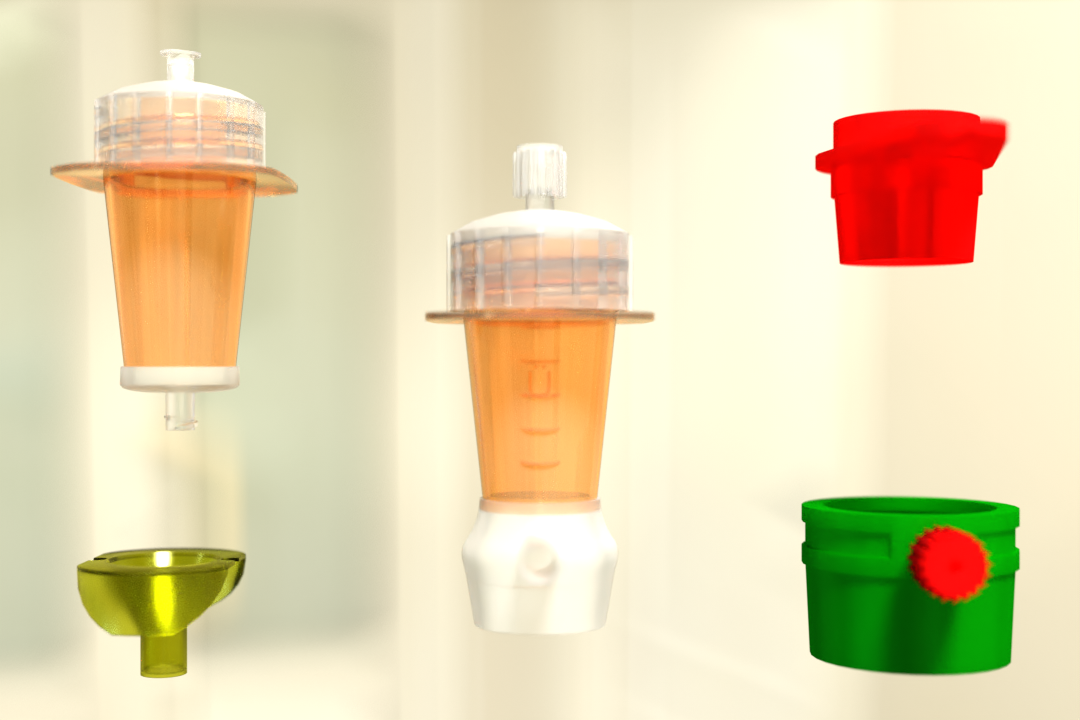
- Pipette-Strainer-T fits standard 1–5 mL pipette tips, making it ideal for highly controlled, low-volume workflows such as primary cell handling or rare sample preparation.
- Pipette-Strainer-S is designed for 1–10 mL serological pipettes, supporting slightly larger volumes while maintaining the same level of precision and control.
This flexibility allows laboratories to choose the version that best matches their routine work without changing technique.
Elastomer Design and High-Friction Control
A key feature of the Pipette-Strainer is its perforated elastomer top. This creates an airtight, high-friction seal around the pipette, preventing slipping during use. The secure fit allows users to pause, reverse flow, or proceed step by step without losing alignment or control, an important advantage when working with valuable samples.
Compatibility with Existing Tools
Because the Pipette-Strainer works with standard pipettes, it integrates seamlessly into existing lab setups. No new equipment, accessories, or training are needed. By transforming filtration into an active, controlled process, it removes one of the most common bottlenecks in small-volume sample preparation.
Step-by-Step: Preparing Single-Cell Suspensions Using Pipette-Strainer
The Pipette-Strainer fits naturally into standard cell culture workflows and can be applied wherever small-volume filtration is required. Its pipette-based design allows researchers to introduce filtration exactly where it adds the most value, without restructuring existing protocols.
When to Use the Pipette-Strainer
The device is especially useful at points where clumps or debris interfere with downstream work. Common use cases include filtering cells immediately after enzymatic or mechanical dissociation of adherent cultures, when cell clusters are most likely to be present. It is also effective before flow cytometry or sorting, where aggregates can clog instruments or distort data. Many labs use the Pipette-Strainer prior to cell counting or viability measurements to ensure accurate results, as well as during preparation for enrichment, stimulation, or functional assays where uniform single-cell input is critical.
Direct Pipette-Based Filtration
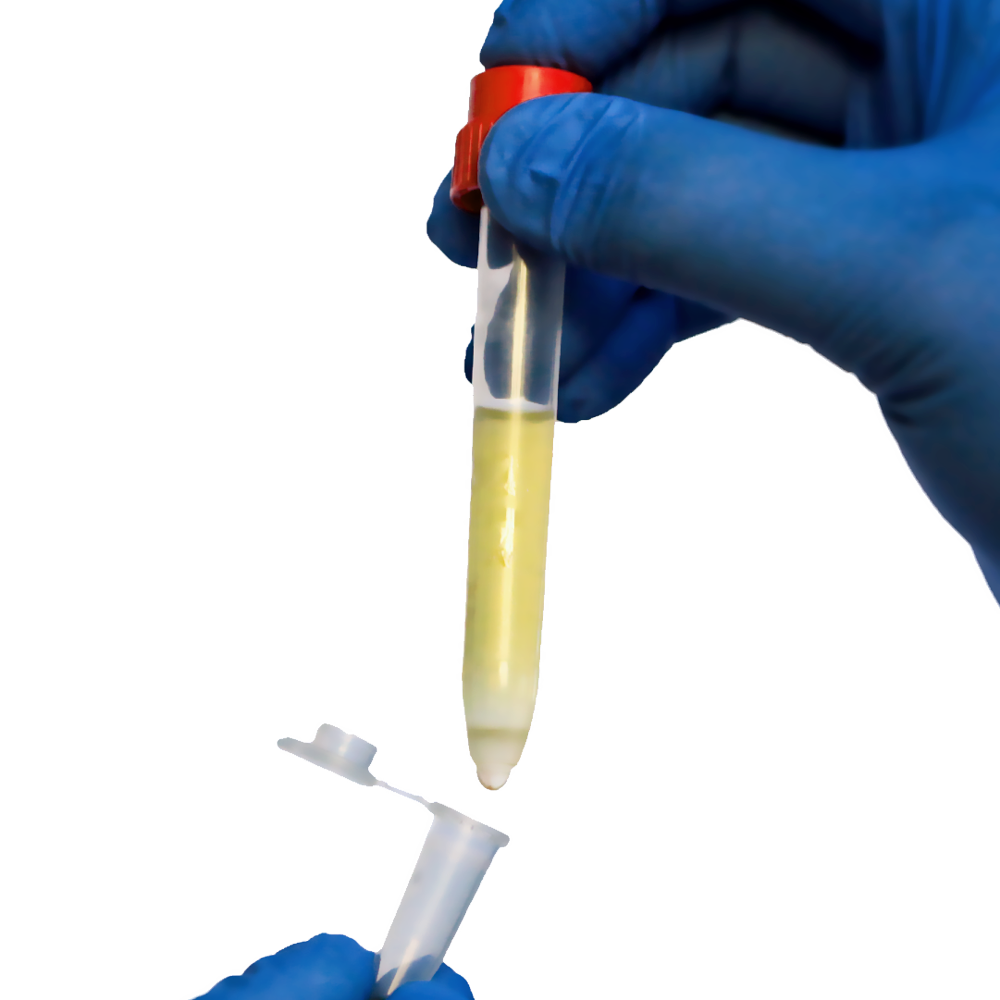
With the Pipette-Strainer, filtration happens directly during pipetting. Cells are aspirated through the strainer and dispensed into the receiving tube in one controlled motion. There is no need to pour samples, balance strainers on tubes, or perform additional transfers. This direct approach minimizes air exposure, reduces the number of open handling steps, and helps maintain consistent sample volumes throughout the process.
Reducing or Eliminating Centrifugation
For many small-volume applications, the Pipette-Strainer can replace centrifugation entirely. Instead of spinning cells to clarify suspensions or remove debris, gentle pipette-guided filtration achieves the same goal in less time. Eliminating centrifugation reduces mechanical stress, prevents uneven pellet formation, and avoids the need for repeated resuspension steps.
Handling Dense or Clump-Prone Suspensions
Dense cultures or clump-prone samples benefit from the controlled flow of the Pipette-Strainer. Users can apply gradual pressure, pause if resistance increases, or reverse flow to release partially retained material. This level of control makes single-cell preparation faster, cleaner, and more reproducible across samples and operators.
Benefits of Using Pipette-Strainer for Cell Culture Applications
Improved Cell Recovery and Viability
Cell loss during preparation is one of the most common hidden costs in cell culture workflows. The Pipette-Strainer minimizes this loss by eliminating unnecessary transfers and harsh centrifugation steps. Gentle, pipette-controlled filtration reduces shear stress and prevents cells from sticking to tube walls or compacting into pellets. As a result, more viable cells are recovered in a usable form, directly improving downstream assay performance and experimental reliability.
Reduced Handling and Contamination Risk
Every additional handling step increases the risk of contamination and variability. Traditional cell strainer setups often involve open meshes, repositioning strainers, and pouring samples between containers. The Pipette-Strainer streamlines this process into a semi-enclosed, pipette-based workflow. By keeping the sample contained and reducing exposure to the environment, it supports cleaner, more controlled cell culture preparation, especially critical for sterile workflows and sensitive cell types.
Faster Processing of Multiple Samples
Time efficiency matters in busy laboratories. The Pipette-Strainer allows immediate filtration during aspiration or dispensing, removing the need for centrifugation, waiting times, and resuspension steps. This significantly shortens preparation time per sample. When processing multiple cultures or experimental replicates, these time savings scale quickly, allowing teams to handle higher throughput without increasing workload or complexity.
Consistency and Reproducibility
Reproducible results depend on consistent sample preparation. Variability introduced by different centrifuge settings, pouring techniques, or operator habits can affect experimental outcomes. The Pipette-Strainer standardizes filtration by placing control directly in the pipetting step. This reduces operator-dependent differences and delivers more uniform results across samples, experiments, and users, an essential advantage for routine assays and comparative studies.
Flexibility Across Cell Types
The Pipette-Strainer is designed to support a wide range of cell culture applications. It performs reliably with robust cell lines as well as sensitive primary cells, stem cells, and immune cells that are easily damaged by force-based methods. Its compatibility with small volumes makes it especially valuable for precious or limited samples, giving laboratories a single, versatile solution for diverse cell culture workflows.
Conclusion: Why Pipette-Strainer Is a Practical Upgrade for Single-Cell Preparation
Preparing single-cell suspensions from cell culture is a foundational step that influences every downstream application. Traditional methods, while familiar, are often poorly suited to the realities of small-volume work, sensitive cells, and high-throughput demands. Excessive handling, reliance on centrifugation, and inefficient filtration introduce stress, loss, and variability that compromise results.
The Pipette-Strainer offers a clear alternative. By integrating filtration directly into pipetting steps, it replaces force-based and transfer-heavy workflows with a controlled, gentle approach. Its two-way filtration design, high-friction elastomer control, and compatibility with both standard and serological pipettes make it easy to adopt without changing existing protocols.
For laboratories preparing single-cell suspensions routinely, the Pipette-Strainer is more than a convenience. It is a practical improvement that saves time, protects cell quality, and improves reproducibility. By simplifying one of the most common yet critical preparation steps, it allows researchers to focus less on troubleshooting sample prep and more on generating reliable, meaningful data.
In modern cell culture workflows, where precision and efficiency matter more than ever, the Pipette-Strainer stands out as a smart, workflow-aligned solution for single-cell suspension preparation.
 English
 French
 German
 Spanish
 Belgium
 Italian
 Brazil
 Chinese Mandarin