Filtration is one of the most common steps in laboratory workflows, but not all samples behave the same. While standard filtration methods work well for simple, low-density liquids, they often struggle when faced with viscous or particle-rich samples. Whether it’s environmental water, soil extracts, protein-rich solutions, or industrial suspensions, these complex samples can quickly turn filtration into a slow, frustrating process.
Researchers working with such samples frequently encounter issues like clogged filters, inconsistent flow, and extended processing times. In many cases, filtration becomes a bottleneck that delays experiments and reduces overall efficiency. Traditional filtration tools, especially those designed for small volumes or low particle loads, are simply not equipped to handle these challenges.
As laboratory applications expand into areas like microplastic analysis, environmental monitoring, and agricultural sciences, the need for robust, scalable filtration solutions continues to grow. Handling large volumes, often ranging from hundreds of milliliters to several liters, requires tools that go beyond basic design.
This is where the pluriStrainer Maxi (Bottle-Top Strainer) stands out. Designed specifically for large-volume and complex sample filtration, it combines flexibility, scalability, and performance into a single system. With features such as low-pressure compatibility, stackable mesh options, and self-refilling capability, it transforms filtration from a limiting step into a controlled and efficient process.
In this article, we explore the challenges of filtering viscous and particle-rich samples, the limitations of traditional methods, and how pluriStrainer Maxi provides a smarter, more reliable solution.
What Makes a Sample Difficult to Filter?
Not all samples are created equal. Some pass through filters easily, while others resist flow, clog quickly, and require repeated intervention. Understanding what makes a sample difficult to filter is the first step toward improving filtration performance and selecting the right tools. In most real-world scenarios, filtration challenges arise from a combination of physical properties rather than a single factor.
High Viscosity
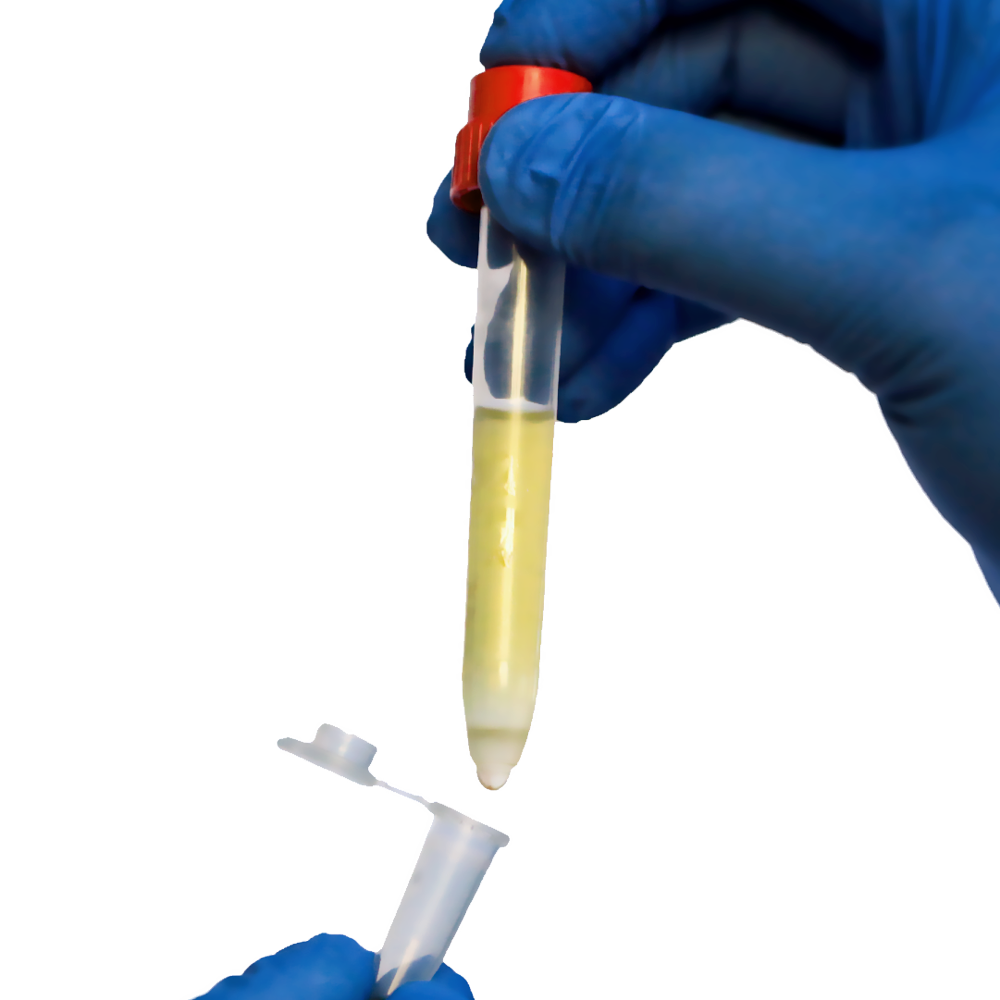
Viscous samples, such as protein-rich solutions, polymer mixtures, gels, or sludge-like materials, move more slowly through filtration meshes. Their thickness creates higher resistance to flow, meaning more force is required to push the liquid through the pores. As flow slows down, particles spend more time in contact with the mesh surface, increasing the likelihood of adhesion and clog formation. In extreme cases, filtration may nearly stop without external assistance such as pressure.
High Particle Load
Samples with a high concentration of particles, such as environmental water, soil extracts, or dense biological suspensions, can overwhelm filtration systems. Larger particles tend to reach the mesh first and block the pores, while smaller particles accumulate behind them. This layered buildup forms a compact barrier that restricts liquid movement and accelerates clogging.
Mixed Particle Sizes
Many complex samples contain a wide distribution of particle sizes. This creates a cascading filtration challenge: larger debris initiates clogging, while smaller particles fill the remaining gaps. Over time, this results in uneven flow and rapid blockage, even if the chosen mesh size is technically appropriate.
Large Sample Volumes
When working with volumes greater than 100 ml and often extending to several liters, filtration becomes a sustained process rather than a quick step. Standard tools struggle to maintain consistent flow over time, especially as clogging progresses. Larger volumes also increase the total particle load, compounding all other challenges.
These factors often occur together, making filtration not just difficult, but unpredictable without the right system in place.
Common Filtration Problems with Viscous and Particulate Samples
When dealing with complex samples, several common problems arise during filtration. These issues are often interconnected, meaning that once one problem begins, it can quickly trigger others, leading to inefficient workflows and inconsistent results.
Slow or Stalled Filtration
Viscous liquids naturally move more slowly through filtration meshes due to their resistance to flow. As particles begin to accumulate on the mesh surface, this resistance increases further, significantly reducing the filtration rate. In challenging samples, the process can slow to a near standstill, requiring external intervention to continue.
Rapid Clogging
Filters exposed to high particle loads can clog within minutes. Larger particles block the pores first, while smaller particles pack tightly behind them, forming a dense layer. Once clogging reaches a critical point, liquid can no longer pass through efficiently, and restoring flow becomes difficult without replacing the filter.
Uneven Flow Distribution
In many filtration setups, liquid does not pass evenly across the entire mesh surface. Instead, certain areas experience higher flow rates, leading to localized clogging. Meanwhile, other areas remain underutilized. This uneven distribution reduces overall efficiency and shortens the usable life of the filter.
Frequent Interruptions
As clogging progresses, researchers often need to pause filtration to clear blockages, adjust the setup, or replace filters. These interruptions disrupt workflow continuity and increase total processing time.
Sample Loss and Reprocessing
When filters clog or fail, samples may need to be transferred, diluted, or filtered again. Each additional step increases the risk of sample loss, contamination, and variability between runs.
Together, these challenges not only slow down workflows but also reduce reproducibility, making it harder to achieve consistent and reliable results.
Limitations of Traditional Filtration Methods
Traditional filtration methods are often not designed for complex or large-volume samples.
Gravity-Based Limitations
Most conventional strainers rely on gravity alone. This provides limited force, especially for viscous liquids, resulting in slow filtration.
No Pressure Control
Without the ability to apply controlled pressure, researchers cannot adjust flow conditions to match the sample.
Limited Scalability
Standard strainers are typically designed for small volumes. Scaling up requires multiple devices or repeated processing steps.
High Manual Intervention
Frequent handling, pouring, and filter replacement increase labor and introduce variability.
Inefficient Use of Filtration Surface
Poor flow distribution leads to uneven clogging, reducing overall efficiency.
These limitations make traditional methods unsuitable for modern, high-demand laboratory workflows.
Introducing pluriStrainer Maxi (Bottle-Top Strainer)
The pluriStrainer Maxi is designed specifically to handle large volumes and complex samples.
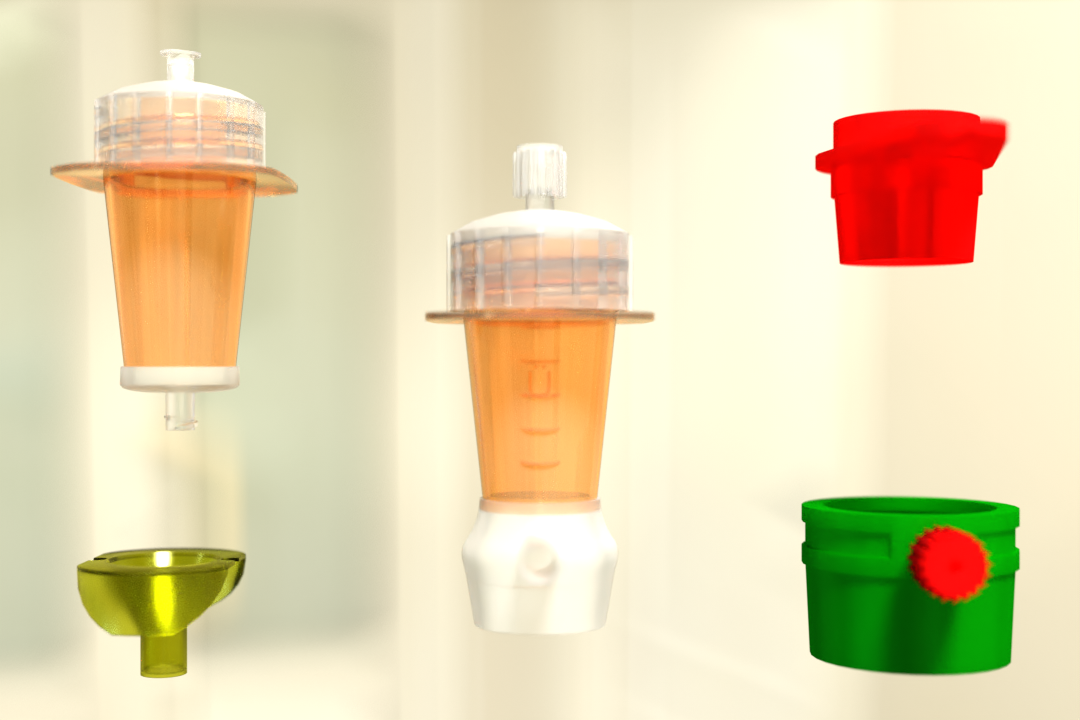
It functions as a bottle-top strainer, allowing it to be mounted directly onto laboratory bottles.
Key design features include:
- Compatibility with GL45 bottles and adapters for GL32 and GL80
- Support for sample volumes from >100 ml to over 10 liters
- Availability in 13 mesh sizes (5 µm to 2000 µm)
- Stackable configuration for multi-step filtration
This design allows pluriStrainer Maxi to adapt to a wide range of applications and sample types.
Key Features That Improve Filtration Performance
pluriStrainer Maxi incorporates several features that directly address the challenges of filtering viscous and particle-rich samples. Instead of relying on a single filtration mechanism, it combines multiple design elements to improve flow control, scalability, and overall efficiency.
Built-in Ports for Low-Pressure Systems
These ports allow the connection of a low-pressure source, enabling filtration that goes beyond gravity-based flow. By applying controlled pressure, users can maintain a steady and consistent flow rate even with viscous samples. This reduces filtration time and helps prevent stalling without exposing samples to excessive force.
Self-Refilling Capability
pluriStrainer Maxi supports continuous sample addition during filtration. Instead of stopping the process to refill the device, users can add more liquid as filtration progresses. This feature is especially valuable for large-volume workflows, as it minimizes interruptions and maintains consistent processing conditions.
Stackable Mesh Design
Multiple strainers with different mesh sizes can be stacked together to create a stepwise filtration system. Larger particles are removed first, followed by smaller ones in subsequent layers. This staged approach prevents premature clogging of fine meshes and improves overall filtration efficiency.
Funnel Compatibility
The system can be combined with a funnel to hold larger sample volumes. This reduces the need for repeated pouring and helps maintain a steady input flow. It also simplifies handling when working with liters of liquid.
Wide Mesh Size Range
With mesh sizes ranging from 5 µm to 2000 µm, pluriStrainer Maxi supports both fine filtration and coarse separation. This flexibility allows users to tailor the filtration setup to different sample types and applications.
Together, these features create a more flexible, scalable, and efficient filtration system that adapts to complex laboratory needs.
How pluriStrainer Maxi Handles Viscous Samples Efficiently
Viscous samples are particularly challenging because they resist flow.
pluriStrainer Maxi addresses this through controlled low-pressure filtration.
Instead of relying solely on gravity, researchers can apply gentle pressure to assist liquid movement. This reduces resistance and maintains a steady flow.
The system also distributes liquid more evenly across the mesh surface, preventing localized clogging.
Because flow is controlled, filtration can proceed without sudden interruptions or excessive force.
This approach ensures:
- Faster processing times
- Reduced clogging
- Improved consistency
Managing High Particle Loads Without Clogging
High particle loads are a major cause of filtration failure.
pluriStrainer Maxi addresses this using a multi-layer filtration approach.
By stacking strainers with different mesh sizes:
- Large particles are removed first
- Smaller particles are filtered in later stages
This prevents large debris from overwhelming finer meshes.
The result is:
- Reduced clogging
- Improved filtration efficiency
- Better separation of particle fractions
This approach is especially useful for environmental and industrial samples.
Applications Where pluriStrainer Maxi Excels
pluriStrainer Maxi is suitable for a wide range of applications, particularly in workflows that involve large volumes, complex matrices, or high particle loads. Its flexible design and scalable filtration capabilities make it a reliable tool across multiple scientific and industrial fields.
Environmental Analysis
pluriStrainer Maxi is highly effective for processing environmental samples such as surface water, wastewater, and sediment-containing liquids. These samples often include organic matter, suspended solids, and microplastics. The system enables efficient separation of these components while maintaining consistent flow, even with challenging sample compositions.
Water Quality Testing
In water testing workflows, large volumes often need to be filtered to detect contaminants present at low concentrations. pluriStrainer Maxi allows continuous filtration of these volumes without frequent interruptions, improving both efficiency and accuracy in contamination analysis.
Agricultural Sciences
Soil extracts and plant-derived suspensions can be dense and heterogeneous, containing particles of varying sizes. pluriStrainer Maxi supports effective separation of these materials, making it easier to analyze nutrients, microorganisms, or particulate content in agricultural research.
Microplastic Analysis
The wide range of available mesh sizes makes pluriStrainer Maxi particularly valuable for microplastic studies. Researchers can separate particles into defined size fractions, enabling detailed characterization and analysis of environmental pollutants.
Industrial Applications
In industrial and manufacturing environments, filtration often involves complex mixtures with high viscosity or particle content. pluriStrainer Maxi provides a robust solution for processing these materials efficiently, supporting both research and production workflows.
Its versatility, scalability, and performance make pluriStrainer Maxi a valuable tool across diverse applications where reliable filtration is essential.
Scaling Filtration from Milliliters to Liters
One of the biggest advantages of pluriStrainer Maxi is its scalability.
Unlike traditional strainers, it can handle:
- Large volumes continuously
- Multiple liters without interruption
The self-refilling design allows researchers to add samples without stopping filtration. This reduces downtime and improves workflow efficiency. Scaling up no longer requires multiple devices or repeated steps.
pluriStrainer Maxi vs Traditional Filtration Systems
A comparison highlights the differences clearly.
Traditional Systems:
- Gravity-dependent
- Prone to clogging
- Limited to small volumes
- High manual handling
pluriStrainer Maxi:
- Pressure-assisted filtration
- Reduced clogging
- Scalable to large volumes
- Continuous operation
The result is a more reliable and efficient filtration process.
Conclusion
Filtration of viscous or particle-rich samples presents unique challenges that traditional methods often fail to address effectively. Slow flow rates, rapid clogging, uneven filtration, and constant manual intervention can quickly turn what should be a routine step into a major bottleneck. These inefficiencies not only delay workflows but also increase variability, reduce reproducibility, and risk sample loss, especially when working with large volumes or complex matrices.
pluriStrainer Maxi offers a solution purpose-built for these demanding conditions. By combining pressure-assisted filtration, stackable mesh configurations, and compatibility with large-volume processing, it transforms filtration from a reactive, trial-and-error step into a controlled and predictable process. Features such as self-refilling capability and funnel integration further streamline workflows, allowing continuous operation with minimal interruption.
What sets pluriStrainer Maxi apart is its ability to adapt to real-world samples, those that are viscous, heterogeneous, and high in particle load, without compromising efficiency or consistency. Whether used in environmental analysis, industrial processing, or advanced research applications, it delivers reliable performance where conventional tools fall short.
As laboratory workflows continue to evolve toward higher throughput and greater precision, having the right filtration system becomes essential. pluriStrainer Maxi ensures that filtration keeps pace with these demands, enabling faster processing, cleaner separations, and more dependable results across a wide range of applications.
 English
 French
 German
 Spanish
 Belgium
 Italian
 Brazil
 Chinese Mandarin