Density gradient centrifugation remains one of the most widely used techniques for isolating leukocytes and peripheral blood mononuclear cells (PBMCs) from whole blood and bone marrow. Despite its long-standing use, one step in this process continues to introduce unnecessary complexity and variability, manual overlaying of whole blood onto the density gradient medium.
At first glance, overlaying appears simple: carefully layer blood over a separation medium and centrifuge. In practice, however, this step requires precision, steady hands, and consistent technique. Even small errors during layering can disrupt the gradient, leading to poor separation, reduced yield, and inconsistent results.
As laboratory workflows evolve toward higher throughput, reproducibility, and efficiency, reliance on manual overlaying has become a limitation. Laboratories handling multiple samples, varying sample qualities, or time-sensitive workflows often struggle with the variability introduced at this stage. This is where pluriMate® offers a fundamentally improved approach. By eliminating the need for manual overlaying altogether, it transforms a fragile, technique-dependent step into a simple, controlled, and reproducible workflow.
What Is Overlaying Whole Blood in Cell Separation?
Overlaying whole blood is a key step in traditional density gradient centrifugation. The goal is to carefully layer anticoagulated blood on top of a density medium without mixing the two.
The process typically involves:
- Slowly pipetting blood along the side of a centrifuge tube
- Maintaining a clear boundary between blood and medium
- Avoiding turbulence or mixing during layering
This separation is critical because density gradient centrifugation relies on the formation of distinct layers during spinning. Cells separate based on density:
- Plasma remains at the top
- PBMCs form an interphase layer
- Granulocytes and erythrocytes settle at the bottom
If the initial layering is disrupted, the gradient cannot form properly.
In theory, overlaying is straightforward. In reality, it is highly sensitive to technique.
Common Errors Caused by Manual Overlaying
Manual overlaying introduces several common errors that directly impact separation quality. Because the process depends heavily on technique and precision, even small deviations can lead to significant issues during centrifugation and downstream analysis.
Mixing of Blood and Density Medium
If blood is added too quickly, dropped from a height, or pipetted at an incorrect angle, it can mix with the density gradient medium instead of forming a distinct layer. Once this mixing occurs, the gradient is disrupted before centrifugation even begins, making proper cell separation difficult or impossible.
Disturbed Gradient Formation
Even minor turbulence during overlaying can blur the boundary between the blood and the separation medium. This disturbance prevents the formation of clear, defined layers during centrifugation, leading to poor separation and difficulty in identifying the PBMC interphase.
Operator-Dependent Variability
Manual overlaying relies on individual technique. Experienced operators may achieve consistent results, while less experienced users may struggle. This variability means that the same protocol can produce different outcomes depending on who performs the step.
Inconsistent Sample Handling
Differences in pipetting speed, positioning, and handling techniques introduce inconsistencies between samples. These variations become more pronounced when processing multiple samples, affecting reproducibility across experiments.
Increased Contamination Risk
Improper layering can allow unwanted cells, such as granulocytes or erythrocytes, to enter the PBMC layer. This reduces purity and can interfere with downstream applications like flow cytometry or cell culture.
These errors are not occasional, they are inherent to manual overlaying and difficult to eliminate completely.
How Overlaying Affects Cell Yield, Purity, and Reproducibility
The consequences of overlaying errors extend far beyond a single step in the protocol, often affecting the overall quality and reliability of cell isolation workflows. When the density gradient is disturbed during manual layering, target cells such as PBMCs may not separate correctly. Instead of forming a clean interphase, they can disperse into adjacent layers, leading to reduced cell yield and lower recovery rates.
At the same time, improper layering allows unwanted cells, such as granulocytes or erythrocytes to mix into the PBMC fraction. This results in lower purity of the isolated cells, which can interfere with downstream applications and compromise experimental accuracy. Even small inconsistencies in overlaying technique can have a significant impact, leading to compromised reproducibility across experiments. Two samples processed using the same protocol may produce different results simply due to variations in handling.
Poor-quality isolation directly affects downstream applications, including flow cytometry, cell culture, functional assays, and molecular analysis, where sample purity and consistency are critical. In workflows involving multiple samples, these inconsistencies become more pronounced, leading to greater variability and making reliable comparisons difficult. Ultimately, manual overlaying introduces uncertainty into a process that should ideally be controlled, standardized, and reproducible.
Why Overlaying Becomes a Bottleneck in Modern Laboratories
Modern laboratories demand workflows that are:
- Fast
- Scalable
- Reproducible
- Easy to standardize
Manual overlaying conflicts with all of these requirements, making it increasingly unsuitable for high-efficiency laboratory environments.
Time-Consuming Process
Careful layering must be performed slowly to avoid disturbing the density gradient. When handling multiple samples, this step significantly increases preparation time and slows down the overall workflow.
Requires Skilled Handling
Overlaying is technique-sensitive and depends on operator experience. New or less experienced staff may find it difficult to achieve consistent layering, leading to variability in results.
High Risk of Human Error
Each manual action, pipetting, angling, and controlling flow introduces the possibility of mistakes. Even minor errors can disrupt the gradient and affect the entire separation process.
Difficult to Scale
Processing a few samples manually may be manageable, but scaling up to larger batches becomes inefficient. Variability increases as more samples are handled, making consistency harder to maintain.
Limits Automation
Because overlaying requires precise manual control, it is difficult to integrate into automated workflows. This limits the ability of laboratories to streamline and standardize their processes.
As a result, overlaying becomes a bottleneck in otherwise streamlined workflows, restricting efficiency, consistency, and scalability.
Introducing pluriMate®: A Structural Solution to Overlaying Problems
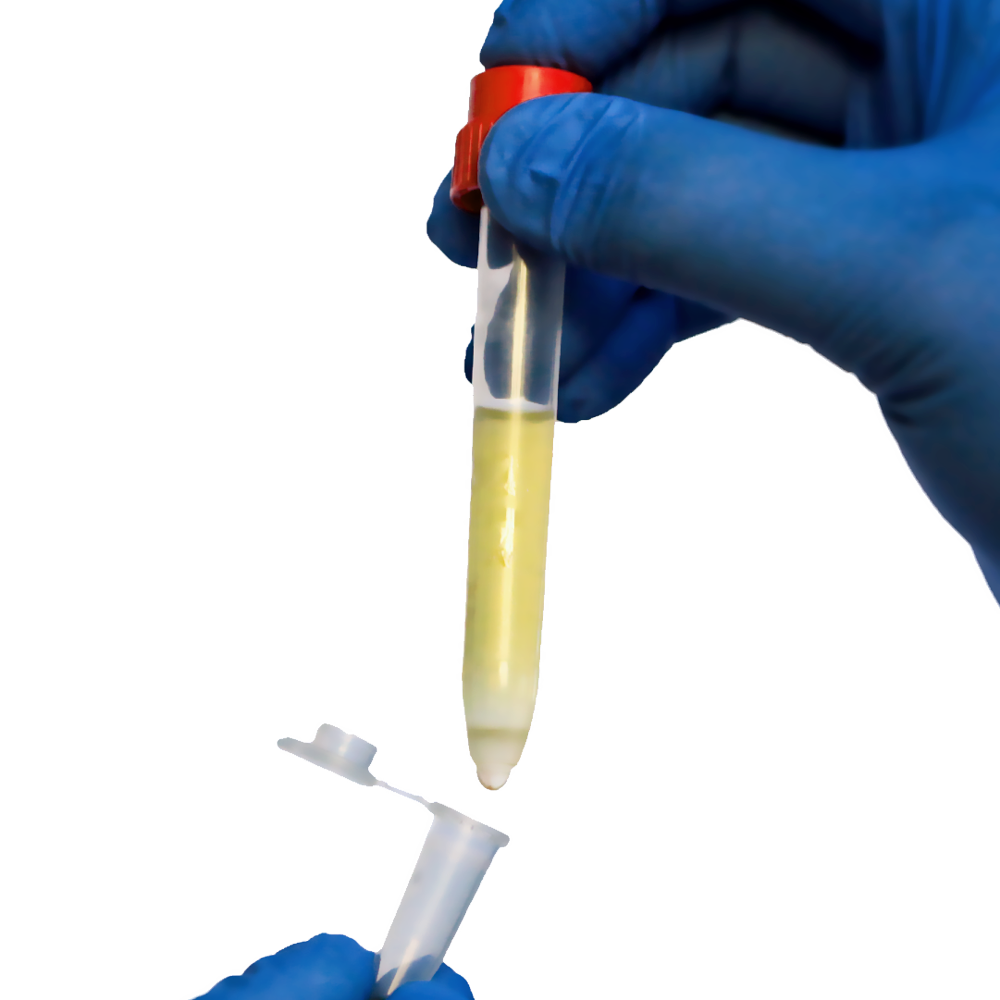
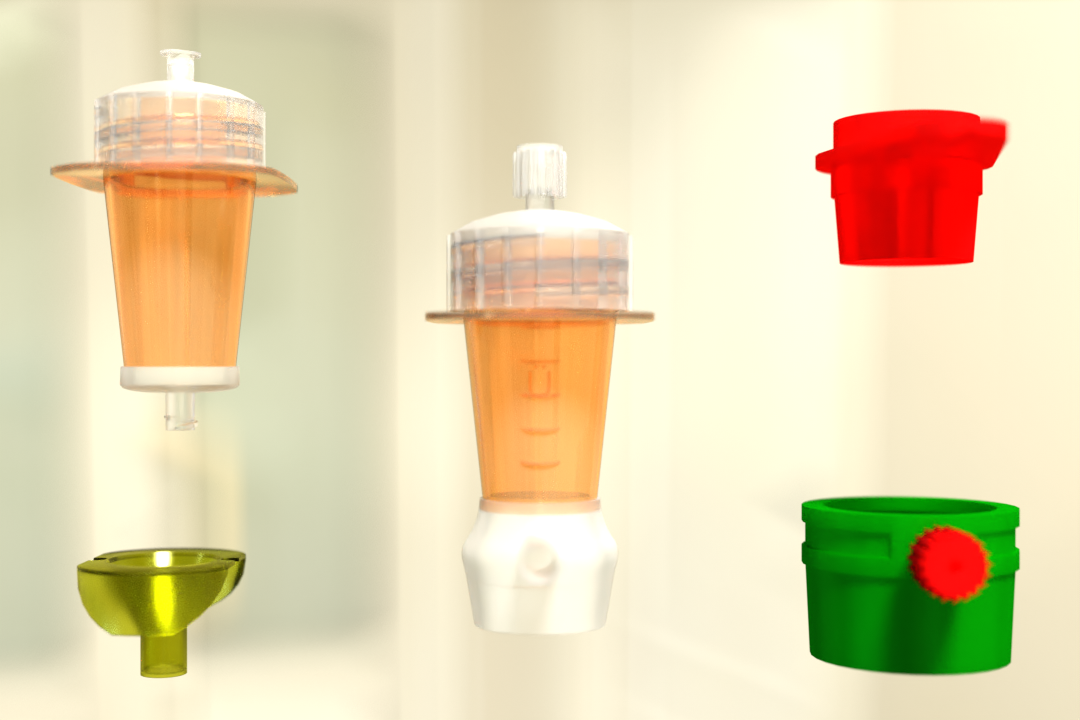
pluriMate® was designed specifically to eliminate the challenges associated with manual overlaying. At the core of its design is a porous sponge barrier made from high-grade polyurethane, positioned at the bottom of the centrifuge tube. This sponge acts as a physical separator between the sample and the density gradient medium.
Key design features include:
- Direct loading of whole blood or bone marrow
- No need for manual layering
- Compatibility with density media such as Leuko Spin and Lympho Spin
- Support for both small and large sample volumes
Instead of relying on technique, pluriMate® relies on structure.
How pluriMate® Eliminates Overlaying Errors
pluriMate® removes the need for overlaying entirely by replacing a technique-dependent step with a structurally controlled process.
Direct Sample Loading
Blood or bone marrow can be poured directly into the tube without careful layering. This eliminates the need for slow pipetting and reduces dependence on operator skill, making the process faster and more consistent.
Sponge Barrier Separation
The built-in porous sponge acts as a physical barrier that keeps the sample and density gradient medium separated before centrifugation. This ensures that the two phases remain distinct without requiring manual precision.
Stable Gradient Formation
During centrifugation, the density gradient forms naturally under controlled conditions. Because there is no disturbance from manual overlaying, the separation process is more reliable and consistent.
Protection Against Mixing
The sponge barrier prevents premature mixing of the sample with the separation medium. This maintains the integrity of the gradient and supports efficient cell separation.
Clean Interphase Formation
Leukocytes and PBMCs accumulate at a clearly defined interface above the density medium. This makes it easier to identify and collect the target cell layer.
Prevention of Recontamination
After centrifugation, the barrier helps prevent unwanted cells, such as erythrocytes and granulocytes, from re-entering the enriched fraction during collection.
This approach replaces manual precision with built-in reliability, ensuring more consistent and reproducible results across samples.
Workflow Advantages of pluriMate®
pluriMate® simplifies the entire workflow in several ways, transforming a traditionally delicate step into a more efficient and standardized process.
Reduced Hands-On Time
By eliminating the need for manual overlaying, sample preparation becomes significantly faster. Researchers no longer need to spend time carefully layering blood, allowing them to move quickly to centrifugation and downstream steps.
Fewer Handling Steps
Direct sample loading reduces the number of pipetting and transfer steps required. Fewer interactions with the sample not only save time but also reduce the risk of sample loss and contamination.
Improved Consistency
Because pluriMate® removes technique-sensitive steps, results become less dependent on operator skill. This ensures that different users can achieve similar outcomes using the same protocol.
Enhanced Reproducibility
Standardized separation conditions lead to more consistent results across experiments. This is especially important in studies where reliable comparisons between samples are critical.
Scalable Workflow
Multiple samples can be processed simultaneously without increasing complexity. This makes pluriMate® well-suited for high-throughput workflows and larger experimental batches.
Compatible with Existing Protocols
pluriMate® integrates easily into current laboratory procedures. There is no need to redesign workflows or invest in additional equipment, making adoption simple and cost-effective.
By simplifying one critical step, pluriMate® improves the efficiency, reliability, and scalability of the entire cell separation process.
Applications in Leukocyte and PBMC Isolation
pluriMate® supports a wide range of applications in cell separation workflows, making it a versatile tool for laboratories working with different sample types and research goals.
Whole Blood Processing
pluriMate® enables efficient isolation of PBMCs and leukocytes directly from whole blood without the need for pre-treatment steps such as manual overlaying or complex preparation. This simplifies the workflow while maintaining high separation quality.
Bone Marrow Samples
Bone marrow is a complex and dense sample type that can be difficult to process using traditional methods. pluriMate® provides reliable separation of target cells from unwanted components, improving consistency even with challenging samples.
PBMC Enrichment
The system supports high-quality PBMC isolation, producing a clean and well-defined interphase. This is particularly valuable for research applications where cell purity and viability are critical.
Clinical and Research Laboratories
pluriMate® is suitable for both routine laboratory workflows and advanced research studies. Its ease of use and reproducibility make it ideal for environments where consistent results are essential.
Downstream Applications
Cells isolated with pluriMate® can be used for a wide range of applications, including:
- Flow cytometry, where clean suspensions improve data accuracy
- Cell culture, where viable and uncontaminated cells are essential
- Functional assays, requiring intact and responsive cells
- Immunological studies, where purity and consistency are critical
Its flexibility makes pluriMate® a valuable tool across different laboratory settings, supporting both basic research and applied workflows.
Comparing Traditional Overlay vs pluriMate® Workflow
A direct comparison highlights the advantages of pluriMate®.
Traditional Overlay Workflow:
- Manual layering required
- High dependence on operator skill
- Risk of mixing and gradient disruption
- Multiple handling steps
- Variable results
pluriMate® Workflow:
- No overlaying required
- Direct sample loading
- Controlled separation via sponge barrier
- Fewer steps
- Consistent and reproducible results
The difference is not just incremental—it is structural.
Conclusion
Overlaying whole blood onto density gradient media has long been a standard step in cell separation workflows. However, it is also one of the most error-prone and variable parts of the process. Small inconsistencies in technique can lead to disrupted gradients, reduced cell yield, and compromised purity. In modern laboratory environments where efficiency and reproducibility are essential, relying on manual overlaying is no longer ideal.
pluriMate® provides a clear and practical solution. By replacing manual layering with a structural barrier, it removes the need for precision-dependent handling while preserving the integrity of the density gradient. The result is a workflow that is simpler, faster, and more reliable.
For laboratories seeking to improve consistency, reduce errors, and streamline PBMC or leukocyte isolation, pluriMate® transforms a fragile step into a controlled process. It allows researchers to focus less on technique and more on results—delivering cleaner separations with greater confidence and efficiency.
 English
 French
 German
 Spanish
 Belgium
 Italian
 Brazil
 Chinese Mandarin