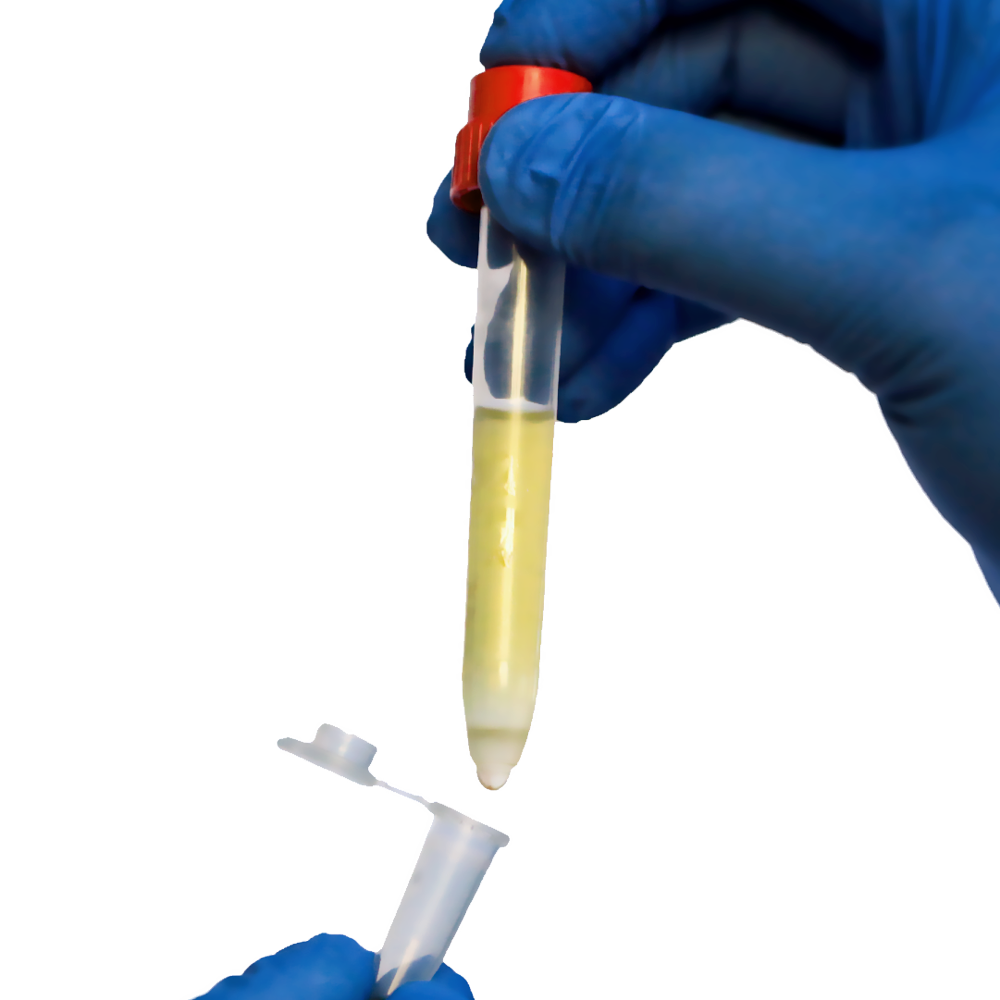
Small-volume sample processing plays an important role in many laboratory workflows. Whether preparing cell suspensions for flow cytometry, removing particles from biological samples, or concentrating specific components for downstream analysis, researchers frequently work with sample volumes that leave little room for error.
Unlike large-volume workflows, small-volume processing presents unique challenges. Even minor sample loss can significantly affect recovery, while additional handling steps increase the risk of contamination and variability. Researchers must balance filtration efficiency with sample preservation, especially when working with limited or valuable materials.
Traditional filtration methods are often not optimized for these requirements. Fine mesh filtration can be slow, dense suspensions can be difficult to process, and some workflows require centrifugation simply to move samples through the filter. To address these challenges, two-way filtration offers a more flexible approach. The Pipette-Strainer was developed specifically for small-volume applications, allowing researchers to control filtration through pipetting while reducing processing time and simplifying sample handling.
This article explores how two-way filtration works and why it is becoming an increasingly valuable tool in modern laboratory workflows.
The Challenges of Filtering Small Volumes
Although filtration is a routine laboratory procedure, small-volume filtration presents several unique obstacles.
Sample Loss During Processing
When sample volumes are limited, even small losses become significant.
Material may be lost through:
- Transfers between containers
- Retention within filtration devices
- Residual liquid remaining in tubing or pipettes
These losses can reduce recovery and affect downstream analysis.
Difficulties Handling Dense Suspensions
Many biological samples contain high concentrations of cells, particles, or debris.
Dense suspensions often:
- Move slowly through filters
- Increase filtration resistance
- Require additional processing time
This can make filtration less efficient and more difficult to control.
Slow Filtration with Fine Mesh Sizes
Fine filtration meshes are often necessary when removing small particles or preparing clean cell suspensions.
However, smaller mesh sizes typically result in:
- Reduced flow rates
- Longer processing times
- Greater risk of clogging
Researchers may need additional tools or procedures to complete filtration efficiently.
Multiple Transfer Steps
Traditional workflows frequently involve:
- Transferring samples into filtration devices
- Collecting filtered material in separate containers
- Repeating transfers for further processing
Each transfer increases handling complexity and introduces opportunities for sample loss.
Increased Risk of Contamination
More handling steps create additional opportunities for contamination.
Repeated transfers may expose samples to:
- Environmental contaminants
- Foreign particles
- Operator-related variability
Workflow Inefficiencies
When filtration becomes slow or requires multiple processing steps, overall workflow efficiency suffers.
Researchers may spend more time preparing samples than performing the analysis itself.
Why Traditional Filtration Methods Often Fall Short
Many filtration devices currently used in laboratories were originally developed for larger-volume applications. While effective in some situations, these systems are not always ideal for micro-scale workflows.
Dependence on Gravity-Based Filtration
Traditional strainers often rely primarily on gravity to move liquid through the mesh.
This approach may work well for:
- Large pores
- Low-density suspensions
However, it becomes less efficient when dealing with fine filtration requirements.
Frequent Need for Centrifugation
When filtration slows significantly, laboratories often resort to centrifugation. While effective, centrifugation introduces additional requirements:
- Extra equipment
- Additional processing steps
- Longer preparation times
Limited Control During Filtration
Many standard filtration systems provide little control over sample movement. Researchers must often wait for samples to pass through naturally rather than actively controlling the process.
Incompatibility with Small-Scale Workflows
Large filtration devices may not integrate well with:
- Small tubes
- Pipette-based workflows
- Limited sample volumes
This creates unnecessary complexity for researchers.
Additional Equipment Requirements
Some filtration procedures require specialized accessories, support structures, or centrifugation systems. These requirements increase both workflow complexity and cost.
What Is Two-Way Filtration?
Two-way filtration is an approach that allows sample material to move through a filtration mesh in a controlled manner using pipetting action. Unlike conventional filtration systems that rely solely on gravity or pressure, two-way filtration enables researchers to actively guide sample movement through the filter.
This provides greater flexibility during processing and allows filtration to be performed directly within existing pipetting workflows.
Key advantages include:
- More controlled sample handling
- Faster filtration of dense suspensions
- Reduced dependence on centrifugation
- Better integration into laboratory workflows
By actively controlling filtration rather than waiting for passive flow, researchers can improve efficiency while maintaining sample quality.
Introducing the Pipette-Strainer
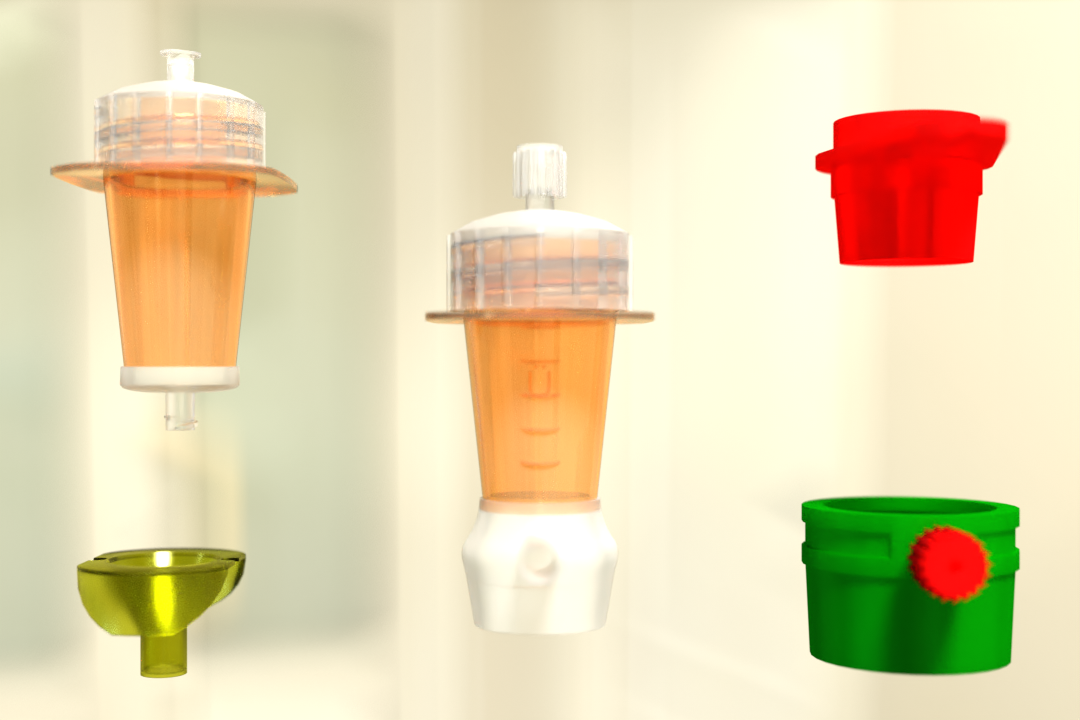
The Pipette-Strainer was specifically designed as a two-way filtration device for small-volume applications, offering researchers greater control over sample preparation without adding complexity to existing workflows. Its unique design combines a filtration mesh with a perforated elastomer top that integrates directly with standard pipetting systems. This allows filtration to be performed through controlled pipetting rather than relying solely on gravity or additional processing equipment. The product is available in two versions to accommodate different laboratory needs:
Pipette-Strainer-T
Designed for use with standard laboratory pipette tips ranging from 1 ml to 5 ml, making it suitable for routine small-volume filtration tasks and precise sample handling.
Pipette-Strainer-S
Designed for use with serological pipettes up to 10 ml, providing additional flexibility for workflows that require slightly larger sample volumes.
Both versions support controlled two-way filtration while remaining compatible with common laboratory equipment. By fitting seamlessly into existing pipetting procedures, the Pipette-Strainer enables researchers to simplify sample preparation, reduce workflow interruptions, and process small-volume samples more efficiently without major procedural changes.
How the Pipette-Strainer Works
The Pipette-Strainer operates differently from traditional filtration devices.
Integration with Standard Pipette Tips
The elastomer opening securely holds standard pipette tips. A specially designed high-friction surface helps create a stable connection between the pipette and the strainer. This improves control during handling.
Filtration Through Controlled Pipetting
Instead of relying solely on gravity, researchers can actively draw or dispense liquid through the filtration mesh. This creates more efficient sample movement.
Two-Way Sample Movement
The ability to move liquid in both directions through the mesh provides greater flexibility when processing challenging suspensions. Researchers can optimize filtration based on the characteristics of the sample.
Step-by-Step Sample Handling
Controlled pipetting enables gradual filtration and more precise handling of sensitive materials.
Improved Control During Processing
Researchers remain actively involved in sample movement rather than waiting for passive filtration. This improves workflow efficiency and reduces processing delays.
How the Pipette-Strainer Reduces Common Filtration Problems
Small-volume filtration often presents challenges that can slow workflows, increase sample loss, and reduce overall efficiency. The Pipette-Strainer addresses many of these issues through its two-way filtration design, allowing researchers to process samples more effectively while maintaining greater control throughout the workflow.
Handling High-Density Suspensions More Efficiently
Dense samples often move slowly through conventional filters because particles and cells accumulate on the filtration surface. This can significantly extend processing times and make filtration more difficult to manage. The two-way filtration design of the Pipette-Strainer helps maintain more effective sample movement through controlled pipetting, reducing delays and allowing researchers to process concentrated suspensions more efficiently.
Improving Filtration Through Fine Mesh Sizes
Smaller mesh openings are often required when removing fine particles or preparing clean cell suspensions. However, fine meshes can create flow restrictions that slow filtration considerably. By allowing controlled movement of liquid through the mesh, the Pipette-Strainer helps overcome these bottlenecks and supports more efficient processing even when working with challenging filtration conditions.
Reducing Sample Transfer Steps
Traditional filtration workflows frequently require samples to be moved between multiple containers. Each transfer adds time and increases handling complexity. Because filtration can occur directly within pipetting workflows, the Pipette-Strainer minimizes unnecessary transfers and streamlines sample preparation.
Lowering Contamination Risk
Every additional handling step introduces opportunities for contamination. By reducing the number of transfers and integrating filtration directly into the sample handling process, the Pipette-Strainer helps create a cleaner and more controlled workflow.
Minimizing Sample Loss
Small-volume samples are particularly vulnerable to loss during processing. Residual liquid left behind during transfers or filtration can significantly impact recovery. The Pipette-Strainer helps preserve valuable material by reducing handling steps and enabling more controlled sample processing from start to finish.
Applications and Advantages of Pipette-Strainer
The Pipette-Strainer is designed to support a wide range of small-volume laboratory workflows while offering practical benefits that simplify sample preparation. Its compatibility with standard pipetting systems allows researchers to integrate filtration directly into existing procedures without introducing additional equipment or complex handling steps.
Flow Cytometry Sample Preparation
Clean single-cell suspensions are essential for accurate flow cytometry analysis. The Pipette-Strainer helps remove aggregates, debris, and unwanted particles before analysis, improving sample quality and reducing the risk of instrument blockage.
Cell Suspension Processing
Researchers can prepare more uniform cell suspensions while maintaining precise control over sample handling. The two-way filtration design supports efficient processing of both routine and challenging suspensions.
Small-Volume Research Samples
When sample availability is limited, preserving every possible cell or particle becomes important. The Pipette-Strainer minimizes unnecessary transfers and helps improve sample recovery throughout the workflow.
Sample Cleanup Before Analysis
Many downstream applications require clean samples free from debris and contaminants. The Pipette-Strainer allows rapid cleanup before molecular analysis, cell-based assays, or other laboratory procedures.
Particle Removal and Concentration Workflows
The system can be used for both removing unwanted particles and concentrating specific sample components. This flexibility makes it useful across a variety of research applications.
Seamless Integration into Laboratory Workflows
The Pipette-Strainer works with commonly used pipette tips and serological pipettes, eliminating the need for specialized filtration equipment. Researchers can adopt the system without modifying established protocols.
Flexible and Reliable Performance
Available in different configurations, the Pipette-Strainer adapts to varying sample volumes and workflow requirements. Its design supports consistent filtration performance across a broad range of sample types.
Optimized for Modern Research Needs
By combining filtration and pipetting into a single workflow, the Pipette-Strainer reduces handling steps, improves efficiency, and simplifies small-volume sample preparation. This makes it a practical solution for laboratories seeking faster and more streamlined workflows without compromising sample quality.
Conclusion
Small-volume sample processing presents unique challenges that traditional filtration methods do not always address effectively. Sample loss, slow filtration, repeated handling, and dependence on centrifugation can all reduce workflow efficiency and complicate sample preparation. Two-way filtration offers a practical alternative by giving researchers greater control over how samples move through the filtration mesh. Instead of relying entirely on gravity, filtration becomes an active and integrated part of the pipetting workflow.
The Pipette-Strainer was developed specifically to support this approach. Its compatibility with standard pipette systems, ability to process small volumes efficiently, and support for controlled two-way filtration help simplify sample preparation while reducing processing time.
As laboratories continue to work with smaller sample volumes and increasingly complex workflows, tools that improve efficiency without sacrificing sample quality will become even more valuable. The Pipette-Strainer provides a simple and effective solution for researchers looking to streamline small-volume filtration and improve overall workflow performance.
 English
 French
 German
 Spanish
 Belgium
 Italian
 Brazil
 Chinese Mandarin