Cell separation is at the heart of countless research and diagnostic workflows. Whether scientists are studying immune responses, developing cell-based therapies, performing molecular analysis, or conducting basic biological research, obtaining the right cell population is critical for producing reliable results. However, successful cell separation is rarely achieved through a single technique. Instead, it involves a series of carefully planned steps that prepare, isolate, enrich, and process cells according to the needs of the experiment.
Each stage of the workflow plays a distinct role. Sample preparation ensures that cells are free from debris and aggregates, filtration improves sample quality, density-based methods separate broad cell populations, and antibody-supported technologies isolate highly specific target cells. As research progresses toward larger studies or production-scale applications, workflows must also become more standardized and scalable.
Rather than viewing these technologies as separate solutions, laboratories benefit from integrating them into one continuous workflow. By selecting the appropriate tools at each stage, researchers can improve cell recovery, maintain viability, reduce variability, and simplify laboratory operations.
This article explores the complete cell separation workflow, highlighting how different technologies contribute from initial sample preparation through large-scale production.
Understanding the Complete Cell Separation Workflow
Every research project begins with a sample, but very few samples are immediately ready for downstream applications. Whole blood, tissue, bone marrow, cultured cells, and environmental samples all contain unwanted materials that must be removed before target cells can be isolated.
A complete cell separation workflow generally includes five key stages:
- Sample preparation
- Size-supported separation
- Gravity-supported separation
- Antibody-supported cell separation
- Scale-up for larger research or production workflows
Each stage builds upon the previous one. Poor sample preparation can reduce the effectiveness of later separation methods, while selecting the right isolation technology helps ensure that purified cells remain suitable for downstream applications such as flow cytometry, cell culture, sequencing, or functional assays.
Rather than replacing one another, these technologies complement each other. Together they create an efficient workflow that supports both routine laboratory research and larger-scale studies.
Step 1: Preparing High-Quality Samples for Cell Separation
The quality of any cell separation workflow depends heavily on the condition of the starting sample. Before target cells can be isolated, researchers must remove debris, tissue fragments, and aggregates while creating a uniform cell suspension. Well-prepared samples reduce processing difficulties and improve the consistency of downstream experiments.
Creating Uniform Cell Suspensions
Many biological samples naturally contain clumps or large particles that interfere with cell isolation. Preparing a single-cell suspension helps ensure that each cell can be processed efficiently during subsequent separation steps.
For laboratories working with small sample volumes, the Mini Strainer provides an effective solution for filtering cell suspensions while minimizing sample loss. It is particularly useful when working with valuable or limited materials where every cell is important.
The Mini-Strainer-Aid further improves small-volume workflows by providing stable pipette support during filtration. This accessory simplifies handling and helps researchers perform delicate filtration procedures more consistently.
Simplifying Small-Volume Sample Processing
Some applications require filtration during pipetting rather than as a separate step. The Pipette-Strainer addresses this need by integrating filtration directly into the pipetting process.
Available for both standard laboratory pipette tips and serological pipettes, it allows researchers to process small sample volumes efficiently while reducing dependence on centrifugation in certain applications. Combining pipetting and filtration into one workflow reduces handling and helps improve laboratory efficiency.
Removing Debris with Fewer Handling Steps
Traditional sample cleanup often involves multiple filtration devices and repeated sample transfers. The SnapCap Strainer simplifies this process by combining the filtration mesh and collection tube into one product.
Available with 40 µm, 70 µm, and 100 µm sterile nylon meshes, the SnapCap Strainer supports efficient debris removal while reducing opportunities for contamination and sample loss. An improved version includes an elastic seal that provides airtight and leakproof performance during sample handling.
Supporting High-Throughput Sample Preparation
Laboratories processing multiple samples simultaneously require preparation systems that support efficient, standardized workflows. The Multi Well Strainer combines size-based filtration with multi-well plate formats, making it suitable for applications involving cell propagation, multicellular organism studies, cytotoxicity testing, and migration assays.
By improving sample quality at the beginning of the workflow, these preparation tools help create a strong foundation for successful cell separation.
Step 2: Size-Supported Separation for Sample Cleanup
Once the initial sample has been prepared, researchers often need more specialized filtration to remove remaining debris, separate particles by size, or process different sample types. Size-supported separation achieves this using filtration meshes or membranes with defined pore sizes.
Because it relies on physical characteristics rather than biological markers, this approach is suitable for a wide variety of samples and applications.
Routine Laboratory Filtration
The pluriStrainer is one of the most versatile filtration tools available for routine laboratory work. Designed to fit standard centrifuge tubes, it is available in multiple mesh sizes that allow researchers to select the appropriate level of filtration for tissue dissociation, sample cleanup, and preparation of single-cell suspensions.
Its simple design makes it suitable for laboratories working with diverse biological materials.
Flexible Filtration Options
Some workflows require greater flexibility than standard strainers can provide. The Uberstrainer offers a modular filtration system with interchangeable mesh sizes, allowing researchers to adapt filtration according to changing sample characteristics.
Similarly, the Syringe-Strainer enables controlled filtration of small liquid volumes directly through syringe-based handling, making it useful for applications requiring precise sample processing.
Continuous Sample Processing
For workflows involving continuous liquid movement, the In-Line-Strainer performs filtration without interrupting sample flow. This reduces handling steps and supports efficient processing in applications where uninterrupted filtration is preferred.
Membrane-Based Filtration
While mesh filters separate particles according to mesh openings, some applications require membrane filtration. The Mini Membrane Strainer uses PET membranes with pore sizes ranging from 1 µm to 8 µm, providing highly controlled filtration for specialized laboratory procedures.
Filtration Under Demanding Conditions
Certain laboratory environments require filtration systems capable of handling solvents, elevated temperatures, or mechanical stress. The reusable Steel Basket-Strainer, manufactured from stainless steel, provides excellent chemical resistance and mechanical stability while supporting tissue dissociation, liquid extraction, and repeated laboratory use.
Together, these size-supported separation tools help researchers create cleaner samples before more specialized cell isolation techniques are introduced. By removing unwanted particles early in the workflow, laboratories can improve downstream recovery, increase reproducibility, and reduce processing variability.
Step 3: Gravity-Supported Separation for Blood and Bone Marrow Samples
After samples have been cleaned and filtered, many workflows involving blood or bone marrow require the separation of broader cell populations before isolating specific target cells. Gravity-supported separation achieves this by using density gradient centrifugation, where cells migrate according to their density during centrifugation.
This approach is widely used for isolating peripheral blood mononuclear cells (PBMCs), leukocytes, monocytes, and platelets while removing erythrocytes and other unwanted cells. Because it provides high recovery and good cell viability, density gradient centrifugation remains an essential technique in many research laboratories.
Simplifying Density Gradient Separation with pluriMate®
Although density gradient centrifugation is well established, carefully layering samples over the density medium can be time-consuming and operator dependent. The pluriMate® system simplifies this process by incorporating a porous barrier inside the centrifuge tube. Researchers can add anticoagulated blood or bone marrow directly into the tube without worrying about disturbing the density gradient.
During centrifugation, the target cells collect at the interface above the density medium, while unwanted cells remain below the barrier. This design reduces remixing during collection, improves consistency, and makes the overall workflow easier to perform.
Precision Collection Using TwinSpin®
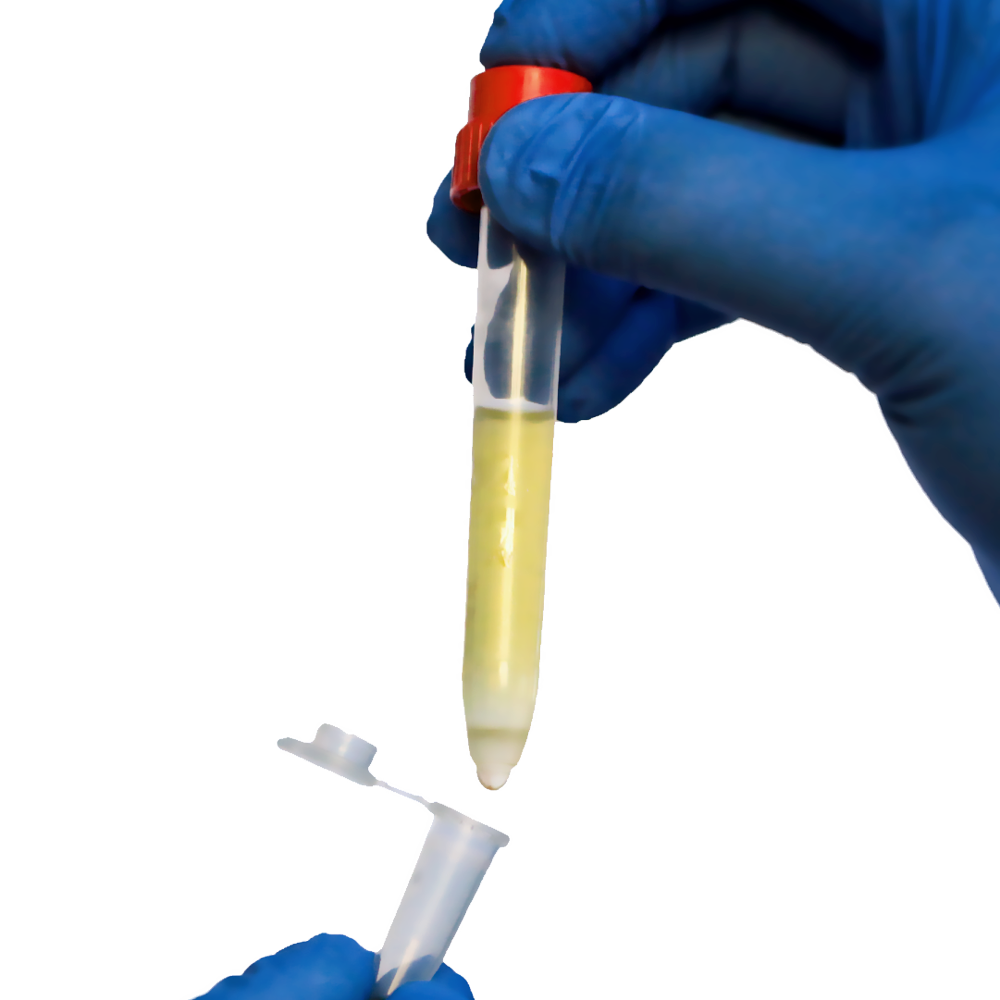
The TwinSpin® system offers another approach to gravity-supported separation. Its dual-tube design combines density gradient centrifugation with precise pipette-based collection. During centrifugation, red blood cells migrate through the density gradient into the outer tube, while the enriched target cells remain inside the inner tube above the density medium.
Once centrifugation is complete, the inner tube becomes a convenient dropper that allows researchers to collect the enriched cells with excellent control. TwinSpin® is compatible with several density gradient media, including Leuko Spin, Lympho Spin, Lympho Spin 24+, and PLT Spin, allowing laboratories to select the most appropriate medium for different target cell populations.
By simplifying sample loading and collection, gravity-supported separation provides an excellent bridge between initial sample preparation and highly specific cell isolation.
Step 4: Antibody-Supported Cell Separation for High-Purity Cell Isolation
While size- and gravity-supported methods separate cells according to physical characteristics, antibody-supported cell separation identifies cells using specific surface markers. This provides the highest level of specificity and is commonly used when researchers require highly purified cell populations.
Depending on the research objective, laboratories can choose either positive or negative cell separation.
Positive Cell Separation with pluriBeads®
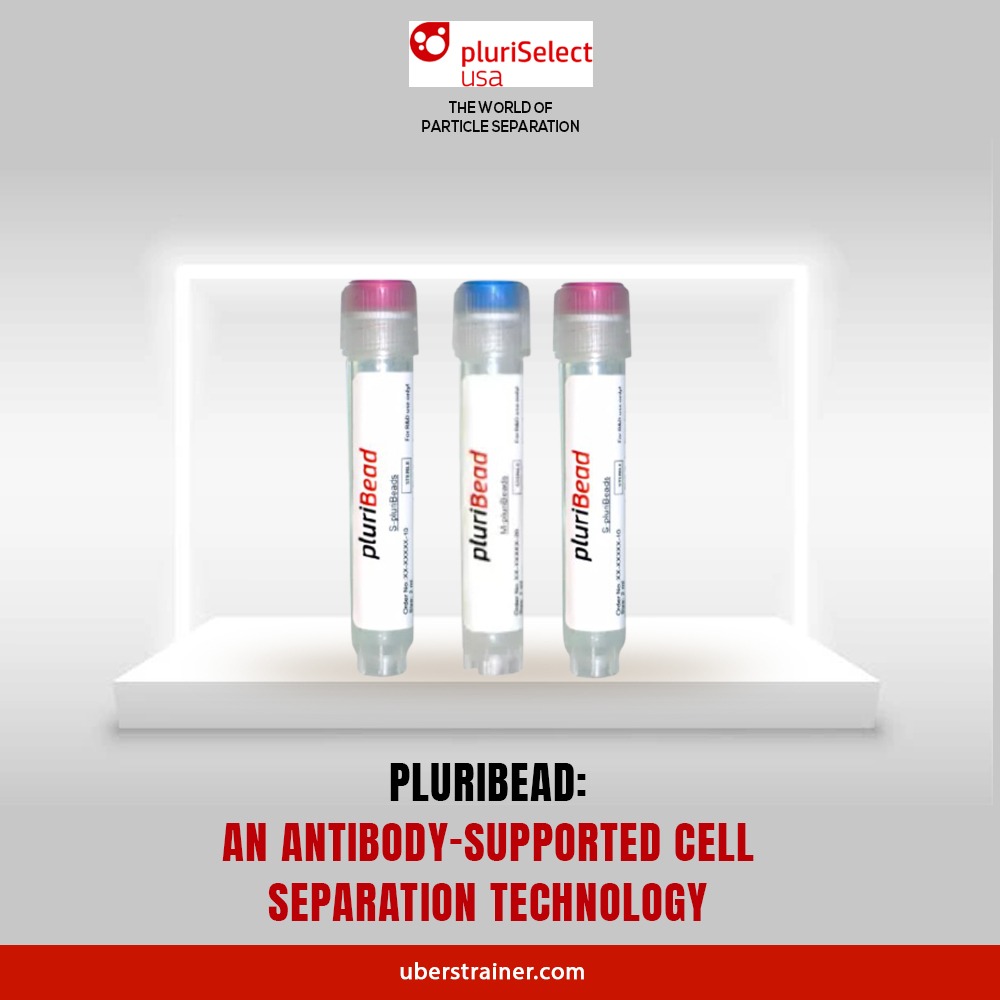
Positive cell separation directly captures the desired cells. The pluriBeads® technology uses non-magnetic microparticles coated with monoclonal antibodies that recognize specific cell surface markers. During incubation, the target cells bind to the beads and are retained on a compatible pluriStrainer®. After washing, a detachment buffer releases the purified cells while the beads remain behind.
Because no magnets or separation columns are required, the workflow remains simple while providing high-quality target cell populations for downstream applications.
Negative Cell Separation with pluriSpin®
In some experiments, researchers prefer the target cells to remain untouched. Instead of capturing the desired cells, pluriSpin® removes unwanted cell populations through negative cell separation.
Unwanted cells are labeled before density gradient centrifugation. During separation, these labeled cells are removed with the unwanted fractions, leaving the desired cells enriched at the density gradient interface. Because the target cells are never directly labeled, they retain their natural characteristics and are well suited for cell culture, functional assays, and other applications requiring high cell viability.
Together, pluriBeads® and pluriSpin® allow researchers to choose the separation strategy that best fits their experimental goals.
Step 5: Scaling Cell Separation from Research to Production
As research projects expand, laboratories often need to process larger sample volumes while maintaining the same level of quality and reproducibility. Scaling a workflow involves more than simply increasing sample size. Every stage of the process must remain efficient, standardized, and capable of producing consistent results.
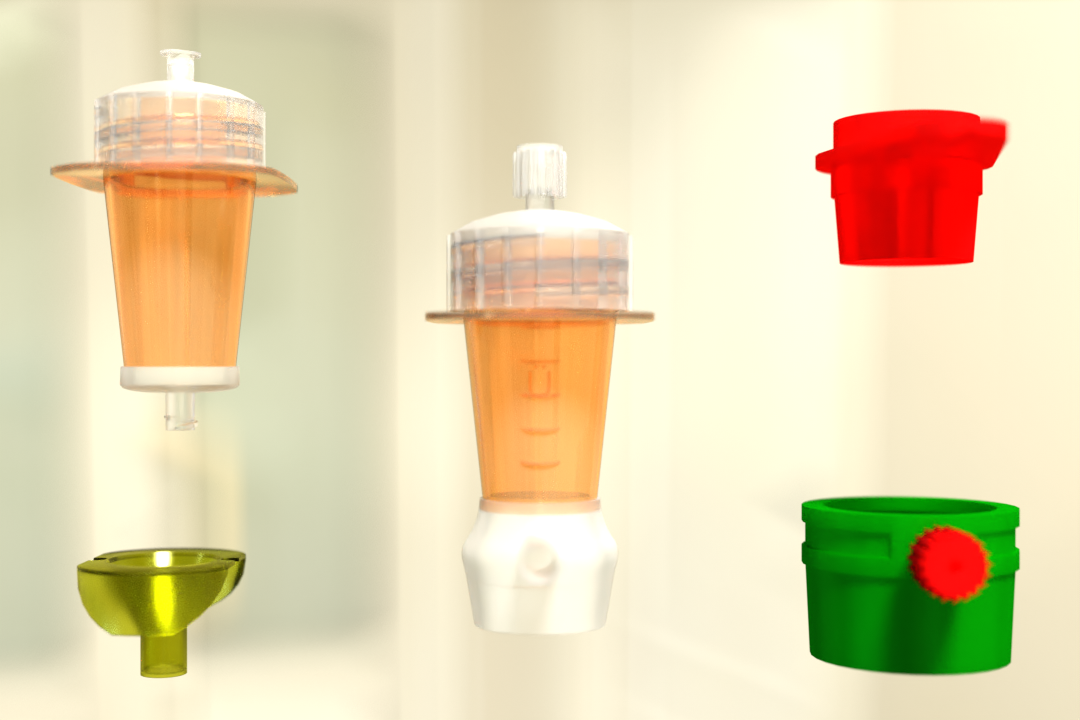
Large-volume filtration becomes particularly important as throughput increases. The pluriStrainer® Maxi was developed to address this challenge. Functioning as a Bottle-top Strainer, it supports filtration volumes ranging from more than 100 ml to several liters. Available with multiple mesh sizes and compatible with standard laboratory bottles, it enables researchers to process larger sample volumes while reducing repeated filtration steps.
A scalable workflow also depends on standardized protocols, consistent sample preparation, and technologies that integrate naturally into existing laboratory procedures. By selecting tools designed for both research and larger-scale processing, laboratories can transition toward production workflows without completely redesigning their methods.
Bringing the Complete Workflow Together
An efficient cell separation workflow combines multiple technologies, with each one contributing to a specific stage of the process. For example, tissue-derived samples may first be filtered using a Mini Strainer or SnapCap Strainer to remove debris and create a single-cell suspension. Additional cleanup can then be performed using a pluriStrainer or another size-supported filtration system.
If the sample originates from whole blood or bone marrow, gravity-supported separation using pluriMate® or TwinSpin® can enrich the desired cell population before more specific isolation takes place.
Finally, antibody-supported technologies such as pluriBeads® or pluriSpin® provide highly purified cell populations for downstream applications including flow cytometry, molecular analysis, cell culture, and functional studies. By combining these complementary technologies, laboratories create workflows that improve recovery, simplify processing, and support reproducible research outcomes.
Why Researchers Choose pluriSelect
At pluriSelect, we believe that successful cell separation depends on providing researchers with practical solutions for every stage of the workflow rather than focusing on a single technology. Researchers choose our products because we offer:
Complete Workflow Solutions
Our portfolio covers sample preparation, size-supported filtration, gravity-supported separation, and antibody-supported cell isolation, allowing laboratories to build integrated workflows using compatible technologies.
Application-Focused Products
Each product is developed to address specific laboratory challenges while remaining easy to incorporate into routine procedures.
Flexible and Scalable Technologies
Whether processing small research samples or large production volumes, our solutions support changing laboratory requirements without compromising workflow consistency.
High Manufacturing Standards
All products are developed and manufactured according to strict quality standards, supporting reliable and reproducible research.
Scientific Expertise
Working closely with researchers worldwide allows us to develop practical technologies that continue to meet the evolving needs of life science research and biotechnology.
Conclusion
Successful cell separation is the result of a well-designed workflow rather than a single isolation technique. Every stage, from sample preparation and filtration to density gradient centrifugation, antibody-supported isolation, and large-scale processing, plays an important role in achieving reliable results.
Size-supported separation creates clean and consistent starting material. Gravity-supported separation enriches broader cell populations from blood and bone marrow, while antibody-supported technologies provide highly specific isolation of target cells. As projects expand, scalable filtration systems ensure that workflows remain efficient and reproducible.
By combining these complementary technologies, researchers can improve cell recovery, preserve viability, reduce variability, and streamline laboratory operations. Building a complete workflow not only supports better experimental outcomes today but also provides the flexibility needed for future research and production-scale applications.
 English
 French
 German
 Spanish
 Belgium
 Italian
 Brazil
 Chinese Mandarin