Particle separation is a routine but critical step in many laboratory workflows. Whether researchers are isolating specific particles, removing unwanted material, or preparing samples for downstream analysis, the quality of the filtration process can influence the reliability of the final results. A well-designed filtration device not only separates particles efficiently but also helps preserve valuable sample material for further study.
In many applications, the retained particles are the primary focus of the experiment. These particles may be needed for microscopy, cell analysis, further purification, or additional laboratory procedures. While many filtration devices are effective at trapping particles, recovering them without significant loss can be a challenge. If the retained material cannot be collected easily, valuable samples may be wasted, requiring additional processing or repeat experiments.
Another consideration is workflow flexibility. Laboratory samples vary widely in both volume and composition. Some procedures involve only a few milliliters of liquid, while others require the filtration of much larger volumes. A filtration device that performs well across different sample sizes allows researchers to use a consistent workflow instead of switching between multiple systems.
The Syringe-Strainer has been developed to address these practical laboratory needs. Designed for particle separation, liquid purification, and particle concentration, it combines efficient filtration with a simple recovery process. Unlike many conventional filtration devices where retrieving retained material can be difficult, the Syringe-Strainer allows researchers to recover target particles through a controlled backflushing process.
Its flexible design also makes it suitable for different laboratory setups. It can be connected directly to a syringe or integrated with tubing and pumps through a Luer-Lock adaptor, allowing operation under either positive or negative pressure depending on the application. This adaptability enables laboratories to process both small and large sample volumes while maintaining an efficient workflow.
This article explores why the Syringe-Strainer is an effective solution for particle separation and recovery, how it works, and the practical advantages it offers across a wide range of laboratory applications.
Why Particle Recovery Is Just as Important as Filtration
Filtration and particle recovery are closely connected, but they serve different purposes. Filtration removes or retains particles based on their size, while recovery focuses on collecting the retained material for future use. In many laboratory procedures, successful filtration alone is not enough. The retained particles often represent the most valuable part of the sample.
For example, researchers may separate cells, beads, tissue fragments, microorganisms, or other particles that need to be examined, cultured, or processed further. If these materials remain trapped inside the filtration device or cannot be recovered efficiently, the usefulness of the entire procedure is reduced.
A good recovery process offers several advantages. First, it helps preserve valuable samples. Some laboratory specimens are difficult to obtain, and repeating the collection process may not always be possible. Recovering as much of the retained material as possible helps maximize the value of every sample.
Second, efficient recovery improves downstream workflows. Whether the next step involves imaging, molecular analysis, particle counting, or additional purification, having an adequate amount of recovered material supports more reliable results. Recovery also contributes to better laboratory efficiency. If a filtration device requires complicated disassembly or multiple transfer steps to retrieve particles, the workflow becomes slower and increases the possibility of sample loss. Every additional handling step introduces opportunities for particles to remain attached to equipment or be lost during transfer.
An effective particle separation device should therefore perform two tasks equally well: retain the desired particles during filtration and allow those particles to be recovered with minimal effort. This combination reduces unnecessary processing while supporting consistent laboratory results.
Common Challenges in Conventional Particle Filtration
Many filtration systems perform well when the objective is simply to remove unwanted material from a liquid. However, when researchers need to recover the retained particles, several practical challenges become apparent.
One common issue is difficult particle recovery. In some filtration devices, particles remain tightly attached to the filter surface after filtration. Removing them often requires washing, scraping, or transferring the filter to another container, all of which can increase sample loss.
Sample transfer itself presents another challenge. Moving retained particles from one container to another creates additional handling steps, increasing the possibility of contamination or accidental loss. These repeated transfers also add time to laboratory workflows. Another limitation involves processing different sample volumes. Some filtration devices are suitable only for small laboratory samples, while others are designed primarily for larger volumes. Laboratories working with varying sample sizes may need multiple filtration systems to complete different procedures, creating unnecessary complexity.
The method used to move liquid through the filter can also affect workflow flexibility. Certain systems operate only under one type of pressure or require specialized equipment, limiting how they can be incorporated into existing laboratory setups. Finally, many conventional filtration devices focus mainly on filtration rather than recovery. Once particles are captured, retrieving them efficiently may require additional equipment or modified protocols that were not part of the original workflow.
These limitations highlight the importance of filtration devices that combine efficient particle separation with an equally practical recovery process.
Understanding the Syringe-Strainer
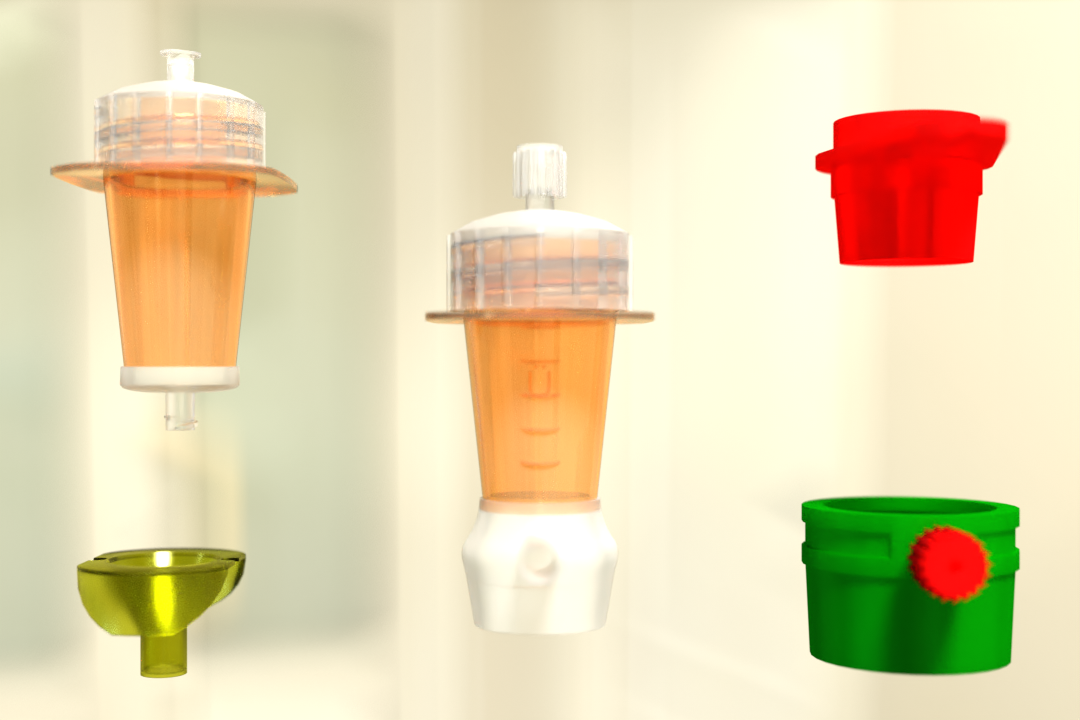
The Syringe-Strainer is a particle separation device designed for laboratory applications that require filtration, particle separation, concentration of particles, and purification of liquids. Its design supports both efficient filtration and straightforward recovery of retained target material, making it suitable for a broad range of laboratory workflows.
One of its defining features is its ability to connect directly to a syringe or laboratory tubing through a screw cap equipped with a Luer-Lock adaptor. This secure connection allows researchers to integrate the device into different experimental setups without requiring complicated modifications.
The Syringe-Strainer can operate using either positive or negative pressure, depending on the specific application. Under positive pressure, liquid is pushed through the filtration device using a syringe. Alternatively, negative pressure can be applied to draw liquid through the filter. This flexibility allows researchers to select the operating method that best suits their sample type and laboratory equipment.
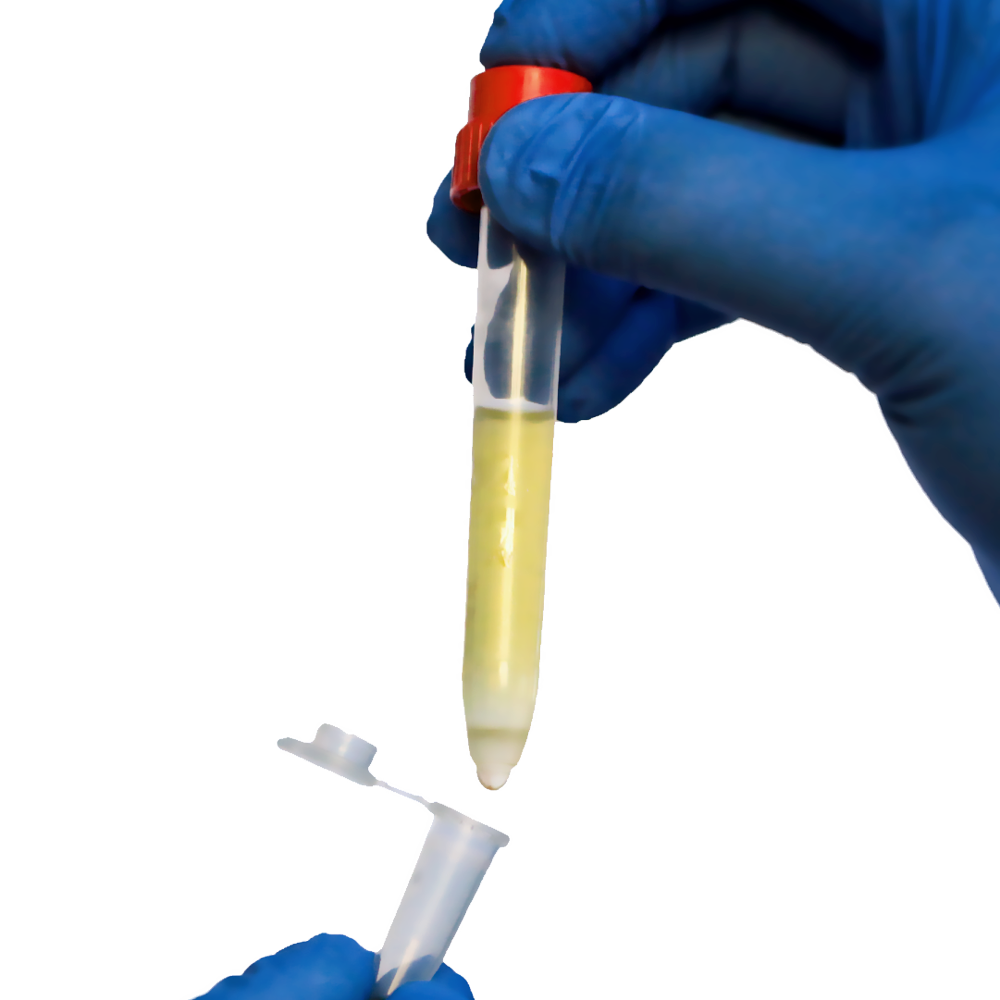
A particularly valuable aspect of the design is its recovery mechanism. After filtration, retained particles can be recovered by creating negative pressure within the Syringe-Strainer and backflushing the material through the screw cap using a syringe. Instead of remaining trapped on the filter surface, the target particles can be collected more efficiently for downstream applications.
For larger sample volumes, the Syringe-Strainer offers additional flexibility. By connecting tubing and a pump through the Luer-Lock adaptor, researchers can process substantially larger quantities of liquid while using the same basic filtration principle. This capability makes the device suitable for laboratories handling both routine sample preparation and higher-volume filtration tasks.
Rather than functioning as a simple filter alone, the Syringe-Strainer integrates filtration, particle concentration, and recovery into a single workflow, helping laboratories simplify sample handling while preserving valuable target material.
Key Advantages of the Syringe-Strainer
The design of the Syringe-Strainer goes beyond basic filtration. It is built to support laboratories that need both efficient particle separation and reliable recovery of retained material. Its combination of flexible operation and straightforward recovery makes it suitable for a wide range of laboratory workflows.
Easy Recovery of Retained Particles
One of the biggest advantages of the Syringe-Strainer is its ability to recover retained particles after filtration. In many conventional filtration devices, particles remain attached to the filter surface, making recovery difficult and increasing the chance of sample loss.
The Syringe-Strainer addresses this challenge through a simple backflushing process. After filtration, researchers can generate negative pressure and use a syringe to flush the retained material back through the screw cap. This allows the target particles to be collected with fewer handling steps, helping preserve valuable sample material for downstream analysis.
Flexible Pressure Operation
Different laboratory procedures require different filtration approaches. The Syringe-Strainer provides flexibility by supporting both positive and negative pressure operation.
For applications where liquid needs to be pushed through the filter, the device can be connected directly to a syringe. When suction-based filtration is preferred, negative pressure can be applied instead. This flexibility allows researchers to adapt the same filtration device to different laboratory protocols without changing equipment.
Suitable for Small and Large Sample Volumes
Laboratories often process samples that vary considerably in volume. Some experiments involve only a few milliliters, while others require the filtration of much larger quantities of liquid.
The Syringe-Strainer accommodates both situations. For routine laboratory work, it connects directly to a syringe for convenient handling of smaller samples. When larger sample volumes need to be processed, the device can be connected to tubing and a pump through the Luer-Lock adaptor. This enables continuous filtration without changing the basic operating principle.
Secure Integration with Laboratory Equipment
The screw cap with a Luer-Lock adaptor provides a secure connection between the Syringe-Strainer and compatible laboratory equipment. Whether attached to a syringe or connected to tubing, the device fits easily into existing workflows without requiring specialized accessories.
This simple integration helps laboratories maintain consistent procedures while reducing unnecessary setup time.
Multiple Functions in One Device
Instead of serving only as a filter, the Syringe-Strainer combines several laboratory functions within a single device. It can be used for:
- Particle separation
- Particle concentration
- Liquid purification
- Recovery of retained target material
Bringing these functions together allows researchers to perform multiple processing steps using one filtration device, simplifying sample preparation and improving overall workflow efficiency.
Laboratory Applications of the Syringe-Strainer
The Syringe-Strainer is designed for a broad range of laboratory applications where particles must be separated, concentrated, or recovered from liquids. Its adaptable design allows researchers to incorporate it into different workflows depending on their experimental requirements.
Particle Separation
One of its primary applications is particle separation. By retaining particles above a selected size while allowing liquids and smaller components to pass through, the device supports laboratory procedures that require clean particle isolation.
Particle Concentration
Researchers may also use the Syringe-Strainer to concentrate particles from larger liquid volumes. As liquid passes through the filter, the desired particles remain within the device and can later be recovered through backflushing. This approach enables laboratories to collect target material from dilute samples without introducing unnecessary processing steps.
Liquid Purification
Many laboratory workflows require the removal of unwanted particles before samples move to downstream applications. The Syringe-Strainer supports liquid purification by separating particulate material from the liquid phase, helping produce cleaner samples for subsequent analysis.
Processing Large Sample Volumes
When laboratories need to process larger quantities of liquid, the Syringe-Strainer can be connected to a tube and pump through the Luer-Lock adaptor. This configuration allows the same device to handle higher sample volumes while maintaining effective particle separation and recovery.
Because of this flexibility, the Syringe-Strainer can be incorporated into a variety of laboratory workflows without requiring separate filtration systems for different sample sizes.
Best Practices for Efficient Particle Recovery
Obtaining consistent results depends not only on the filtration device but also on how it is used. Following a few practical guidelines helps maximize particle recovery while maintaining efficient laboratory workflows.
Select the Appropriate Operating Method
Before filtration begins, researchers should determine whether positive pressure or negative pressure is more suitable for their application. Choosing the appropriate operating method helps maintain consistent sample processing.
Ensure Secure Connections
Proper attachment of the syringe or tubing to the Luer-Lock adaptor helps maintain stable operation throughout filtration. Secure connections reduce the possibility of interruptions during sample processing.
Perform Controlled Backflushing
The recovery process should be carried out carefully by generating negative pressure and backflushing the retained particles through the screw cap. A controlled recovery process helps collect the target material efficiently while minimizing unnecessary sample handling.
Match the Setup to Sample Volume
Smaller samples can be processed conveniently with a syringe, while larger volumes benefit from connection to tubing and a pump. Selecting the appropriate setup helps improve workflow efficiency across different laboratory applications.
Following these simple practices allows laboratories to take full advantage of the Syringe-Strainer’s design while maintaining consistent particle recovery.
Why Researchers Choose pluriSelect Filtration Solutions
Laboratories require filtration products that can adapt to different workflows without making sample preparation unnecessarily complicated. pluriSelect develops filtration solutions that focus on practical laboratory requirements, including efficient particle separation, flexible operation, and reliable recovery of target material.
The Syringe-Strainer reflects this approach by combining several important functions within one device. Its ability to connect to syringes, tubing, or pumps provides flexibility across different laboratory setups, while the backflushing mechanism makes recovery of retained particles straightforward.
Rather than treating filtration and recovery as separate processes, the Syringe-Strainer integrates both into a single workflow. This allows researchers to process samples more efficiently while preserving valuable material for downstream applications.
Conclusion
Successful laboratory filtration involves more than simply separating particles from a liquid. In many applications, recovering the retained material is equally important, as these particles often form the basis for further analysis, purification, or experimental work.
The Syringe-Strainer is designed with this complete workflow in mind. Its ability to perform particle separation, concentration, liquid purification, and straightforward particle recovery makes it a versatile solution for modern laboratories. By supporting both positive and negative pressure operation, it provides flexibility for a variety of experimental protocols, while the Luer-Lock adaptor enables easy integration with syringes, tubing, and pumps.
Its backflushing design further distinguishes it from many conventional filtration devices by allowing retained particles to be recovered efficiently with fewer handling steps. Whether processing small laboratory samples or larger liquid volumes, researchers can use the same device while adapting the setup to their specific workflow requirements.
For laboratories seeking a practical solution that combines efficient filtration with reliable particle recovery, the Syringe-Strainer offers an effective approach that supports consistent sample processing, simplifies laboratory workflows, and helps maximize the value of every sample.
 English
 French
 German
 Spanish
 Belgium
 Italian
 Brazil
 Chinese Mandarin