Water sample filtration is an important step in many laboratory and environmental workflows. Researchers may need to remove suspended material, separate particles by size, or prepare water samples for further analysis. While small volumes can often be handled with compact filtration setups, larger samples require a different approach. Processing several liters of water through a small filtration device can mean repeating the same steps multiple times, adding sample portions, waiting for filtration, collecting the output, and preparing the system again.
Large-volume samples may also contain suspended particles, debris, organic material, and other substances that collect on the mesh during filtration. As retained material builds up, liquid may take longer to pass through. This makes both the filtration format and mesh size important considerations when planning the workflow.
pluriStrainer® Maxi provides a larger-format option for processing greater sample volumes. Instead of dividing a large water sample into numerous small filtration cycles, researchers can use a setup designed around larger-volume processing. The goal is not simply faster filtration, but a more practical workflow with fewer unnecessary transfers and repeated steps.
By considering sample volume, particle load, mesh size, and the material that needs to be retained, researchers can select a filtration approach that better matches their application and makes large-volume water sample preparation easier to manage.
The Challenges of Filtering Large-Volume Water Samples
Filtering a large water sample is different from processing a small laboratory sample. The main challenge is not only the amount of liquid but also the amount and type of material suspended in it. Water collected for research may contain particles of different sizes, organic matter, debris, or other material that needs to be separated before the sample can be studied further.
When a large volume is processed through a small filtration device, the same filtration step may need to be repeated many times. The researcher has to add one portion, wait for it to pass through the mesh, collect the filtered liquid, and then repeat the process. Although each individual step may appear manageable, the total time can become significant when the original sample is large.
Suspended Material Can Slow Filtration
The amount of material present in a water sample has a direct effect on filtration. As suspended particles reach the mesh, some are retained on its surface. With continued filtration, these particles can build up and cover portions of the available filtration area. As the retained material increases, the remaining liquid may take longer to pass through. This can be particularly noticeable when a sample contains a high concentration of suspended particles.
The problem is not necessarily that the filtration device is unsuitable. The sample itself may simply contain more material than the filtration surface can comfortably handle in a single small-scale setup. For researchers processing several samples, this can create an additional workload. A filtration step that takes only a short time for a clean sample may take considerably longer when the sample contains more suspended material.
Repeated Filtration Adds Handling
Large-volume samples can also create more opportunities for unnecessary handling. If a small strainer is used for a large sample, researchers may need to divide the sample into multiple portions. Each portion has to be transferred into the filtration setup and processed separately. Once filtration is complete, the system may need to be emptied or replaced before the next portion can be handled.
Every transfer requires attention. Researchers need to ensure that the correct sample is being processed, that the collection vessel is ready, and that material is not unnecessarily lost during movement between containers. For workflows involving many samples, repeated transfers can make the process harder to standardize. The more individual steps a procedure contains, the more opportunities there are for variation between samples.
A larger filtration format can help address this issue by allowing the workflow to be planned around the actual sample volume instead of forcing a large sample into a series of smaller filtration cycles.
The Wrong Mesh Can Create Another Bottleneck
Sample volume is only one consideration. Mesh size also affects how a filtration step performs. A very fine mesh may retain smaller particles, which can be useful when the objective is to capture a particular size fraction. However, if the water contains a large amount of larger suspended material, that material can accumulate on the mesh and slow the process.
A coarse mesh may allow smaller particles to pass through while retaining larger debris. This can be useful as an initial filtration step, depending on the purpose of the experiment. The appropriate choice therefore depends on what the researcher wants to separate from the water. The objective should be defined before selecting the mesh rather than assuming that the smallest available openings will always produce the best result.
Large-volume filtration works best when sample volume, particle load, and mesh size are considered together.
How pluriStrainer® Maxi Makes Large-Volume Filtration More Efficient
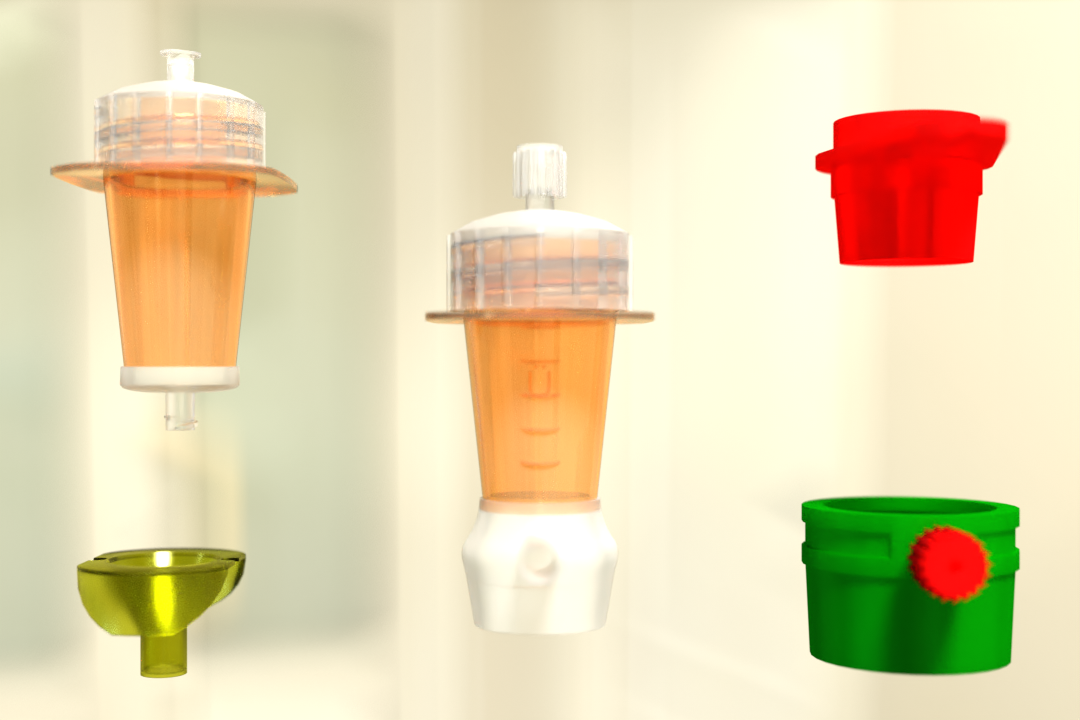
The format of the filtration device becomes increasingly important as sample volume increases. pluriStrainer® Maxi is designed for larger sample volumes and provides a practical option for workflows where a small strainer would require repeated processing.
The device is available with multiple mesh sizes, ranging from 5 µm to 2,000 µm. This gives researchers a broad selection when determining which particles should be retained and which should pass through. Its larger format is particularly relevant when processing samples exceeding typical small-volume filtration requirements. Instead of repeatedly dividing a large sample into portions simply because the filtration device is small, researchers can use a setup designed for larger volumes.
Designed for Larger Sample Volumes
The pluriStrainer® Maxi is intended for larger-volume applications, with sample volumes ranging from more than 100 mL to more than 10 L, depending on the setup. This makes it suitable for workflows where processing the entire sample through a small laboratory strainer would require multiple cycles.
Reducing the number of filtration cycles can simplify sample preparation. Researchers can spend less time repeatedly loading and emptying small filtration devices and more time on the analysis that follows. The larger format can also make the workflow easier to organize when processing several samples. Each sample can be assigned its own filtration setup according to the selected mesh size and collection requirements.
Ports for Low-Pressure Systems
The pluriStrainer® Maxi also includes ports that allow connection to a low-pressure system. This can be useful when passive filtration is not sufficient for the sample or when researchers need additional support to move the liquid through the mesh. The option provides flexibility without requiring researchers to redesign the entire filtration workflow around a different device.
Low-pressure filtration should still be selected according to the characteristics of the sample and the requirements of the application. The objective is to maintain controlled filtration rather than simply forcing the sample through the mesh.
Compatibility With Laboratory Containers
Another practical feature of pluriStrainer® Maxi is its compatibility with a GL45 laboratory bottle, with adapters available for GL32 and GL80 connections.
This can help integrate the strainer into existing laboratory setups. Rather than requiring an entirely separate collection arrangement, researchers can select a container and adapter configuration that fits the workflow. The device is also stackable, which provides another option when the filtration process needs to be organized around different stages or configurations.
These design features are useful because large-volume filtration is not only about the mesh itself. The way the strainer connects with containers, tubing, and other equipment can determine how easily the process fits into an existing laboratory workflow.
Matching the Device to the Scale of the Task
The main advantage of a large-format strainer is that it matches the scale of the sample. If a researcher has a 5 L water sample, repeatedly processing small portions through a compact filter may create unnecessary work. A larger filtration setup can provide a more direct route from the original sample to the filtered fraction.
This does not mean that a larger strainer is always the better choice. Small samples may still be better suited to smaller filtration devices. The important consideration is whether the equipment matches the amount of liquid being processed. For large-volume water samples, using a filtration device designed for that scale can make the workflow more practical and easier to manage.
Choosing Mesh Sizes and Managing Different Water Samples
Mesh selection is one of the most important decisions in any filtration workflow. The mesh determines the approximate size of material that can pass through and what will remain on the filtration surface.
With pluriStrainer® Maxi, researchers can choose from mesh sizes between 5 µm and 2,000 µm. This broad range allows the device to be used for different types of sample preparation rather than limiting the workflow to one particle size.
Start With the Purpose of Filtration
The first question should be: What do you want to retain? If the goal is to remove large debris from water while allowing smaller particles to continue through, a larger mesh size may be appropriate. If the purpose is to retain much smaller particles, a finer mesh may be required.
The choice should therefore be based on the intended downstream analysis. Researchers should also consider whether the retained material is the primary target of the experiment or simply unwanted material. This distinction can influence both mesh selection and how the retained fraction is collected.
Consider the Particle Load
Two water samples with the same volume may behave very differently during filtration. A relatively clear sample may move through a selected mesh without significant buildup. Another sample of the same volume may contain a much higher concentration of suspended particles and may require more careful handling.
When the particle load is expected to be high, researchers should consider whether the selected mesh is likely to become heavily covered during filtration. A larger filtration area can help accommodate greater amounts of material, but mesh selection remains important. Choosing an unnecessarily fine mesh for a heavily loaded sample can still slow the workflow.
Match the Mesh to the Desired Fraction
Researchers may also use filtration to isolate a particular size range rather than simply clean up a sample. For example, larger particles can be retained while smaller material passes through. In another application, the objective may be to collect smaller particles on a finer mesh for later analysis. The mesh should therefore be viewed as part of the sample preparation strategy. The selected size should correspond to the material being investigated and the requirements of the next stage.
Plan the Collection Step Before Filtration
The collection method should also be considered before beginning a large-volume filtration process. The filtered liquid and retained material may have different uses. If both fractions are important, the setup should allow them to be collected without unnecessary transfers.
For large-volume water samples, planning the collection vessel, connection type, and filtration configuration in advance can help make the process more consistent. Ultimately, efficient filtration comes from matching the device, mesh size, sample volume, and collection method to the purpose of the experiment. pluriStrainer® Maxi provides the larger format and mesh options needed to build that approach around large-volume samples.
Conclusion
Large-volume water filtration becomes more manageable when the filtration system is selected according to the sample volume, particle load, and intended separation. Using a small filtration setup for a large sample can require repeated loading, transfers, and filtration cycles, adding unnecessary time to sample preparation.
pluriStrainer® Maxi provides a larger-format option for workflows involving more than 100 mL to more than 10 L of sample. Its available mesh sizes, ranging from 5 µm to 2,000 µm, allow researchers to select a filtration point based on the size of the material they want to retain or allow through.
The device can also be integrated into different laboratory setups. Ports support connection to low-pressure systems, while compatibility with GL45 laboratory bottles and adapters for GL32 and GL80 connections provides flexibility in sample collection and processing. Its stackable design offers additional options when adapting the filtration setup to specific workflows.
The right configuration will still depend on the sample and application. Researchers should consider particle concentration, particle size, sample volume, and downstream requirements before selecting the mesh and setup.
By matching the filtration format to the scale of the sample, laboratories can reduce repeated processing and unnecessary handling. For larger water samples, pluriStrainer® Maxi offers a practical way to organize filtration around the needs of the workflow.
 English
 French
 German
 Spanish
 Belgium
 Italian
 Brazil
 Chinese Mandarin