Peripheral blood mononuclear cell (PBMC) isolation is a common step in research involving blood-derived cells. The objective is to separate mononuclear cells from other blood components and obtain an enriched cell fraction for downstream work.
Density gradient centrifugation is widely used for this purpose. However, the efficiency of the process depends on more than the density gradient medium itself. Sample preparation, layering, centrifugation, and harvesting all involve handling steps that can influence how smoothly the isolation process runs. This is where the separation tube becomes important.
Traditional density gradient workflows generally require the sample to be carefully layered over the separation medium before centrifugation. Performing this step manually can take time and requires controlled handling to avoid mixing the sample and gradient medium.
pluriSelect separation tubes are designed to address this part of the workflow. The pluriMate® tube incorporates a porous sponge that creates a physical barrier between the sample and the density gradient medium. This allows anticoagulated blood or bone marrow to be transferred directly into the tube without manually creating a separate sample layer. Rather than adding another complicated step to PBMC isolation, the tube is designed to make sample preparation part of the separation system itself.
The Challenge of Preparing Whole Blood for PBMC Isolation
Before centrifugation begins, whole blood needs to be positioned correctly in relation to the density gradient medium. In a conventional workflow, this usually involves carefully placing the blood sample over the gradient without disturbing the underlying layer. This manual overlay step can be one of the more delicate parts of the procedure. The sample has to be transferred in a controlled manner, and unnecessary mixing between the blood and density gradient medium needs to be avoided.
For laboratories processing multiple samples, these preparation steps can also add to hands-on time. Each tube needs to be prepared individually, making consistent handling important throughout the workflow. The challenge is therefore not simply separating PBMCs during centrifugation. It begins earlier, with how the sample and separation medium are brought together.
A separation tube designed specifically for this workflow can reduce some of this manual preparation. Instead of requiring the researcher to carefully create the blood-gradient interface by hand, the tube can provide a physical structure that keeps the two materials separated until centrifugation.
This changes the role of the tube from being a simple container to being an active part of the sample preparation process.
How pluriMate® Simplifies Sample Loading
The pluriMate® separation tube is designed to make sample loading more straightforward. Its main design feature is a porous sponge positioned at the bottom of the centrifuge tube.
The sponge is made from high-grade polyurethane and serves as a barrier between the sample and the density gradient medium. Because of this design, anticoagulated blood or bone marrow can be poured directly from the sampling tube into the pluriMate® tube. This eliminates the need for the researcher to manually overlay the sample onto the density gradient medium. The difference may seem small, but removing a manual layering step can make the overall workflow easier to handle. Instead of carefully pipetting the sample onto the gradient, the sample can be transferred directly into the prepared separation tube.
This is particularly useful in workflows where several samples need to be processed. A simpler loading step means less manual manipulation before centrifugation and makes the preparation process easier to standardize. The tube is therefore designed around a practical question: how can the sample reach the density gradient medium in the correct configuration without requiring the researcher to manually create that configuration?
The integrated sponge provides the answer by separating the two components during loading while allowing the intended interaction to occur during centrifugation.
The Porous Barrier: Keeping Sample and Density Gradient Separate
The porous sponge is central to the design of the pluriMate® tube. Its role is not simply to support the sample but to prevent the blood or bone marrow from mixing with the density gradient medium before centrifugation.
When the sample is introduced into the tube, the porous barrier keeps the sample positioned above the separation medium. This provides a controlled starting arrangement for the centrifugation step. Once centrifugation begins, the physical properties of the system allow the blood components to separate according to their densities. The barrier therefore helps manage the transition from sample loading to separation without requiring manual layering.
This is an important design distinction. In a conventional tube, the researcher is responsible for establishing and maintaining the correct sample-gradient arrangement. With pluriMate®, part of that responsibility is built into the tube itself.
The barrier also helps make the workflow less dependent on delicate pipetting during preparation. By physically separating the materials before centrifugation, it supports a more controlled starting point for the isolation process. For PBMC isolation, this matters because the quality of the separation depends on having the sample correctly positioned before the centrifugation step begins. The pluriMate® design addresses that preparation challenge directly, allowing the centrifugation process to focus on separating the different blood components.
How Centrifugation Creates the PBMC-Enriched Fraction
Once the sample has been loaded into the pluriMate® tube, centrifugation drives the actual separation of the different blood components. The cells and other components move according to their density in relation to the selected density gradient medium.
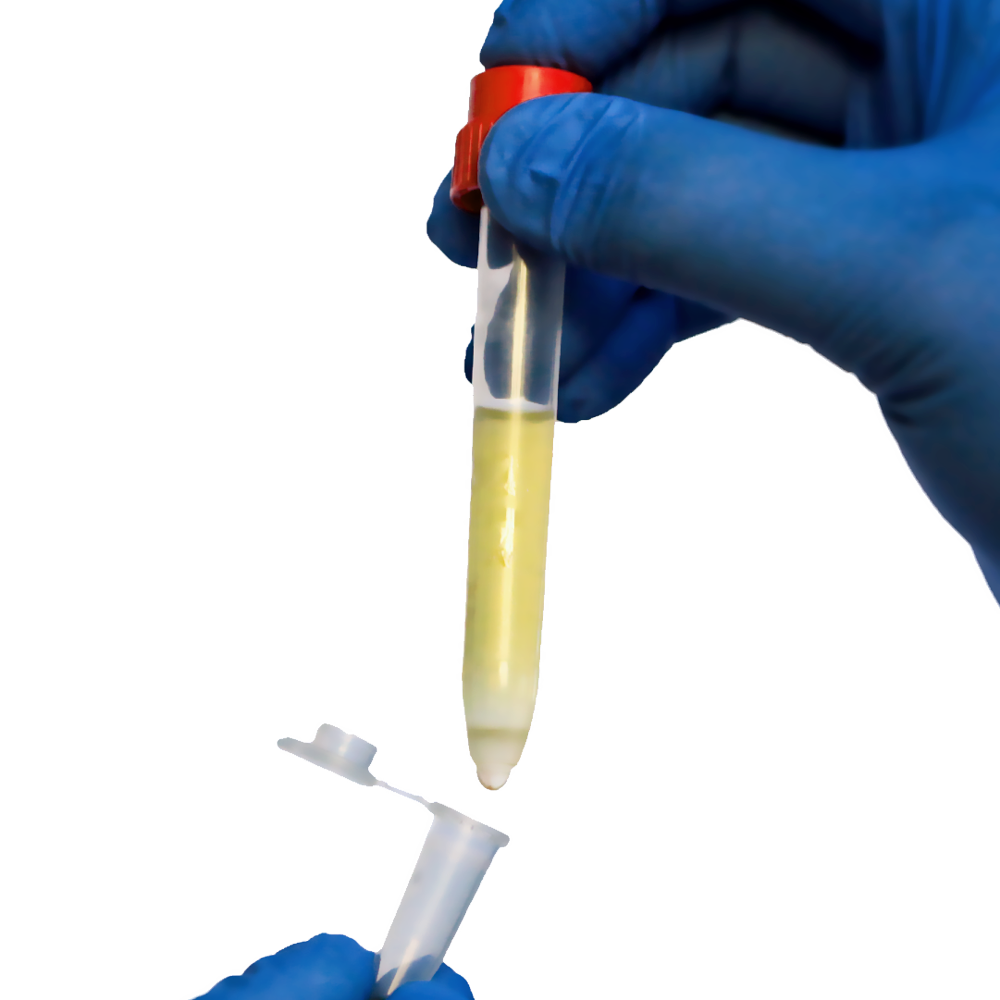
During this step, leukocytes, including PBMCs, separate from denser components such as erythrocytes and granulocytes. The desired mononuclear cells become enriched at the interphase above the density gradient medium. The result is a distinct cell fraction that can be collected for downstream applications.
The role of the pluriMate® tube at this stage is to provide a controlled setup for the separation. Since the sample was already positioned above the density gradient medium by the integrated porous barrier, there is no need to recreate the sample-gradient interface immediately before centrifugation.
This makes the tube particularly useful in workflows where PBMC isolation is performed routinely. The separation itself still relies on the selected density gradient medium and centrifugation conditions, while the tube addresses the sample preparation and handling around that process.
Preventing Recontamination During Cell Harvest
Obtaining a PBMC-enriched fraction is only part of the isolation process. The fraction must also be recovered without unnecessarily disturbing the separated layers. After centrifugation, the enriched PBMC fraction is located at the interphase above the density gradient medium. Harvesting this fraction requires careful handling because the surrounding blood components can potentially interfere with the collected material.
The porous barrier in the pluriMate® tube provides an additional advantage during this stage. It helps prevent the enriched cell fraction from becoming recontaminated during harvesting, regardless of the sample volume.
This is important because a well-separated sample can still become compromised if the collection step disturbs the unwanted cell fractions. By retaining its barrier function after centrifugation, the tube supports cleaner recovery of the enriched fraction.
The design therefore addresses two separate stages of the workflow: it helps prevent premature mixing during sample loading and supports separation between the enriched fraction and unwanted components during recovery.
Consistent Handling Across Different Sample Volumes
Sample volume can vary between experiments, and this can make manual separation steps more difficult to standardize. When researchers rely heavily on manual layering and harvesting, handling may change depending on how much sample is being processed.
pluriMate® is designed to reduce some of this variation by incorporating the separation barrier directly into the tube. The sample can be transferred into the tube without manually overlaying it onto the density gradient medium. The barrier also helps protect the enriched fraction during harvesting. This means the researcher does not have to rely solely on maintaining a carefully created interface throughout the entire process.
For laboratories handling different blood or bone marrow sample volumes, this design can make the workflow easier to manage. The tube provides a consistent physical setup while the density gradient medium and centrifugation conditions can be selected according to the intended separation.
The benefit is not about changing the underlying principle of density gradient centrifugation. Instead, it is about making the steps surrounding that principle easier to handle.
Where pluriMate® Fits Into a PBMC Isolation Workflow
The pluriMate® tube can be incorporated into a density-gradient-based workflow from sample preparation through cell recovery. The process begins with anticoagulated blood or bone marrow being transferred directly into the tube. The integrated porous sponge keeps the sample separated from the density gradient medium before centrifugation.
The tube is then centrifuged under the appropriate conditions. During centrifugation, the blood components separate according to density, with the desired mononuclear cell population becoming enriched at the interphase.
Following centrifugation, the enriched fraction can be harvested while the barrier helps limit recontamination from unwanted components. pluriMate® can be used with compatible density gradient media such as Leuko Spin, Lympho Spin, and PLT Spin, depending on the intended cell separation.
This makes the tube a supporting component of the overall isolation workflow rather than a replacement for the density gradient medium or centrifugation step. Its purpose is to simplify sample preparation and improve handling around those established separation steps.
Why Purpose-Designed Separation Tubes Improve Laboratory Efficiency
Laboratory efficiency is often influenced by small preparation steps repeated across many samples. A task that takes only a short time for one tube can become a significant source of hands-on work when repeated throughout a larger experiment. By removing the need for manual sample overlay, pluriMate® reduces one of these preparation steps. Direct sample transfer also makes the loading process more straightforward.
The tube’s integrated barrier provides another practical advantage by supporting separation before centrifugation and helping protect the enriched fraction during harvesting.
Together, these design elements create a workflow that requires less manual manipulation while retaining the basic principle of density gradient centrifugation. For routine PBMC isolation, this can make sample preparation more convenient and easier to standardize. Rather than depending on careful manual layering for every tube, researchers can use a separation tube specifically designed to handle this part of the process.
Conclusion: A More Efficient Approach to PBMC Isolation
Efficient PBMC isolation depends on more than the centrifugation step alone. Sample loading, maintaining separation between the sample and density gradient medium, and recovering the enriched fraction all contribute to the overall workflow.
pluriMate® is designed to address these practical stages through its integrated porous sponge. The barrier allows anticoagulated blood or bone marrow to be transferred directly into the tube without manual overlaying. During centrifugation, the sample separates according to density, producing an enriched PBMC fraction at the interphase. The same barrier also helps prevent recontamination during harvesting.
This design makes pluriMate® more than a standard centrifuge tube. It provides a structured approach to sample preparation and recovery while working with established density-gradient separation methods. For laboratories performing PBMC isolation regularly, reducing manual steps can make the process easier to handle and more consistent. pluriMate® brings these considerations into the tube design, helping simplify the path from sample loading to recovery of the enriched cell fraction.
 English
 French
 German
 Spanish
 Belgium
 Italian
 Brazil
 Chinese Mandarin