Density gradient centrifugation has long been one of the most reliable methods for separating specific cell populations from whole blood and bone marrow. It is widely used to isolate leukocytes, lymphocytes, and peripheral blood mononuclear cells (PBMCs) for research and downstream laboratory applications. Because the technique is well established, many laboratories continue to rely on familiar protocols that consistently deliver dependable results.
Although the basic principle of density gradient centrifugation has remained unchanged for years, some parts of the workflow can still be time-consuming. Preparing the sample, carefully layering it over the separation medium, and harvesting the enriched cell fraction all require attention to detail. Even small disturbances during these steps may affect the quality of the separation or increase the time needed to complete the procedure.
Rather than replacing density gradient centrifugation, many laboratories are looking for ways to simplify these routine steps while continuing to use the protocols they already know. Improving efficiency without changing the overall workflow helps researchers save time while maintaining confidence in their established laboratory procedures.
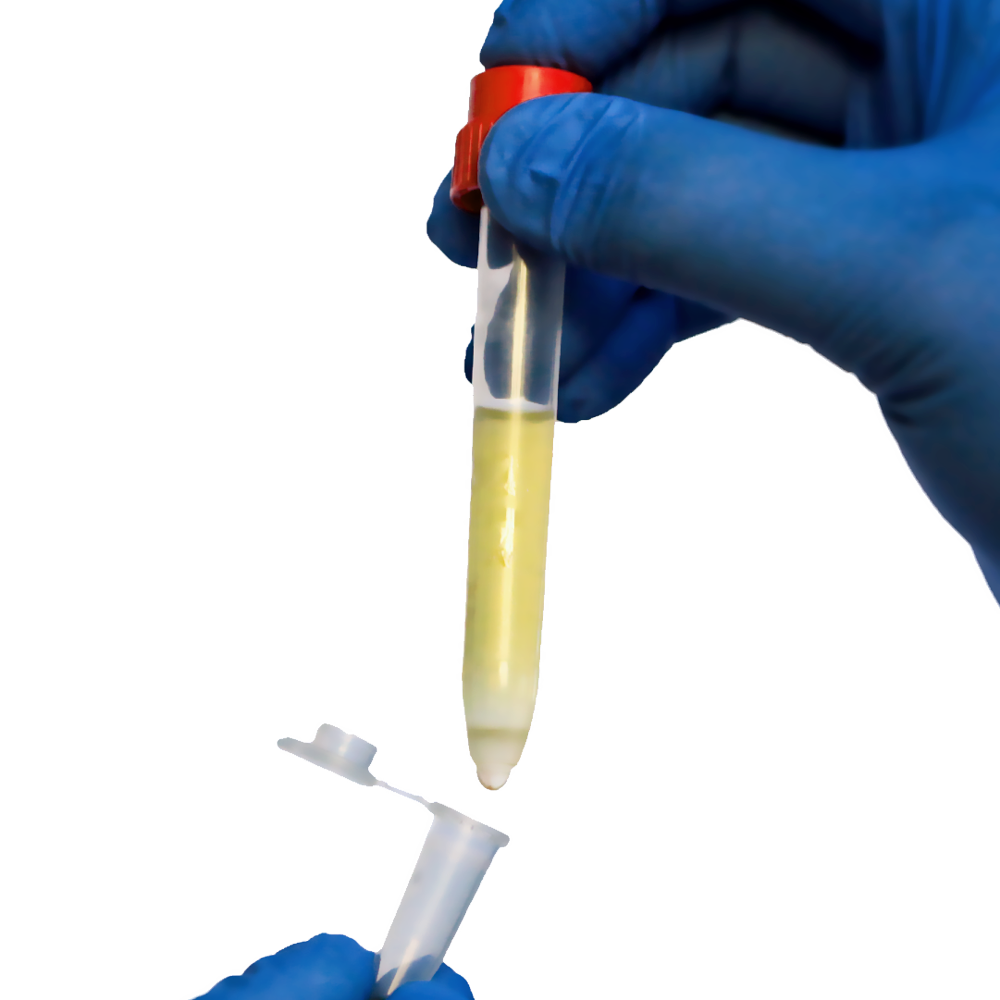
The pluriMate® tube was developed with this goal in mind. Designed for the efficient separation of leukocytes and PBMCs from whole blood and bone marrow, it incorporates a porous polyurethane sponge at the bottom of the centrifuge tube. This unique barrier eliminates the need for manually overlaying the sample onto the density gradient medium while helping prevent mixing between the sample and the separation medium.
Because the overall centrifugation procedure remains familiar, researchers can integrate pluriMate® into existing laboratory workflows without learning an entirely new technique. This article explains how pluriMate® simplifies density gradient centrifugation while allowing laboratories to continue following their established protocols.
Common Challenges in Conventional Density Gradient Centrifugation
Density gradient centrifugation remains an effective and widely accepted method for cell separation. However, laboratories performing this technique on a routine basis often encounter several practical challenges during sample preparation and cell harvesting.
Time-Consuming Sample Overlay
One of the most delicate stages of conventional density gradient centrifugation is layering the sample over the separation medium.
Researchers must carefully overlay anticoagulated blood or bone marrow onto the density gradient without disturbing the interface between the two liquids. This step requires patience and careful technique because excessive mixing can reduce the quality of cell separation. When multiple samples need to be processed, the time required for careful overlay can become a significant part of the overall workflow.
Risk of Mixing with the Separation Medium
Maintaining a clear boundary between the sample and the density gradient medium is essential for successful separation.
During manual overlay, accidental mixing may occur if the sample is added too quickly or if the pipette disturbs the surface of the density gradient. Even small amounts of mixing can affect how cells separate during centrifugation. Reducing this possibility helps laboratories achieve more consistent separation results.
Recontamination During Cell Harvesting
After centrifugation, the desired cell population is enriched at the interphase above the density gradient medium.
Harvesting this enriched fraction requires careful handling. If the lower layers become disturbed during collection, unwanted erythrocytes or granulocytes may contaminate the harvested cells. Maintaining separation during the harvesting stage is therefore just as important as the centrifugation itself.
Processing Different Sample Volumes
Laboratories often work with varying sample volumes depending on the experimental design or the available specimen. In conventional workflows, handling different sample volumes while maintaining careful overlay and consistent harvesting can become more challenging. Researchers must pay close attention throughout the process to avoid disturbing the separation layers.
As sample numbers increase, these manual steps can contribute to workflow variability and longer processing times.
Understanding the pluriMate® Design
The pluriMate® tube was developed to simplify density gradient centrifugation while preserving the familiar workflow that laboratories already use.
Rather than changing the separation principle itself, pluriMate® introduces a simple design feature that makes sample preparation and harvesting more convenient.
A Porous Polyurethane Sponge Barrier
The defining feature of the pluriMate® tube is a porous sponge located at the bottom of the centrifuge tube.
Manufactured from high-grade polyurethane, this sponge functions as a barrier between the sample material and the density gradient medium. Instead of requiring researchers to carefully overlay the sample above the medium, the barrier allows the sample to be added directly while helping maintain separation between the two liquids.
Direct Sample Loading
With pluriMate®, anticoagulated whole blood or bone marrow can be poured directly from the sampling tube into the centrifuge tube.
Because the porous barrier prevents mixing with the separation medium, laboratories no longer need to perform the careful manual overlay required in conventional density gradient centrifugation. This simplifies one of the most delicate stages of the workflow while allowing researchers to continue using their preferred density gradient media.
Maintaining the Separation Principle
Although the loading procedure becomes simpler, the basic principle of density gradient centrifugation remains unchanged.
During centrifugation, cells separate according to the density gradient being used. Depending on the selected separation medium, leukocytes, lymphocytes, or PBMCs become enriched within the interphase above the density gradient, while unwanted erythrocytes and granulocytes remain below.
Rather than introducing a completely different separation method, pluriMate® supports the same well-established centrifugation process through a more convenient tube design.
How pluriMate® Simplifies the Density Gradient Workflow
The pluriMate® tube simplifies density gradient centrifugation by reducing the amount of manual handling required before and after centrifugation while preserving the familiar laboratory workflow.
Direct Sample Addition
Instead of carefully layering the sample over the density gradient medium, researchers simply pour anticoagulated whole blood or bone marrow directly into the pluriMate® tube. The porous sponge barrier keeps the sample separate from the density gradient during loading, eliminating one of the most time-consuming preparation steps.
Separation During Centrifugation
Once centrifugation begins, cell separation follows the same principles as conventional density gradient centrifugation.
Leukocytes, lymphocytes, and PBMCs become enriched in the interphase above the density gradient medium, while unwanted erythrocytes and granulocytes separate according to the selected density gradient. The workflow remains familiar, allowing laboratories to continue using established centrifugation protocols without introducing new operating procedures.
Supporting Reliable Cell Separation
The primary purpose of density gradient centrifugation is to isolate specific cell populations while minimizing contamination from unwanted cells. Although the success of the separation depends on the selected density gradient medium, the preparation and harvesting steps also play an important role in obtaining a clean enriched cell fraction.
The pluriMate® tube has been designed to support this process by simplifying sample loading and helping maintain separation during cell harvest. Instead of changing the established principles of density gradient centrifugation, it improves how researchers perform routine laboratory procedures around the centrifugation step.
Efficient Separation of Leukocytes
Leukocytes are commonly isolated for a variety of laboratory studies. When whole blood or bone marrow is processed using the appropriate density gradient medium, the centrifugation process separates these cells from unwanted erythrocytes and granulocytes.
The pluriMate® tube supports this established workflow while eliminating the need for careful manual overlay before centrifugation.
Isolation of Peripheral Blood Mononuclear Cells (PBMCs)
The pluriMate® tube is also designed for the isolation of peripheral blood mononuclear cells (PBMCs). During centrifugation, PBMCs become enriched within the interphase above the separation medium, allowing researchers to collect the desired cell population after centrifugation.
Because the loading procedure remains straightforward, laboratories can prepare samples more efficiently while continuing to use familiar density gradient protocols.
Processing Whole Blood and Bone Marrow
The pluriMate® tube is suitable for processing both anticoagulated whole blood and bone marrow.
Instead of transferring samples through a careful layering procedure, researchers can pour the sample directly from the collection tube into the pluriMate® tube. The porous sponge barrier prevents mixing with the separation medium before centrifugation, helping simplify one of the most delicate stages of sample preparation.
Compatibility with Different Density Gradient Media
One advantage of the pluriMate® tube is its compatibility with different density gradient media depending on the target cell population.
Researchers can use appropriate separation media such as:
- Leuko Spin
- Lympho Spin
- PLT Spin
The choice of density gradient determines which cell populations become enriched during centrifugation, while the pluriMate® tube simplifies the handling steps surrounding the separation process.
Practical Benefits for Laboratory Workflows
The pluriMate® tube offers several practical advantages that help laboratories simplify routine density gradient centrifugation without requiring major changes to existing protocols.
Saving Preparation Time
Traditional density gradient centrifugation requires careful manual overlay of the sample onto the separation medium. This preparation step demands attention and can become time-consuming when processing multiple samples.
Because the porous barrier prevents mixing between the sample and the density gradient, researchers can load samples directly into the pluriMate® tube. Eliminating manual overlay helps reduce preparation time while maintaining the familiar centrifugation workflow.
Reducing Workflow Variability
Manual overlay depends on individual technique. Small differences in how samples are layered may influence the consistency of sample preparation between operators or across multiple experiments. Using the pluriMate® tube standardizes this stage of the workflow by allowing direct sample loading. This helps reduce variability introduced during manual preparation.
Supporting Cleaner Cell Harvesting
After centrifugation, harvesting the enriched cell fraction requires careful handling to avoid disturbing the lower layers.
The porous sponge barrier provides an additional advantage during this stage. After separation, it prevents recontamination of the enriched cell fraction during harvesting, regardless of the sample volume. This feature helps researchers collect the desired cells while minimizing the possibility of unwanted cells entering the harvested fraction.
Handling Different Sample Volumes
Laboratories frequently process samples of different sizes depending on the research project or specimen availability. The barrier continues to prevent recontamination during harvesting regardless of sample volume, allowing researchers to maintain a consistent collection procedure across different experiments.
Preserving Established Laboratory Procedures
One of the most significant benefits of the pluriMate® tube is that it improves workflow efficiency without requiring researchers to abandon familiar density gradient centrifugation methods.
Laboratories can continue using their existing centrifugation protocols while benefiting from simplified sample loading and more controlled harvesting.
Why Researchers Choose pluriMate®
Researchers often prefer laboratory equipment that improves efficiency without introducing unnecessary changes to established methods. The pluriMate® tube has been developed with this principle in mind.
Rather than replacing density gradient centrifugation, it enhances the workflow surrounding the separation process. Laboratories continue using the same centrifugation principles and the same density gradient media while simplifying routine preparation and harvesting.
The direct sample loading procedure reduces one of the most delicate manual steps in conventional workflows. At the same time, the porous polyurethane barrier helps maintain separation before centrifugation and prevents recontamination of the enriched cell fraction during harvesting.
Another important advantage is ease of adoption. Because researchers do not need to redesign existing protocols, the pluriMate® tube can be incorporated into routine laboratory procedures with minimal disruption.
For laboratories processing whole blood or bone marrow on a regular basis, this combination of familiar techniques and simplified handling can improve workflow efficiency while maintaining reliable cell separation.
Conclusion
Density gradient centrifugation continues to be one of the most trusted methods for separating leukocytes and peripheral blood mononuclear cells from whole blood and bone marrow. Although the separation principle remains highly effective, conventional workflows often involve time-consuming sample overlay and careful harvesting procedures that require considerable attention.
The pluriMate® tube simplifies these routine steps without changing the underlying centrifugation method. Its porous polyurethane sponge barrier allows anticoagulated whole blood or bone marrow to be added directly into the tube while preventing mixing with the density gradient medium. During centrifugation, target cell populations are enriched as expected, and after separation, the barrier helps prevent recontamination of the harvested cell fraction regardless of sample volume.
By reducing manual preparation, supporting cleaner harvesting, and maintaining compatibility with commonly used density gradient media such as Leuko Spin, Lympho Spin, and PLT Spin, the pluriMate® tube integrates easily into existing laboratory workflows. For researchers looking to improve efficiency while continuing to use familiar density gradient centrifugation protocols, pluriMate® provides a practical solution that simplifies sample preparation without changing the way they work.
 English
 French
 German
 Spanish
 Belgium
 Italian
 Brazil
 Chinese Mandarin