Particle filtration is an important step in laboratory sample preparation. Researchers use filtration to remove unwanted particles, separate material according to size, and prepare samples for further analysis. However, filtration involves more than selecting the right mesh size. The way liquid moves through the filtration device also influences how the process works.
Pressure plays an important role in this movement. When researchers use a Syringe-Strainer, they can apply positive or negative pressure to move liquid through the mesh. Although both approaches support filtration, they work in different ways and may serve different sample preparation objectives.
Positive pressure pushes liquid through the strainer. Negative pressure uses suction to draw liquid through the filtration device. Understanding this difference helps researchers select a suitable approach based on their sample and the material they want to recover.
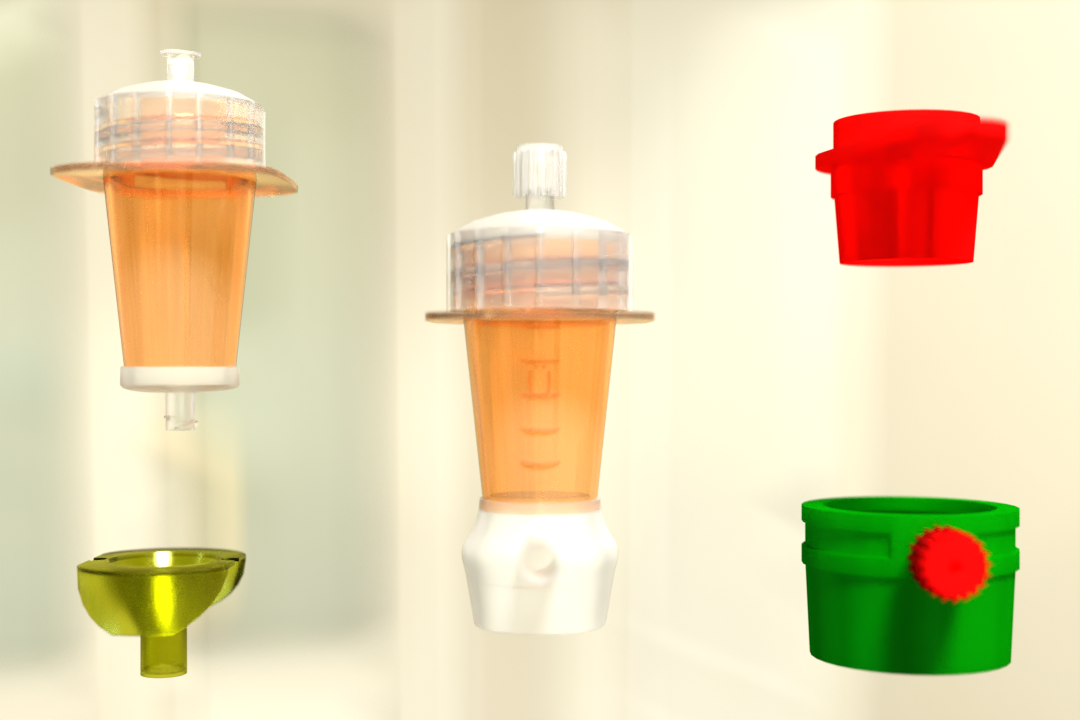
The distinction becomes particularly important when the goal is to collect particles retained on the mesh rather than simply filter the liquid. The Syringe-Strainer from pluriSelect® supports particle filtration through a range of mesh sizes. It connects to a syringe or tubing through a Luer-Lock connection and can be used with positive or negative pressure. The device is available in 15 mesh sizes, ranging from 1 to 500 µm. This range allows researchers to select a filtration level according to their sample requirements.
For laboratories working with biological, environmental, or other particle-containing samples, pressure direction and mesh selection should be considered together. Understanding how each pressure approach works can help researchers organize their filtration workflow, select the appropriate device configuration, and determine how to collect the desired fraction.
How Positive Pressure Drives Particle Filtration
Positive pressure is commonly used when researchers need to push a liquid sample through a filtration device. With a Syringe-Strainer, the researcher applies pressure by pushing the syringe plunger. This moves the sample through the strainer and across the mesh. The filtration process separates material according to the selected mesh size.
How positive pressure moves the sample
When the syringe plunger is pushed, pressure is applied to the liquid inside the syringe. The liquid moves toward the strainer and passes through the mesh openings. Particles that are small enough to pass through the selected mesh may move into the filtrate. Larger particles may remain on the mesh.
This allows researchers to separate particles from the liquid according to their size and behavior during filtration. The pressure provides the force needed to move the sample through the device. However, the filtration result also depends on the sample composition and the selected mesh.
Selecting mesh size for positive-pressure filtration
Mesh size determines which particles can pass through the filtration device. The Syringe-Strainer is available with 15 mesh sizes between 1 and 500 µm. Researchers should select a mesh according to the particles they want to remove or retain. For example, if a sample contains larger particles that need to be removed before further analysis, a suitable mesh can help retain those particles while allowing the liquid to pass. A smaller mesh may be needed when researchers want to retain smaller particles.
However, the selected mesh should match the actual filtration objective. Particles may behave differently depending on their shape, composition, and whether they form aggregates. Therefore, researchers should evaluate the filtration result rather than assuming that all particles will pass or remain based on size alone.
Factors that influence positive-pressure filtration
Several factors can influence how a sample moves through the strainer.
Sample volume: The amount of liquid being processed affects how researchers organize filtration. Larger samples may require a different workflow from small-volume samples.
Particle content: Samples containing many particles may behave differently from samples with relatively little particulate material.
Mesh size: The selected mesh determines which particles can pass through the filtration openings.
Sample characteristics: The composition of the liquid and the properties of the particles can influence filtration behavior.
Researchers should consider these factors when choosing a suitable filtration setup.
When positive pressure is useful
Positive pressure is useful when the primary objective is to push a sample through the mesh and separate particles from the liquid.
This approach can support routine sample filtration, including preparation of particle-containing samples before downstream analysis. For example, researchers may use a Syringe-Strainer to remove unwanted particles from a liquid sample.
The filtrate can then be collected for further processing. Positive pressure is also useful when the sample needs to move through the device using a syringe-based setup. The main consideration is whether pushing the liquid through the mesh meets the requirements of the sample preparation process.
How Negative Pressure Supports Particle Recovery
Negative pressure provides a different way to move liquid through a Syringe-Strainer. Instead of pushing the sample toward the mesh, researchers apply suction to draw liquid through the filtration device. This approach can also support particle recovery when the retained material is the fraction researchers want to collect.
Understanding negative pressure
Negative pressure creates a pressure difference that draws liquid through the filtration device. When suction is applied, liquid moves through the mesh toward the collection side.
Particles that cannot pass through the selected mesh remain on the filtration surface. The process allows researchers to separate the liquid from retained material. The difference from positive pressure is the direction in which the sample is moved. Positive pressure pushes liquid through the strainer, while negative pressure draws it through.
Both approaches can support particle filtration, but the preferred method depends on the sample and the intended outcome.
Recovering retained particles
In some laboratory workflows, the particles retained on the mesh are the material researchers want to collect. Examples include samples where particles need to be examined, transferred, or processed further. In these situations, filtration is not complete when the liquid passes through the device. Researchers also need a way to recover the retained material.
The Syringe-Strainer can support particle recovery through negative pressure and backwashing. This allows researchers to collect retained particles rather than leaving them on the mesh. The recovery process is particularly relevant when the target material is the fraction that does not pass through the selected pore size.
Using backwashing to collect retained material
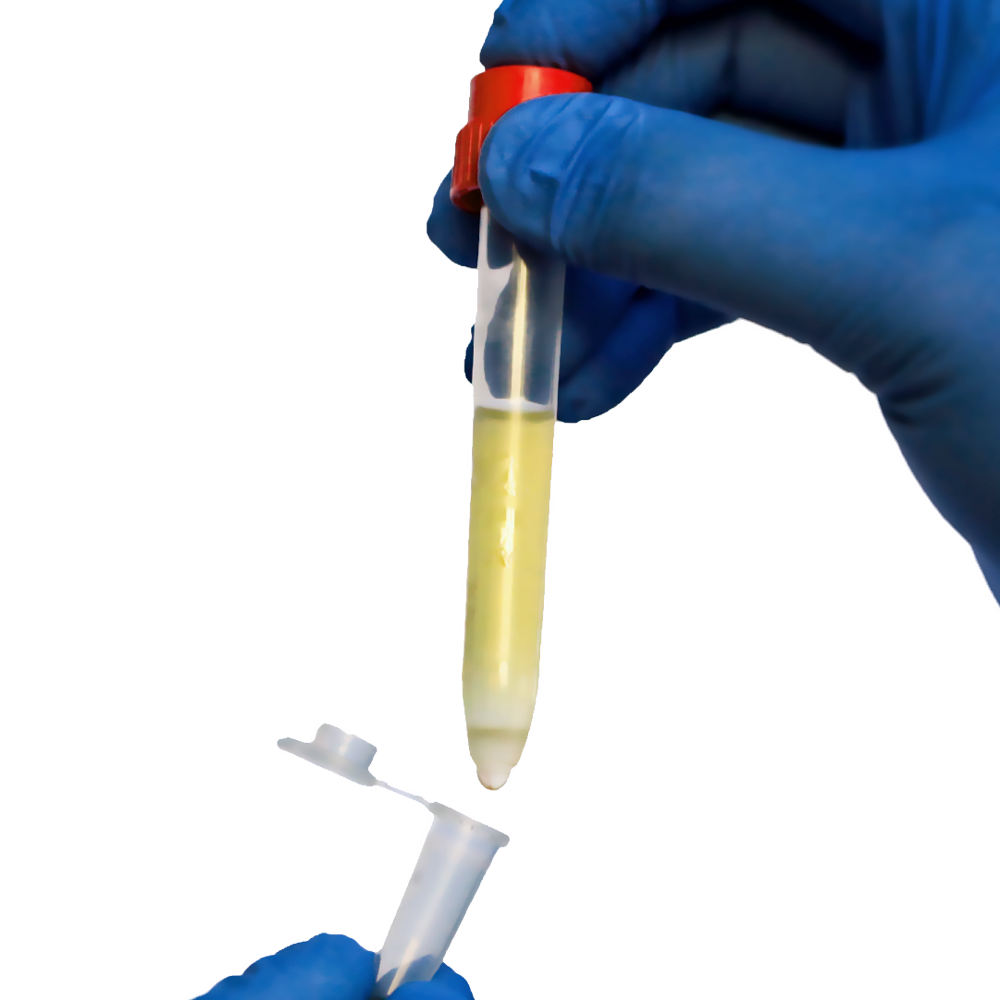
Backwashing provides a way to move retained particles away from the mesh. After filtration, researchers can use the syringe-based setup to recover material from the strainer.
The retained particles can be transferred back into a syringe for further processing. This provides a way to collect material that would otherwise remain on the filtration surface. The recovery approach should be selected according to the sample and the particles being collected. Researchers should also consider whether the recovered material needs to remain in a particular liquid or be prepared for another analytical step.
When negative pressure is useful
Negative pressure is useful when researchers want to draw liquid through the filtration device. It can also support workflows where retained particles need to be recovered.
For example, researchers may filter a sample to retain particles on the mesh and then recover those particles for further analysis. This makes negative pressure relevant to workflows where particle collection is an important part of sample preparation. The main advantage is that researchers can organize filtration and recovery within a syringe-based setup.
However, the suitability of negative pressure depends on the sample and the intended separation. Researchers should consider whether the target material is in the filtrate or on the mesh before selecting the pressure approach.
Choosing Pressure Conditions for Different Filtration Workflows
Positive and negative pressure can both support particle filtration, but the choice should depend on the research objective. Researchers need to determine which fraction they want to collect and how the sample should be processed.
Identify the target fraction
The first step is to determine whether the desired material is expected to pass through the mesh or remain on it. If the objective is to collect the liquid after removing unwanted particles, positive pressure may provide a suitable approach.
If the objective includes collecting retained particles, researchers should consider how those particles will be recovered. Negative pressure and backwashing can support workflows where retained material needs to be collected. The target fraction should guide the filtration method.
Match mesh size to the sample
Pressure direction does not replace mesh selection. The mesh determines the size-based separation, while pressure provides the force that moves the liquid through the device.
Researchers should therefore select mesh size according to the particles they need to separate. The Syringe-Strainer offers 15 mesh sizes from 1 to 500 µm. This range supports different filtration requirements, from smaller particles to larger material.
However, researchers should consider the sample composition and particle behavior when choosing the mesh. A suitable filtration setup should support the intended separation without unnecessarily removing the target material.
Consider sample volume and particle load
The amount of sample and its particle content can influence how filtration is organized. Small-volume samples may be processed directly using a syringe-based setup. For larger sample volumes, researchers may connect the Syringe-Strainer to tubing or a pump through its Luer-Lock connection.
This can support filtration workflows that require more than a standard syringe volume. The appropriate setup depends on the sample and the amount of material being processed. Researchers should also consider how much retained material they expect to collect.
Decide whether filtration and recovery are both required
Not every workflow needs particle recovery. Some experiments require only the filtrate, while others focus on the particles retained on the mesh. If the filtrate is the target, researchers should organize the process around collecting the liquid that passes through the strainer.
If retained particles are the target, researchers should plan for recovery after filtration. This distinction helps prevent unnecessary steps. The filtration method should reflect the intended use of the sample rather than applying the same procedure to every experiment.
Use pressure according to the workflow objective
Positive pressure is appropriate when researchers need to push liquid through the mesh. Negative pressure can support liquid movement through suction and may be useful when recovering retained particles. Some workflows may use both approaches at different stages.
For example, researchers may first filter a sample to retain particles and then recover those particles through a separate handling step. The choice should depend on the target fraction, sample volume, particle properties, and downstream requirements.
Maintain consistent filtration conditions
Consistency is important when researchers process several samples or compare results across experiments. The mesh size, sample preparation, filtration approach, and recovery procedure should be selected according to the application. Researchers should avoid changing several filtration conditions at once when evaluating a workflow.
A defined procedure makes it easier to understand how filtration affects the sample and whether the selected approach meets the research objective. The final workflow should include only the steps required for filtration and recovery.
Conclusion
Positive and negative pressure provide different ways to move liquid through a Syringe-Strainer. Positive pressure pushes the sample through the mesh, allowing researchers to separate particles from the liquid.
Negative pressure draws liquid through the device and can support workflows where retained particles need to be recovered. The choice between these approaches depends on the sample and the intended outcome. Researchers should first determine whether the desired material is in the filtrate or retained on the mesh. They should then select an appropriate mesh size and organize the filtration process according to the sample volume and particle content.
The Syringe-Strainer from pluriSelect® supports these workflows through its Luer-Lock connection, compatibility with positive and negative pressure, and 15 mesh sizes ranging from 1 to 500 µm. These features provide options for different laboratory filtration requirements.
When retained particles are the target, researchers can consider negative pressure and backwashing to support recovery. When the filtrate is the desired fraction, positive-pressure filtration may provide a suitable approach for moving the sample through the mesh. The most appropriate workflow depends on the research objective. By matching pressure direction, mesh size, and recovery method to the sample, laboratories can organize particle filtration more effectively and prepare material for downstream laboratory applications.
 English
 French
 German
 Spanish
 Belgium
 Italian
 Brazil
 Chinese Mandarin