Peripheral blood mononuclear cells (PBMCs) are widely used in immunology, cell biology, and clinical research. They include lymphocytes and monocytes, which help researchers investigate immune responses, inflammation, and cellular interactions.
PBMC isolation usually begins with a blood sample containing several types of blood cells. Researchers need to separate the mononuclear cells from red blood cells and granulocytes before using the recovered population in downstream experiments.
However, blood sample age can influence the isolation process. When blood remains unprocessed for more than 24 hours, its cellular condition may change. These changes can affect how cells behave during separation and how clearly the different blood components form layers. Granulocyte contamination is one concern when processing delayed blood samples. Granulocytes are white blood cells that include neutrophils, eosinophils, and basophils. Unlike monocytes and lymphocytes, they are generally separated from PBMCs during density-based isolation.
If granulocytes enter the collected PBMC fraction, they can affect the composition of the recovered sample. This may create challenges for experiments that require a defined mononuclear cell population.
The extent of contamination depends on several factors, including the condition of the blood, sample handling, and the separation method. Researchers therefore need to evaluate older samples carefully rather than assuming that a procedure developed for freshly collected blood will produce the same result after prolonged storage. The objective is to prepare a suitable PBMC fraction while considering cell recovery, sample composition, and the requirements of the downstream application.
Understanding how blood aging affects separation can help researchers select an appropriate workflow and identify where additional quality checks are needed.
How Blood Storage Changes the Starting Sample
Blood is a mixture of cells and liquid components. During storage, the condition of these components can change, making sample preparation more challenging.
The effects of storage depend on factors such as temperature, collection conditions, anticoagulant, and the duration before processing. For this reason, blood older than 24 hours should not automatically be treated as equivalent to freshly collected blood.
Changes in blood cell condition
Blood cells may undergo changes during prolonged storage. These changes can influence cell appearance, physical behavior, and the way cells respond during separation. Granulocytes are particularly important to consider because their condition can change during storage. Depending on the sample and storage conditions, granulocytes may show changes that affect their behavior during density-based separation.
Researchers should therefore evaluate the condition of the sample before beginning PBMC isolation. The 24-hour mark is a useful point for considering delayed processing, but it is not a universal threshold after which every blood sample becomes unsuitable.
Some samples may remain usable for specific applications, while others may show changes that affect recovery or purity. The appropriate decision depends on the sample condition and the requirements of the experiment.
Why granulocyte behavior matters
Granulocytes and PBMCs differ in their physical properties. Density gradient centrifugation uses these differences to separate blood cell populations. Under suitable conditions, PBMCs collect at the interface between the plasma or sample layer and the density gradient medium. Granulocytes generally move into a different fraction.
However, when blood is stored for an extended period, changes in cell condition can affect separation behavior. Granulocytes may become more difficult to separate cleanly from the PBMC fraction.
This can contribute to contamination during collection. The important point is that granulocyte contamination is not determined by sample age alone. It also depends on how the cells behave during separation and how the PBMC layer is collected.
Aggregation and layer formation
Delayed blood samples may contain changes in cell interactions or aggregation. When cells form aggregates, they may behave differently during centrifugation than individual cells. This can complicate the separation of blood components.
Aggregates may interfere with the formation of clear layers or contribute to unwanted material entering the collected fraction.
Researchers should therefore consider whether the sample contains visible aggregates or other signs of changes in cellular condition. The presence of aggregates does not automatically mean that the sample cannot be processed. However, it may indicate that the separation procedure needs careful evaluation.
Evaluating the sample before isolation
Before beginning PBMC isolation, researchers should review the sample’s collection and storage history.
Important considerations include:
- Time between blood collection and processing
- Storage temperature and conditions
- Sample type and anticoagulant
- Visible changes in the sample
- Presence of clumps or aggregates
- Requirements of the downstream application
These factors help researchers determine whether the sample is suitable for the intended procedure. A sample that has been stored for more than 24 hours may require additional evaluation before processing.
The goal is to understand the starting material rather than assume that all delayed samples behave in the same way.
Choosing an Isolation Method to Reduce Granulocyte Contamination
The separation method plays an important role in PBMC isolation. Researchers need to select a procedure that supports the separation of mononuclear cells from granulocytes and other blood components.
Understanding density gradient centrifugation
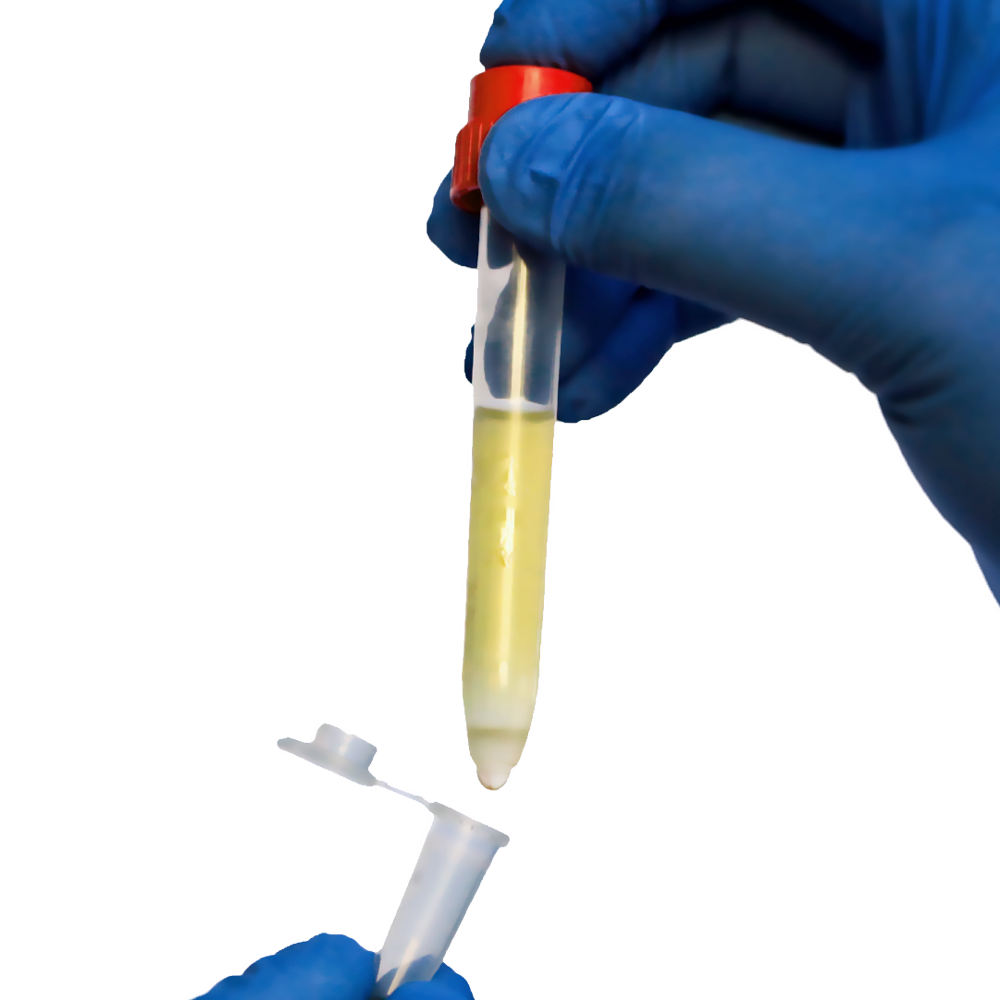
Density gradient centrifugation is commonly used to separate PBMCs from blood-derived samples. The method uses a density gradient medium to help separate cells according to their physical properties. During centrifugation, blood components move through the sample and form different fractions.
Under suitable conditions, PBMCs collect at the interface between the sample and the density gradient medium. Granulocytes and red blood cells generally move into other fractions. Researchers can then collect the PBMC layer for further processing.
The separation depends on the sample condition and the selected procedure. When blood has been stored for more than 24 hours, researchers should consider whether changes in cell behavior may affect the separation. The method should be evaluated according to the quality of the recovered fraction rather than relying only on the expected position of the PBMC layer.
Why granulocytes may enter the PBMC fraction
Granulocyte contamination can occur when the separation does not produce a clean distinction between the target cells and unwanted populations. Several factors may contribute. First, delayed processing can change the condition of blood cells. Second, cell aggregation may affect how cells move during centrifugation. Third, the separation conditions may not be suitable for the sample.
Finally, collection of the PBMC layer may introduce material from neighboring fractions. These factors should be considered together. A separation method that works well with one sample may not produce the same result with a sample that has been stored for a longer period. Researchers should therefore evaluate the sample and the recovered fraction when processing older blood.
How pluriMate® supports PBMC enrichment
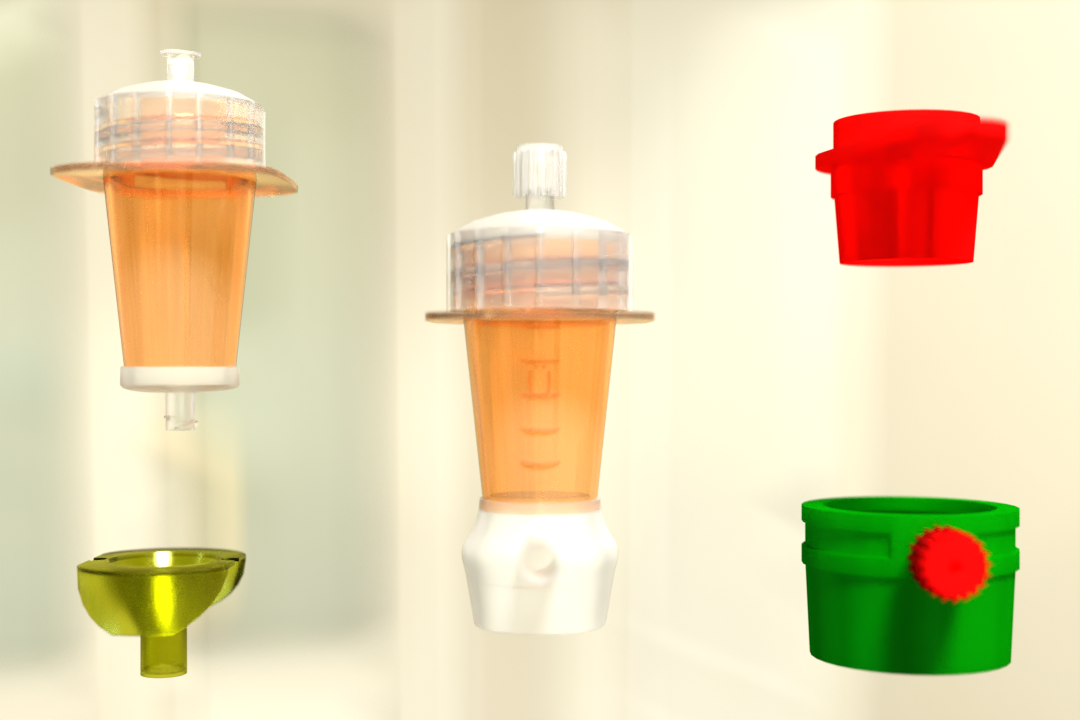
pluriMate® provides an approach to PBMC enrichment using a porous polyurethane sponge positioned at the bottom of a centrifuge tube. The sample can be poured directly into the tube without manually overlaying it onto the density gradient medium.
The sponge acts as a barrier between the sample and the density gradient medium. This helps prevent mixing between the layers during sample preparation.
During centrifugation, the target leukocytes or PBMCs can enrich at the interphase, depending on the gradient and the separation conditions. The barrier also supports separation of the sample from the density gradient medium during the process.
This approach can help reduce recontamination during collection. For researchers working with blood-derived samples, the device provides a different way to organize the sample and gradient medium before centrifugation. However, the performance of any enrichment procedure depends on the sample condition and the requirements of the application. pluriMate® should not be considered a guarantee that granulocyte contamination will be eliminated from blood older than 24 hours. Researchers should evaluate the recovered fraction to determine whether it meets their experimental requirements.
Selecting a suitable workflow for delayed samples
The isolation method should be selected according to the sample and the intended application.
Researchers should consider whether the procedure supports the required PBMC recovery and whether it produces a sufficiently defined cell population. For older blood samples, the workflow should account for possible changes in cell condition and separation behavior.
A suitable procedure should also allow researchers to collect the PBMC fraction without unnecessarily disturbing neighboring layers. The final choice should be based on sample evaluation and the quality requirements of the downstream experiment.
Practical Steps to Improve PBMC Recovery and Sample Purity
Once the isolation method has been selected, researchers need to organize the sample preparation process carefully. The goal is to recover a PBMC fraction that meets the requirements of the intended application.
Review sample age and condition
The first step is to confirm the sample’s collection and storage history. Researchers should record the time between collection and processing. They should also review the storage conditions and check for visible changes in the sample.
This information helps determine whether the sample may require additional evaluation. Blood older than 24 hours should be assessed according to its condition rather than automatically accepted or rejected. The requirements of the downstream application should guide this decision.
Prepare samples consistently
Sample preparation should follow the requirements of the selected isolation method. Researchers should use a consistent approach when handling samples before centrifugation.
This includes following the procedure for sample preparation, density gradient setup, and loading. Consistency helps reduce variation between samples. It also makes it easier to identify whether differences in the recovered fraction may be related to sample condition or handling.
Collect the PBMC layer carefully
Collection of the PBMC layer is an important part of the isolation process. The target fraction forms between other blood components, so researchers need to collect it without introducing unwanted material from neighboring layers. This becomes particularly relevant when processing delayed samples that may show changes in layer formation.
Researchers should follow the selected procedure and avoid disturbing the separation more than necessary.
The collection method should be consistent across samples. Careful collection can help reduce the introduction of unwanted cell populations, although it cannot correct every issue caused by changes in the starting sample.
Assess granulocyte contamination
After isolation, researchers should evaluate the composition of the recovered fraction. The presence of granulocytes should be assessed using a suitable method for the application. This helps determine whether the collected sample meets the required purity.
Researchers should not assume that the expected position of the PBMC layer confirms its composition. The recovered fraction needs to be evaluated according to the experiment’s requirements.
If granulocyte contamination is higher than acceptable, researchers should review the sample condition, separation procedure, and collection process. This provides a basis for determining whether the workflow needs adjustment.
Evaluate cell recovery and viability
Purity is only one part of sample quality. Researchers should also consider how many cells were recovered and whether the cells are suitable for downstream work. Cell recovery helps determine whether the isolation process provided enough target cells for the experiment.
Viability assessment helps researchers evaluate the condition of the recovered population. These measurements should be interpreted according to the requirements of the application. A sample with acceptable purity may still require further evaluation if cell recovery or viability does not meet the experimental needs.
Handle the enriched fraction according to the application
After collection, the PBMC fraction should be handled according to the downstream procedure. Different applications may require different sample conditions.
Researchers should consider the intended experiment when deciding how to process and prepare the recovered cells. Unnecessary transfers or additional processing should be avoided when they do not contribute to the experimental objective. The final workflow should preserve the sample in a condition suitable for the intended analysis.
Establish a consistent procedure
When processing multiple delayed blood samples, researchers should document the isolation procedure.
Important details include sample age, storage conditions, separation method, collection approach, and quality assessment.
This helps laboratories compare results across samples. It also supports evaluation of whether differences in granulocyte contamination may be related to sample condition or processing. A consistent procedure provides a practical basis for improving the workflow over time.
Conclusion
PBMC isolation from blood older than 24 hours requires careful consideration of the starting sample and the separation process. Prolonged storage can affect blood cell condition and separation behavior.
These changes may influence how clearly the PBMC fraction separates from granulocytes and other blood components. However, sample age alone does not determine whether isolation will be successful.
Storage conditions, sample composition, aggregation, separation method, and collection technique all contribute to the final result. Researchers should therefore evaluate delayed blood samples before processing and select an isolation method according to the requirements of the experiment. Density gradient centrifugation remains an important approach for separating PBMCs from other blood components. pluriMate® supports PBMC enrichment through a porous barrier that separates the sample from the density gradient medium and helps reduce recontamination during collection.
Its use should be considered within the complete sample preparation workflow rather than as a guarantee of granulocyte-free isolation. After enrichment, researchers should assess granulocyte contamination, cell recovery, and viability. These checks help determine whether the recovered PBMC fraction is suitable for downstream applications.
For laboratories processing delayed blood samples, the most useful approach is to combine careful sample evaluation, suitable separation conditions, consistent fraction collection, and appropriate quality assessment. By understanding how blood storage can influence cell separation, researchers can make more informed decisions about PBMC isolation and establish workflows that better match their experimental requirements.
 English
 French
 German
 Spanish
 Belgium
 Italian
 Brazil
 Chinese Mandarin