Cell selection is an important step when researchers need to obtain a specific cell population from a mixed sample. Blood, tissue, and cell culture samples often contain several cell types, while downstream experiments may require only one population. The challenge is not simply to isolate the right cells, but to choose a method that preserves the cells in a form suitable for further use.
Two widely used approaches are positive and negative cell selection. Although both are designed to enrich a desired cell population, they achieve this in different ways.
Positive selection focuses directly on the cells researchers want to collect. These cells are identified using specific markers and captured from the sample. Negative selection takes the opposite approach: unwanted cells are identified and removed, leaving the desired population behind. This difference becomes especially important when the goal is to obtain untouched cells. If the target cells need to remain free from selection-related antibodies or particles, the method used for isolation can affect how suitable they are for subsequent experiments.
Understanding how positive and negative selection work makes it easier to decide which approach fits a particular research workflow.
What Is Positive Cell Selection?
Positive cell selection isolates cells by targeting the population of interest directly. The process begins by identifying a marker that is present on the target cells. A specific antibody is then used to recognize that marker and bind to the cells. The antibody may be linked to a particle or another separation component, allowing the target cells to be separated from the rest of the sample.
The main advantage of this approach is its direct targeting. Instead of removing several unwanted populations one by one, the method captures the cells that researchers specifically need. For example, if a sample contains several blood cell populations and the experiment requires one particular cell type, positive selection can be designed to recognize a marker associated with that population. The selected cells are then separated from the remaining sample material.
However, the direct interaction with the target cells is also an important consideration. Because the selection components are designed to bind the cells of interest, the target population is exposed to the antibodies or particles used during the separation process.
This may not be a concern for every application. In workflows where the main priority is simply to enrich a defined cell population, positive selection can be a practical choice. But when researchers specifically need cells in an untouched state, a different strategy may be more appropriate.
What Is Negative Cell Selection?
Negative cell selection uses an opposite strategy. Rather than binding the cells researchers want, it targets the cells they want to remove. In this approach, antibodies are used to recognize unwanted cell populations. These cells are then separated from the sample, while the desired cells remain unbound.
The key idea is simple: remove what is not needed rather than capture what is needed.
This makes negative selection particularly useful when researchers want the target population to remain untouched by the selection reagents. Since the antibodies are directed toward unwanted cells, the desired cells do not need to be directly labeled during the selection process.
After the unwanted cells have been removed, the remaining fraction contains the enriched target population. The exact unwanted populations that are removed depend on the sample and the cell type being isolated.
Negative selection can therefore be useful when the biological state of the target cells matters. Researchers may want to examine cell behavior, activation, differentiation, or other characteristics without directly exposing the target population to selection antibodies or particles.
The approach also changes how researchers think about cell isolation. Instead of asking, “How do I capture my target cells?”, negative selection asks, “Which cells do I need to remove so my target cells remain?”
Positive vs. Negative Selection: How the Workflows Differ
The biggest difference between the two methods is which cells are targeted during separation.
| Feature |
Positive Selection |
Negative Selection |
| Cells targeted |
Desired cells |
Unwanted cells |
| Target cells directly labeled |
Yes |
No |
| Main objective |
Capture the cells of interest |
Remove unwanted cells |
| Suitable when |
Direct target-cell capture is acceptable |
Untouched target cells are important |
| Target cell state |
Selection components interact directly with target cells |
Target cells remain unbound |
The difference starts at the labeling stage. In positive selection, the target population receives the selection label because it is the population being captured. In negative selection, labeling is directed toward unwanted populations instead.
The separation step follows the same logic. Positive selection isolates the labeled target cells, whereas negative selection separates away the labeled unwanted cells.
This distinction can influence the next stage of an experiment. If researchers need target cells that have not been directly exposed to selection antibodies or particles, negative selection has a clear practical advantage.
At the same time, neither approach is universally better. The appropriate method depends on what researchers need from the isolated cells and how those cells will be used afterward. The question becomes more specific when the requirement is not simply cell enrichment, but enrichment of cells that remain untouched.
Why Negative Selection Is Better Suited for Untouched Cells
When the goal is to isolate cells in their original, unbound state, the way selection reagents interact with the sample becomes especially important.
In positive selection, antibodies or particles are attached to the target cells so that those cells can be identified and collected. This direct interaction can be useful when target-cell capture is the priority, but it means the isolated cells have been involved in the selection process.
Negative selection takes a different approach. Antibodies identify the unwanted cells instead, allowing those populations to be removed while the target cells remain unbound. The desired cells therefore do not need to carry the selection label.
This is the main reason negative selection is generally better suited for obtaining untouched cells. Researchers can enrich their population of interest without directly targeting it during the selection step.
An untouched cell population can be valuable when researchers want to use the isolated cells for downstream experiments where their natural characteristics matter. Keeping the target cells free from direct antibody or particle binding can help maintain a cleaner starting population for subsequent work.
Negative selection is therefore particularly relevant when the objective is not just cell enrichment, but enrichment while keeping the target cells as close as possible to their original state.
How pluriSpin® Supports Untouched Cell Separation
pluriSpin® is designed around the negative selection principle, making it suitable for workflows where researchers need viable, untouched target cells.
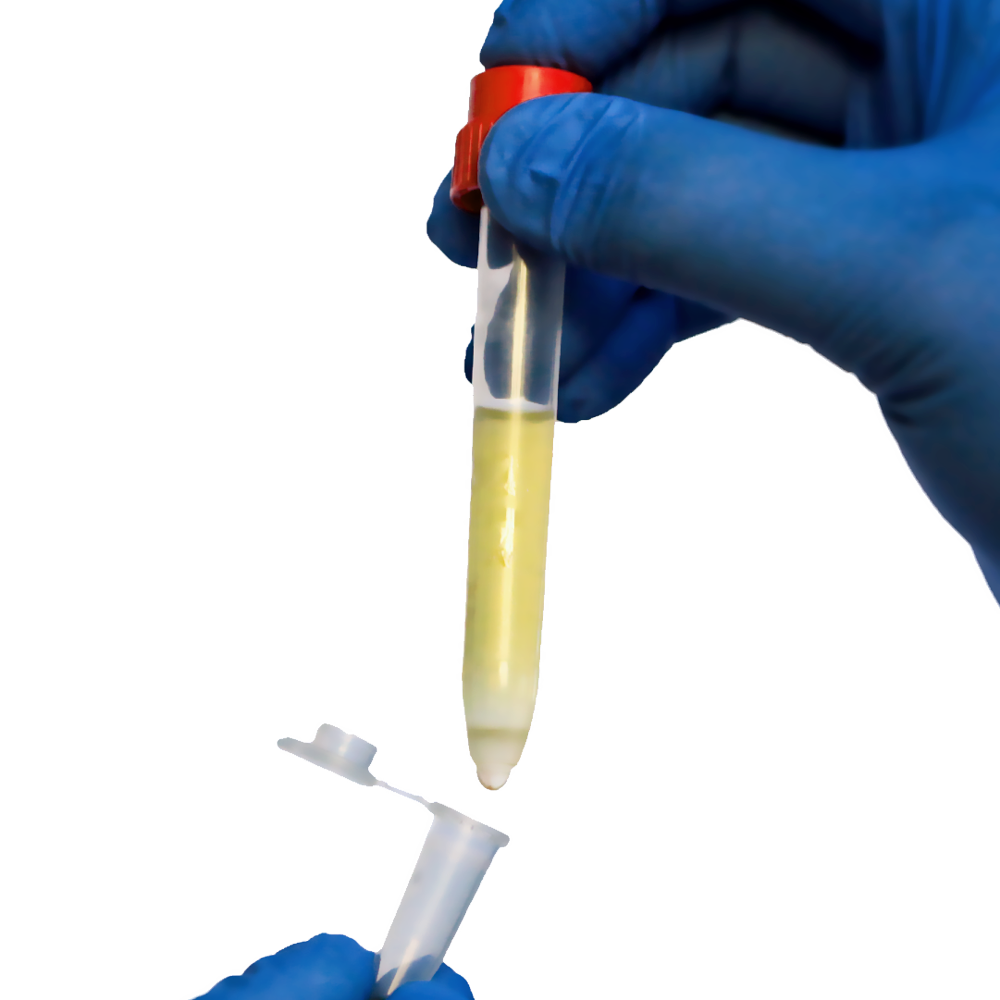
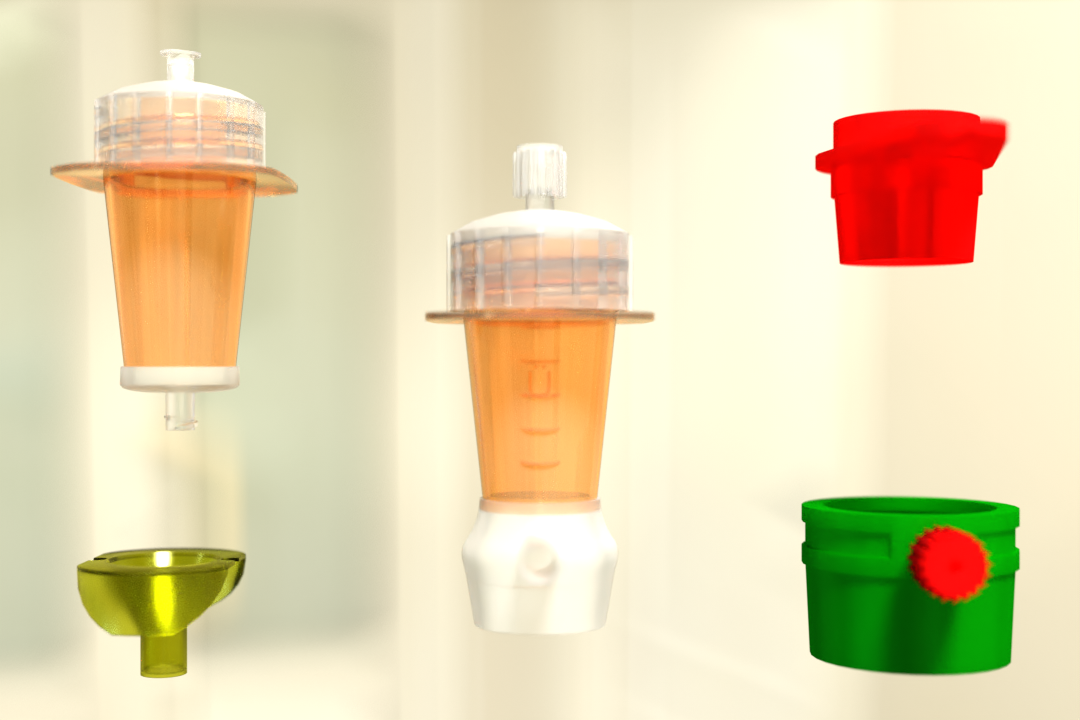
Instead of labeling the cells of interest, pluriSpin® uses specific antibodies to bind the unwanted cells. The target cells remain unbound during the selection process. Once the unwanted cells have been separated, the desired population can be collected for further applications. Another feature of the pluriSpin® approach is that the separation is performed using density gradient centrifugation. This means the workflow does not depend on magnets or columns.
The combination of negative selection and density-based separation provides a straightforward way to enrich target cells while avoiding direct antibody or bead binding to the cells researchers want to retain.
This can be especially useful when the isolated cells will be used in experiments where maintaining their untreated state is important. Rather than modifying the target population to make it separable, pluriSpin® removes the populations that are not required.
When Should Researchers Choose Positive Selection Instead?
Negative selection is not automatically the best choice for every cell isolation workflow. Positive selection can be preferable when researchers need to directly capture and enrich a specific cell population. For example, if a target population is defined by a well-characterized surface marker and direct labeling does not interfere with the intended downstream application, positive selection can offer a practical way to obtain the cells of interest.
Positive selection may also make sense when the primary requirement is strong and direct enrichment rather than maintaining an untouched target population.
The decision should therefore be based on what happens after cell separation.
If the experiment requires target cells that have not been directly labeled during isolation, negative selection is the more appropriate strategy. If direct interaction with the target cells is acceptable and efficient capture is the main objective, positive selection may be suitable.
In other words, the question is not simply which technique gives an enriched cell population. It is whether the selection process itself needs to leave the target cells untouched.
Comparing the Practical Benefits for Laboratory Workflows
Beyond the basic difference in selection strategy, researchers should consider how each method fits into the overall workflow.
Positive selection follows a direct capture model: identify the desired cells, label them, and separate them from the rest of the sample. This can be convenient when the target population is the main focus of the separation. Negative selection reverses the process. Researchers identify the populations that need to be removed and leave the target cells outside the labeling step.
This distinction can simplify decision-making when planning downstream experiments. If target-cell labeling could affect the intended analysis, negative selection provides a way to avoid that direct interaction.
The choice can also depend on the characteristics of the starting sample. Different samples contain different combinations of unwanted cell populations, so the selection strategy should be matched to the cell population researchers want to retain. Ultimately, the most useful method is the one that supports the purpose of the experiment rather than simply producing an enriched fraction.
Conclusion: Which Method Is Better for Untouched Cells?
Both positive and negative cell selection can be used to enrich specific cell populations, but the way they approach separation is fundamentally different. Positive selection directly targets the cells of interest, allowing them to be captured from the sample. Negative selection instead identifies and removes unwanted cells, leaving the desired population unbound.
For applications where researchers need untouched cells, this difference is particularly important. Since the target cells are not directly targeted by selection antibodies or particles during negative selection, they can be collected without the direct labeling used in positive selection. This makes negative selection a suitable choice when preserving the target cell population in an untouched state is an important part of the experimental design.
pluriSpin® is designed for this type of cell separation. It uses negative selection together with density gradient centrifugation to remove unwanted cells while enriching the desired population. The method does not require magnets or columns, offering a straightforward approach to untouched cell isolation.
Ultimately, the best selection method depends on the downstream application. However, when untouched target cells are the priority, negative selection provides a clear and practical advantage.
 English
 French
 German
 Spanish
 Belgium
 Italian
 Brazil
 Chinese Mandarin