Leukocyte isolation involves more than separating white blood cells from other blood components. Researchers also need to recover the enriched cell fraction without introducing unwanted cells or disturbing the separation achieved during centrifugation. Even when the separation process works as intended, the harvesting stage can affect the quality of the final sample.
During density-based separation, leukocytes move to a specific position within the density gradient according to their physical properties. The enriched fraction must then be collected carefully while avoiding the transfer of surrounding blood components or density gradient medium. If these materials enter the collected fraction, they can affect sample purity and create additional work during downstream processing.
This makes recontamination an important consideration in workflows involving leukocyte and peripheral blood mononuclear cell (PBMC) isolation. The collection step should preserve the separation achieved during centrifugation rather than compromise it through unnecessary handling.
PluriMate® addresses this challenge through a porous polyurethane sponge barrier integrated into its centrifuge tube design. The barrier helps prevent recontamination of the enriched fraction during harvesting, supporting a more controlled approach to leukocyte recovery.
Understanding the Sources of Recontamination During Leukocyte Harvesting
Density-based separation relies on differences in the density of sample components. During centrifugation, cells move through the density gradient medium and form distinct fractions. In leukocyte isolation workflows, the target cells are enriched at the interface above the separation medium, while other components occupy different positions in the tube.
However, the presence of distinct fractions does not automatically guarantee a clean harvest. The way the sample is handled after centrifugation can influence which components enter the collected fraction.
Disturbance of separated layers
One potential source of contamination is the disturbance of separated layers during collection. After centrifugation, the enriched fraction is positioned close to other sample components and the density gradient medium. If the tube is handled abruptly or the collection process is not controlled, these layers may become disturbed.
This can make it more difficult to collect only the target fraction. Material from neighboring layers may be transferred along with the enriched leukocytes, affecting the composition of the recovered sample.
Carryover of unwanted blood components
Whole blood contains several cellular components, including erythrocytes, granulocytes, lymphocytes, and monocytes. The objective of leukocyte separation is to enrich the required cell population while reducing the presence of unwanted components.
If surrounding fractions are accidentally collected during harvesting, unwanted cells may enter the enriched fraction. The extent of carryover depends on the sample, separation conditions, and collection technique. This is particularly relevant when researchers need a consistent cell population for subsequent laboratory applications.
Transfer of density gradient medium
Density gradient medium plays an important role in separating cells, but it is not generally intended to be part of the final enriched cell preparation. During harvesting, collecting too much material from the interface or disturbing the separation boundary can result in density medium being transferred with the target cells.
This may require additional washing or processing steps, depending on the downstream application. Careful collection is therefore important for limiting unwanted material in the recovered fraction.
Repeated handling and transfers
Every additional transfer creates another opportunity for sample disturbance or accidental carryover. Moving the enriched fraction between containers, repeatedly adjusting the collection position, or handling the sample more than necessary can make the process harder to control.
These challenges show why recontamination should not be considered only a centrifugation issue. The design of the separation tube and the way the enriched fraction is recovered also matter.
How PluriMate® Helps Prevent Recontamination During Leukocyte Harvesting
The design of the separation tube can influence how the sample is handled before, during, and after centrifugation. PluriMate® is designed to simplify density-based separation of leukocytes and PBMCs from anticoagulated whole blood and bone marrow.
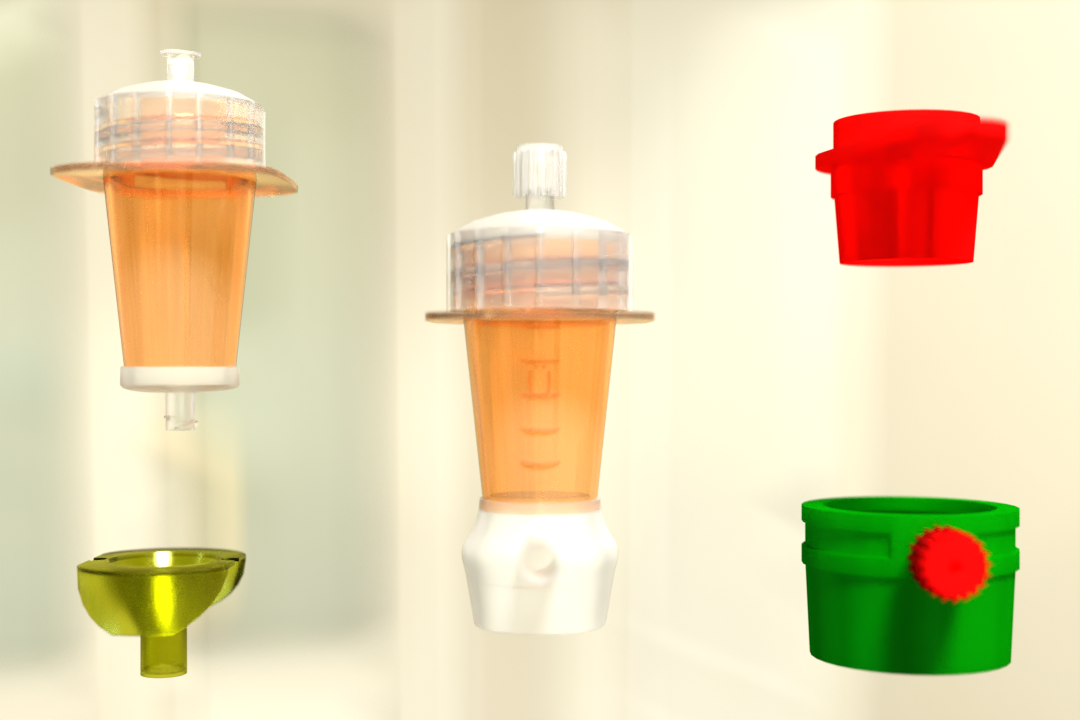
Its defining feature is a porous sponge made from high-grade polyurethane, positioned at the bottom of the centrifuge tube. This sponge acts as a physical barrier between the sample and the density gradient medium. It supports the separation process during preparation and helps prevent recontamination of the enriched fraction during harvesting.
A physical barrier between the sample and density gradient medium
In conventional density gradient workflows, researchers generally need to carefully layer the sample over the density gradient medium. This requires controlled pipetting to establish the interface before centrifugation.
PluriMate® uses its integrated sponge to separate these components during sample loading. Anticoagulated blood or bone marrow can be poured directly into the tube without requiring manual overlaying.
The barrier helps maintain the separation between the sample and density gradient medium before centrifugation. This reduces dependence on manual layering and provides a more straightforward starting arrangement for the separation process.
Supporting cleaner recovery of the enriched fraction
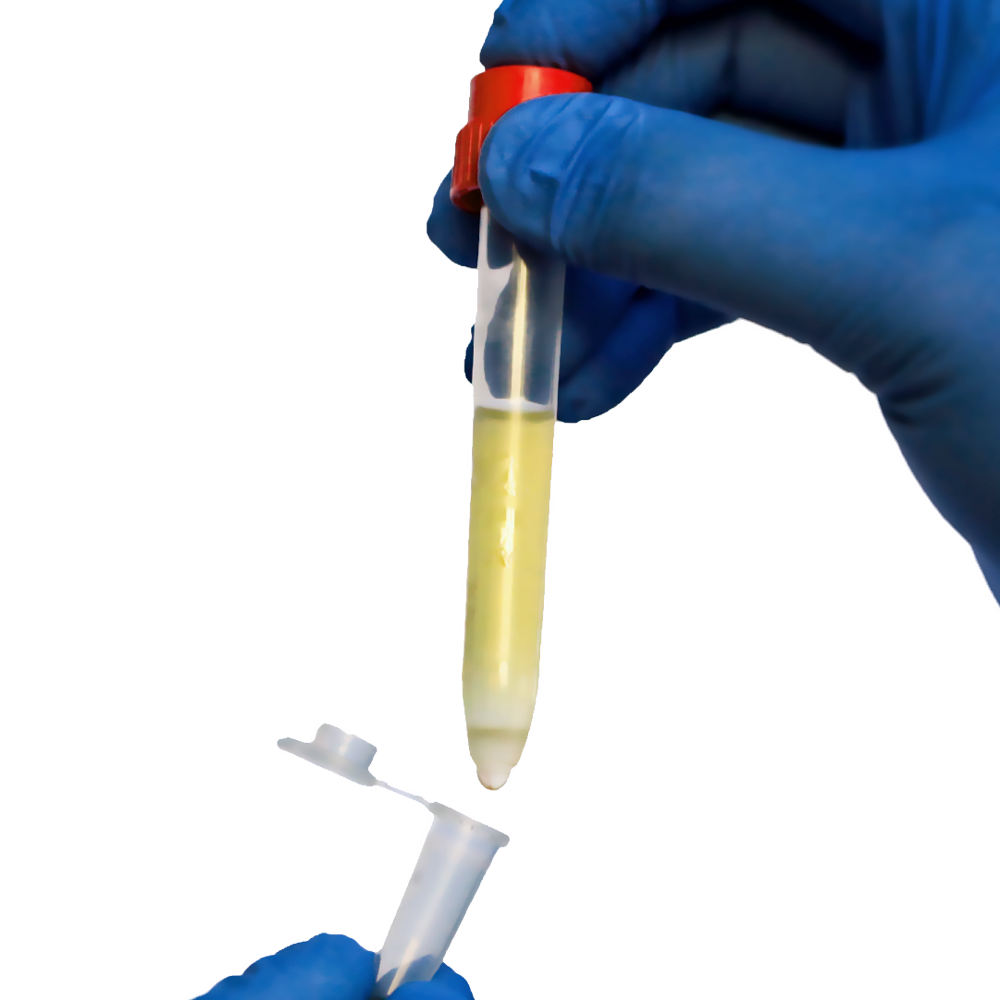
The sponge barrier also plays a role during harvesting. Once centrifugation is complete, the leukocyte-enriched fraction forms at the interface above the density gradient medium. At this stage, researchers need to collect the target fraction while minimizing the transfer of unwanted material.
PluriMate®’s porous barrier helps prevent recontamination of the enriched fraction during harvesting. This is an important design feature because sample recovery is not simply about removing the target cells from the tube. It is also about maintaining the separation between the enriched fraction and unwanted components throughout collection.
By incorporating this barrier into the tube, PluriMate® supports the recovery stage rather than leaving the researcher to manage every aspect of separation through manual handling alone.
Direct sample loading simplifies preparation
Another practical feature of PluriMate® is that it eliminates the need for time-consuming manual overlaying. Researchers can transfer anticoagulated blood or bone marrow directly from the sampling tube into PluriMate®. This makes the preparation process easier to manage, particularly when several samples need to be processed. It also reduces the number of individual steps required before centrifugation.
Although direct loading primarily simplifies sample preparation, it contributes to a more consistent workflow by reducing reliance on manually creating the initial sample-gradient interface.
Designed for leukocyte and PBMC isolation
PluriMate® is suitable for density-based separation workflows involving leukocytes and PBMCs from whole blood and bone marrow. During centrifugation, the target cells become enriched at the interface according to the density gradient medium used.
The combination of direct sample loading and the integrated sponge barrier supports the preparation and recovery stages of the process. Rather than changing the basic principle of density gradient centrifugation, PluriMate® is designed to make the surrounding handling steps more straightforward and help protect the enriched fraction during harvesting.
Best Practices for Maintaining Leukocyte Purity During Harvesting
A purpose-designed separation tube can help reduce the risk of recontamination, but researchers should also follow careful handling practices. The quality of the recovered fraction depends on the sample, separation conditions, and collection technique.
The following considerations can help maintain sample quality during leukocyte harvesting.
Identify the enriched fraction before collection
After centrifugation, allow the separated fractions to settle as expected before beginning recovery. Identify the location of the enriched leukocyte fraction and distinguish it from the surrounding material.
Understanding the expected position of the target fraction helps researchers plan the collection step. It also reduces the likelihood of accidentally collecting material from an adjacent layer.
Avoid disturbing the surrounding fractions
The collection process should be controlled and deliberate. Sudden movements, unnecessary agitation, or contact with neighboring layers can disturb the separation.
Researchers should handle the tube carefully after centrifugation and avoid actions that could disrupt the interface. Maintaining the arrangement of the fractions makes it easier to identify and collect the target material.
Use appropriate collection techniques
The harvesting technique should match the position and volume of the enriched fraction. When using a pipette or another collection instrument, researchers should aim to recover the target layer without drawing in excessive material from the surrounding fractions.
Consistent handling is particularly important when processing multiple samples. Using a repeatable collection approach can help reduce differences between preparations.
Minimize unnecessary transfers
Additional transfers can increase handling time and create more opportunities for sample loss or contamination. Researchers should plan the recovery process in advance and use suitable collection vessels to avoid unnecessary movement of the enriched fraction.
A workflow that reduces repeated manipulation can make sample processing easier to manage, particularly in laboratories handling several blood or bone marrow samples.
Consider washing requirements
Depending on the intended downstream application, the harvested leukocyte fraction may require washing to remove residual density gradient medium or other unwanted material. Researchers should follow the requirements of their chosen separation protocol and downstream assay.
Washing should be treated as a separate sample-processing step rather than a substitute for careful harvesting. Collecting the enriched fraction appropriately in the first place helps limit the amount of unwanted material carried into subsequent processing.
Evaluate the quality of the recovered fraction
Visual inspection alone cannot establish the purity or composition of an enriched leukocyte preparation. Researchers should assess the recovered sample using suitable methods for their application.
Depending on the intended use, relevant assessments may include:
- Cell recovery: Determine how many target cells have been collected compared with the starting sample.
- Cell purity: Evaluate the proportion of the desired leukocyte population and the presence of unwanted cell types.
- Cell viability: Assess whether the recovered cells remain suitable for the intended downstream application.
- Sample consistency: Compare results across preparations to identify variations in recovery or purity.
These assessments help researchers determine whether their separation and harvesting workflow meets the requirements of their experiments.
Conclusion
Preventing recontamination during leukocyte harvesting requires attention to more than the centrifugation step. Although density gradient centrifugation separates cells according to their physical properties, the enriched fraction must still be collected without disturbing surrounding components or transferring unwanted material.
The separation tube can play an important role in this process. PluriMate® incorporates a porous polyurethane sponge barrier that separates the sample from the density gradient medium during preparation and helps prevent recontamination of the enriched fraction during harvesting.
Its direct-loading design also eliminates manual sample overlaying, simplifying an important part of the workflow for anticoagulated blood and bone marrow samples. Combined with careful fraction collection and appropriate sample-quality assessment, these features support a more controlled approach to leukocyte and PBMC isolation.
For laboratories seeking to improve their density-based separation workflow, PluriMate® offers a practical tube design that addresses both sample preparation and recovery. By paying attention to how the enriched fraction is protected during harvesting, researchers can better maintain the quality of their isolated cell preparations for subsequent laboratory applications.
 English
 French
 German
 Spanish
 Belgium
 Italian
 Brazil
 Chinese Mandarin