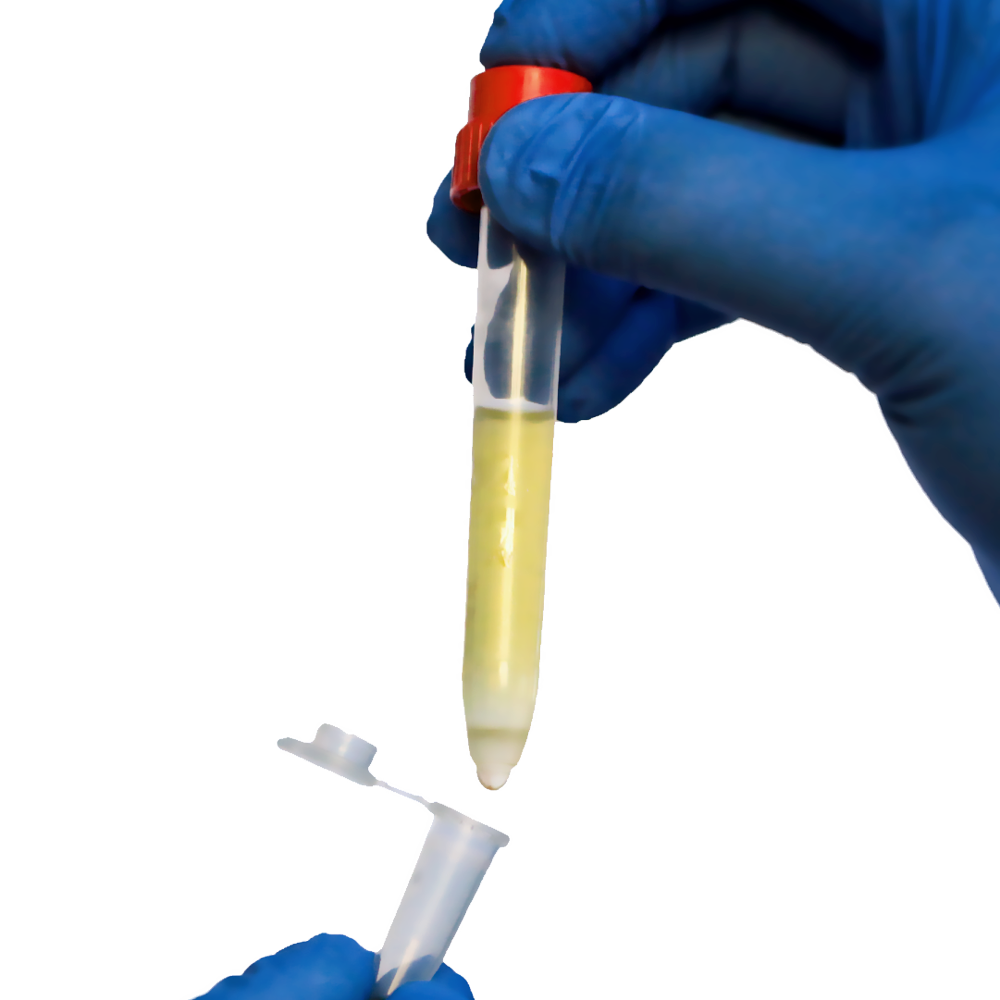
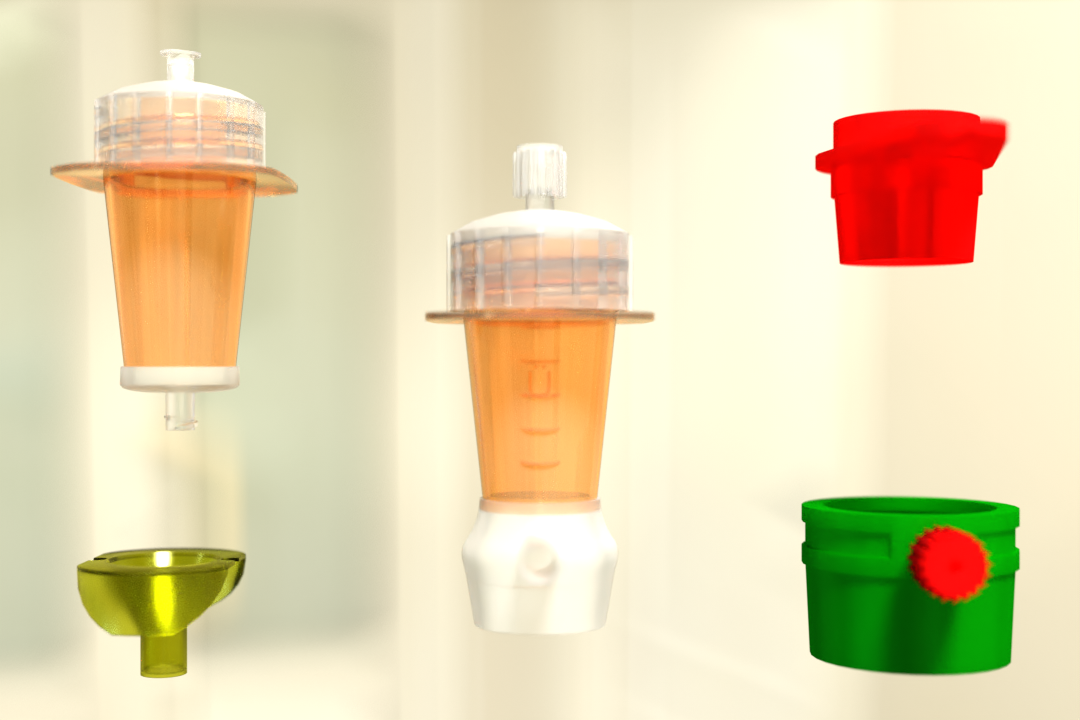
Filtration is commonly used to separate particles from liquids, but the process does not always end when the filtered liquid passes through the mesh. In many laboratory workflows, the material retained on the filter may also be valuable. Researchers may need to examine, measure, collect, or process these particles in a later stage. Treating the retained fraction as waste can result in the loss of useful sample material, particularly when particles are present in low concentrations or are the focus of the analysis. For this reason, particle recovery should be considered when planning the filtration workflow.
The Syringe-Strainer provides a compact option for separating particles during syringe- or tube-based sample handling. It features a screw cap with a Luer-Lock port, allowing it to connect directly to a syringe or tube. This makes it possible to incorporate filtration into an existing transfer step rather than requiring a separate filtration vessel.
Available in 15 mesh sizes from 1 µm to 500 µm, the Syringe-Strainer can be selected according to the particle size and filtration requirements. Sterile and non-sterile versions are available, and the device can be used with positive or negative pressure. By planning for both the filtered liquid and retained material, researchers can make filtration part of a more complete separation and recovery workflow.
What Happens to Particles During Syringe-Based Filtration?
When a sample is pushed or drawn through a Syringe-Strainer, the liquid moves through the mesh while particles larger than the selected openings are retained. This creates two fractions: the filtered liquid that passes through and the material collected on the mesh. The behavior of the retained fraction depends largely on the particle size and the mesh selected for the application. A finer mesh can retain smaller particles, while a coarser mesh allows more small material to pass through. The choice should therefore be based on what the researcher needs to remove or collect.
How the Mesh Captures Particles
The mesh acts as the separation point between the liquid and retained material. As the sample moves through the Syringe-Strainer, particles that cannot pass through the openings remain on the mesh.
With continued filtration, these particles may gradually accumulate. A sample containing a high concentration of particles can therefore produce a larger retained fraction than a relatively clean sample. This retained material may be the unwanted portion of the sample, but it may also be the fraction that the researcher needs for further work. For example, a workflow may be designed to collect particles within a particular size range for subsequent analysis.
This is why filtration should be planned around the intended result rather than simply around the need to remove material from a liquid.
The Role of Mesh Size
The Syringe-Strainer is available with 15 different mesh sizes ranging from 1 µm to 500 µm. This range allows researchers to select a filtration point according to the approximate size of the particles they are working with. For an application involving relatively large particles, a coarse mesh may be appropriate. When smaller particles need to be retained, a finer mesh can provide a more suitable separation.
The selected mesh also affects what remains available for recovery. If the retained fraction is important, researchers should consider whether the chosen mesh will collect the desired particles without unnecessarily retaining other material. Mesh selection is therefore not only a filtration decision. It can also influence the composition and amount of the fraction that researchers may want to recover afterward.
Positive and Negative Pressure
The Syringe-Strainer can be used with either positive or negative pressure. This provides flexibility in how the sample is moved through the filtration device. With positive pressure, the sample can be pushed through the strainer using a syringe. With negative pressure, the filtration setup can instead draw the liquid through the mesh.
The appropriate approach depends on the workflow and the way the sample needs to be handled. In either case, the basic separation principle remains the same: the liquid passes through the mesh while retained particles remain on the filtration surface. The ability to use either pressure direction can be useful when adapting the device to different sample-processing procedures.
Why the Retained Fraction Should Be Considered Before Filtration
Once particles have accumulated on the mesh, the next step depends on the purpose of the experiment. If the particles are unwanted, the strainer may simply be removed after filtration. If they are valuable, however, the retained material needs to remain accessible for recovery. This makes it useful to decide in advance what will happen to both fractions.
Researchers can identify the particles they want to retain, select a suitable mesh size, and then plan how the retained fraction will be handled after filtration. This approach helps connect the filtration step with the downstream application rather than treating recovery as an afterthought. The Syringe-Strainer’s screw-cap design and Luer-Lock connection allow it to be incorporated directly into syringe- or tube-based workflows. This makes filtration a defined step within sample handling while leaving the retained material available for the next stage of the process.
Ultimately, the value of syringe-based filtration is not limited to producing a filtered liquid. When the retained particles are part of the research objective, the filtration step can also serve as a controlled way to collect a specific fraction for further investigation.
How to Recover Retained Particles After Filtration With Syringe-Strainer
Once filtration is complete, the particles retained on the mesh may represent an important part of the original sample. If these particles are required for further analysis, the recovery step should be handled as part of the overall workflow rather than treating the filtration process as finished once the liquid has passed through.
Identify the Retained Fraction Before Disassembling the Setup
The first step is to determine what has accumulated on the mesh. The retained material may consist of the particles of interest, unwanted debris, or a combination of both. This distinction matters because the recovery approach should reflect the purpose of the experiment. If the retained particles are the target material, the goal is to collect them while limiting unnecessary handling. If they are only being retained temporarily before another processing step, recovery may involve transferring the material into a separate container for further treatment.
Taking a moment to assess the retained fraction can also help researchers decide whether the selected mesh was appropriate for the application.
Keep the Recovery Step Separate From the Filtration Step
Filtration and recovery serve different purposes. During filtration, the objective is to separate the sample according to particle size. During recovery, the objective is to collect the material that has accumulated on the mesh. Keeping these stages conceptually separate can make the workflow easier to plan.
After the liquid has passed through, the Syringe-Strainer can be removed from the filtration setup and handled according to the intended recovery procedure. The retained particles can then be transferred into an appropriate collection vessel for downstream processing. The exact recovery method will depend on the type of particles and what the researcher plans to do with them afterward. The available information for the Syringe-Strainer does not specify a single universal recovery technique, so the recovery method should be selected according to the particular sample and application.
Consider the Amount of Material Retained
The amount of material collected on the mesh can vary considerably between samples. A sample with a low particle concentration may leave only a small amount of material behind, while a heavily loaded sample may produce a much larger retained fraction. This can influence how researchers approach recovery.
When only a small amount of material is retained, minimizing handling becomes particularly important. Multiple transfer steps may make it harder to collect the entire fraction. When a larger amount is present, researchers may instead need to ensure that the receiving container and recovery process can accommodate the full fraction. Planning the collection step around the expected amount of retained material can help make recovery more organized.
Use the Connection Design to Support the Workflow
The Syringe-Strainer uses a screw cap with a Luer-Lock port, allowing it to connect to either a syringe or a tube. This design makes the device suitable for filtration directly within a sample-transfer process. The advantage is that filtration does not necessarily require the sample to be moved into a separate filtration vessel before processing. The syringe or tube can be connected directly to the strainer, allowing the sample to pass through the mesh as part of the existing handling process.
Once filtration is complete, the retained fraction remains associated with the strainer and can be handled as a separate sample fraction. This can be particularly useful when researchers want to maintain a clear distinction between the filtered liquid and the particles captured during filtration.
Select Sterile or Non-Sterile Versions According to the Application
The Syringe-Strainer is available in both sterile and non-sterile versions. The choice should be based on the requirements of the workflow. For applications where sterility is important, a sterile version can be selected. For workflows where sterility is not required, the non-sterile option may be appropriate. This choice should be made before filtration because it forms part of the overall sample-handling plan.
Treat Recovery as Part of the Sample Preparation Workflow
The most important point is that retained particle recovery should be considered before filtration begins. Researchers can first identify the fraction they want to collect, select an appropriate mesh size, choose the suitable Syringe-Strainer version, and then determine how the retained material will be handled after filtration. This approach prevents the recovery step from becoming an improvised procedure at the end of the experiment.
The Syringe-Strainer provides a compact filtration format with a range of mesh sizes and flexible pressure options. When combined with a recovery plan suited to the specific sample, it can help researchers separate and retain particles within the same overall sample-processing workflow.
Conclusion
Filtration can serve more than one purpose when the particles retained on the mesh are valuable for further analysis or processing. Instead of treating this material as waste, researchers can plan the filtration and recovery steps together to maintain access to the fraction collected on the strainer.
The Syringe-Strainer provides a practical option for workflows that require particle retention during syringe- or tube-based filtration. With 15 mesh sizes ranging from 1 µm to 500 µm, researchers can select a suitable filtration point based on the particle size they need to capture. The device is also available in sterile and non-sterile versions and can operate with positive or negative pressure.
Its screw cap with a Luer-Lock port allows connection to either a syringe or tube, making it suitable for direct integration into sample-transfer workflows. This can help researchers keep filtration and subsequent particle handling within a connected process.
Before filtration, researchers should consider the target particle size, sample characteristics, expected particle load, sterility requirements, and intended downstream use. These factors can help determine the most appropriate setup and recovery approach.
When the retained fraction matters, choosing a filtration device with the right configuration can give researchers greater control over both the filtered liquid and captured particles. The Syringe-Strainer supports this approach by combining flexible filtration options with a compact format for laboratory sample preparation.
 English
 French
 German
 Spanish
 Belgium
 Italian
 Brazil
 Chinese Mandarin